
Sandro Pertiniborn in Stella in the province of Savona in 1896 and died in Rome in 1990, was A partisan and politicianexponent for the whole life of Socialist party. As a young man he took part in the First World War and studied jurisprudence and political science. In the first post -war period he began his political career and in 192.6 to escape the repression organized by the fascist regime, he went exile in France. Returned clandestinely to Italy in 1929, he was arrested and detained for 14 yearsfirst in prison and then to confinement. Liberated after the collapse of the fascist regime, he was one of the most important political leaders of the Resistance. In the years of the First Republic, he was Senator, deputy, president of the Chamber and, from 1978 to 1985, President of the Republicalways highlighting for inflexibility and determination.
Youth and studies
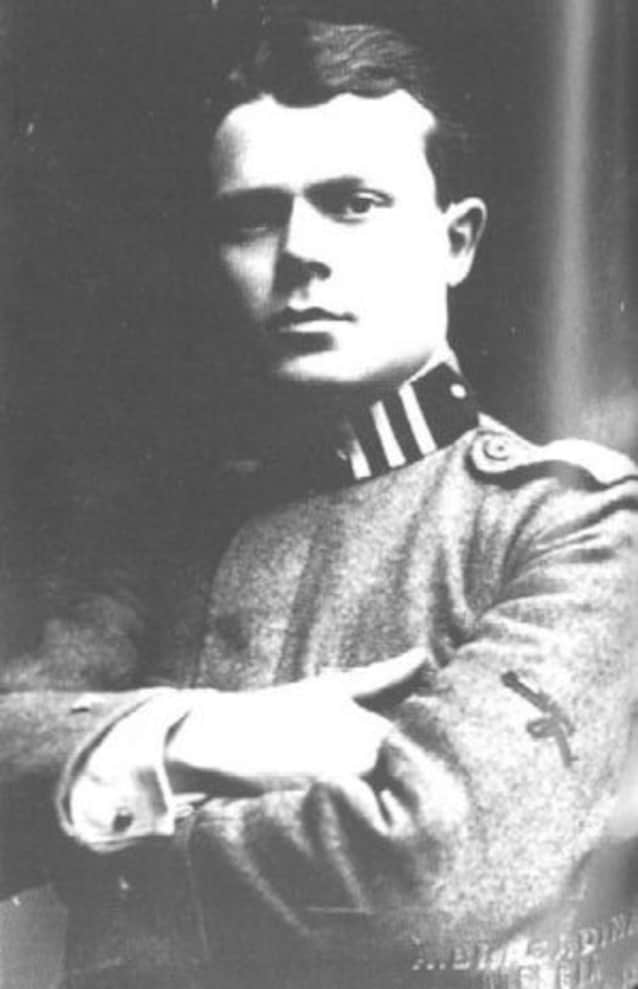
Alessandro Giuseppe Antonio Pertinibetter known as Sandro, was born to Starin the province of Savona, on September 25, 1896, by a wealthy family. He attended schools and in 1915, at the outbreak of the First World War, he was recalled to weapons. It was involved in the Caporetto route and in many other war operations. Despite being neutralist, he fought with value and it was even proposed for a value medal. Returned to civil life after the war, in 1923 he obtained the Degree in Law And, after a year, the one in political science.
The beginning of political career and detention during fascism
After the war Pertini started his political career. On his first experiences in this context, conflicting news circulate, but it is certain that he was proudly hostile to fascism and that in 1924 he enrolled in the Unitary Socialist Party which grouped the reformist current of the socialists. He suffered different attacks and beatings with black shirtswho also devastated his lawyer’s office. In 1925 he was arrested for a few months for distributing an anti -fascist booklet and the following year, while repression became increasingly intense, expatrite to France. He settled First in Paris and then to Niceadapting to do various jobs to land the Lunario: whitewashing, laborer, cinematographic appearance.

In exile, he continued the fight against fascism, planting a clandestine radio, and in 1929 He returned clandestinely in Italy to organize the party in the area. He visited various cities, but after a few days, while he was in Pisa, he was recognized and arrested. Sentenced by the Special Court for the Defense of the State, remained in prison for seven years, during which he had the opportunity to get to know Antonio Gramsci and many other anti -fascist exponents. In 1933 his mother, without consulting it, presented one question of gracebut Pertini refused her with a disdainful letter, declaring that she was offended because her mother had thought that she could deny her political creed to obtain freedom. He therefore remained in prison until 1936 And he was then assigned to the police confinement.
From the Resistance to the Republic: partisan and parliamentary Pertini
Freed in 1943, after the fall of fascism, Pertini participated in the establishment of Italian Socialist Party of Proletarian Unit (PSIUP)and, after September 8, he became one of the major political managers of the Resistance. On October 18, 1943 He was arrested by the Germans together with Giuseppe Saragat (another future president of the Republic) and sentenced to death, but in January 1944, while he was held in prison of the Regina Coelihe managed to escape thanks to the stratagem organized by a group of partisans, who falsified an order of release, and resumed work in the resistance. After the liberation of Rome he moved to Milan and became a member of the National Liberation Committee for High Italy, distinguishing himself for determination and intransigence.

In the same period he met Carla Voltolinaanti -fascist journalist, who would become his wife in the post -war period and would have been next to him for a lifetime. At the end of the Second World War, which has now become one of the most known exponents of the Socialist Party, he was elected deputy to the Constituent. He tried without success to avoid the split of the Social Democratic wing of the Socialist Party, which took place in 1946. He also assumed intransigent positions towards the former fascists, contesting the amnesty promoted by the secretary of the Communist Party, Palmiro Togliatti.
In the following years he was present uninterruptedly in Parliament and continued to stand out for his determination and clear political positions. Among other things, he maintained a critical attitude with respect to theEntry of the PSI into the government teamwhich took place in the early 1960s. In 1968 he was elected president of the Chamber. Two years later he made his cause refusal to meet the commissioner of MilanMarcello Guida, who had been director of the Confine di Ventotene when he was detained. He also sided against the increase in the parliamentary allowance and, during the seizure of Aldo Moro, he supported the line of firmness, not accepting, unlike his party, that the state started one negotiation with red brigades.

Pertini President of the Italian Republic
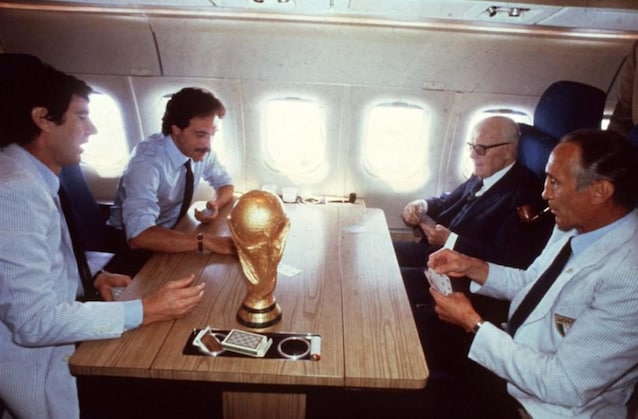
Shortly after Moro’s death, voting began to elect the new President of the Republic. At the sixteenth scrutiny, on the proposal of the secretary of the PSI, Bettino Craxi, Sandro Pertini was elected. The new president preferred Do not move to the Quirinale And he chose to continue living in the small house at the Trevi Fountain. In the years of the presidency, he conferred for the first time the task of forming the government a political exponents not belonging to the Christian Democracy: The Republican Spadolini and the socialist Craxi, with whom, moreover, he often disagreed. It distinguished himself for some strong positions, unusual for a President of the Republic, such as the hard criticism of the management of rescue on the occasion of the Irpinia earthquake. He also highlighted for the presence of events that captured the attention of the public, such as the tragic death of Alfredino Rmpi, the child who fell in a well in 1981, and World Cup in 1982. The images that portray him at the stadium while he exults and on the plane of the return are still very popular as he plays cards with two players and with the national team coach.
In 1985 he ended his mandate as president and became a senator for life by law, adhering to the socialist parliamentary group. He died in 1990at 93 years old, for the complications of a fall in his Roman house.
Sources
Andrea Gandolfo, Sandro Pertini, Aracne, 2010-2018, 5 vols.
Antonio Maccanico, with Pertini at the Quirinale. Diaries 1978-1985, Il Mulino, 2014,
Sandro Pertini in the history of Italy. Conference Proceedings held in Genoa in 1996, Lacaita 1997.
Umberto Gentiloni Silveri, Sandro Pertini, in the Biographical Dictionary of Italians, vol. 82, 2015,
