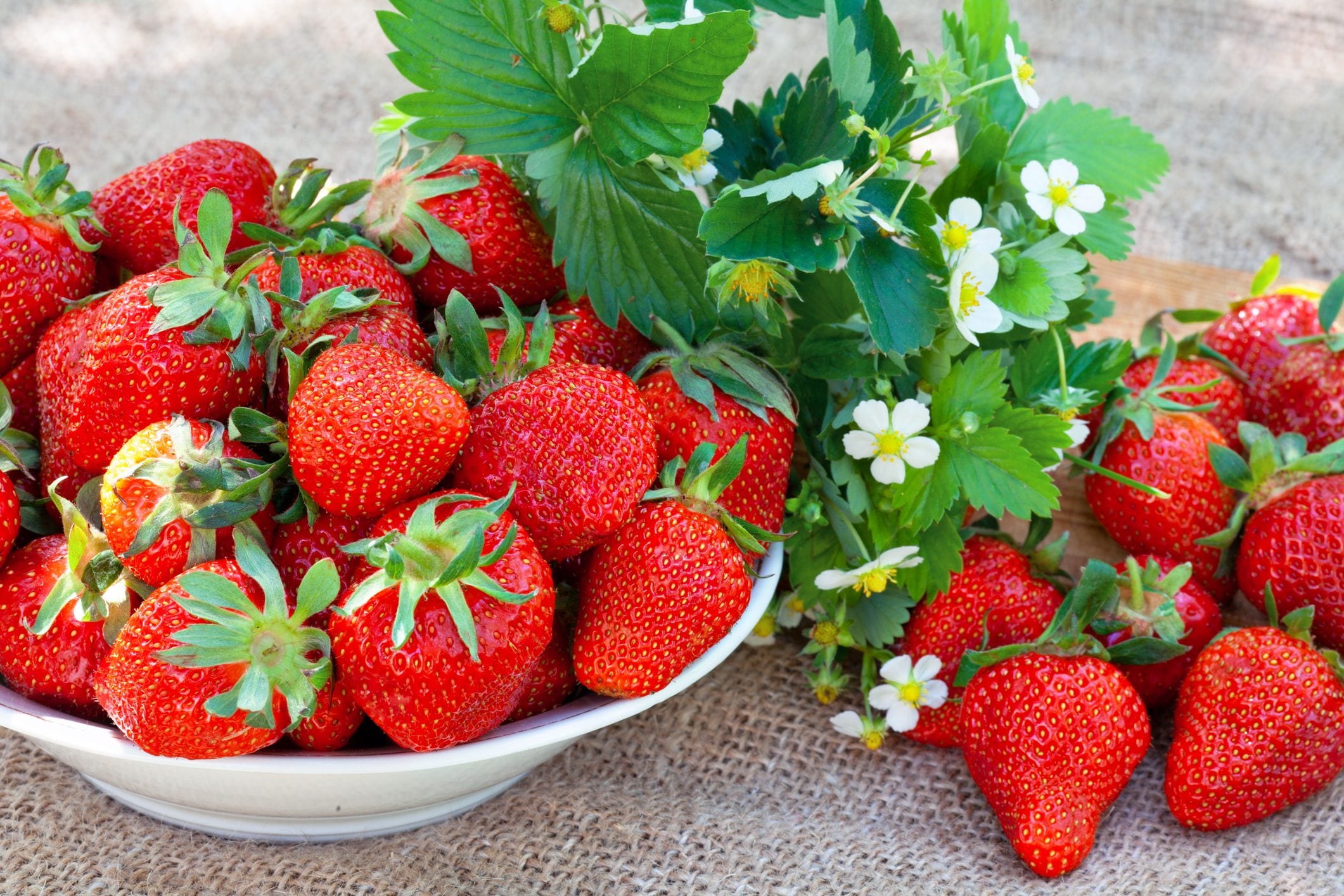
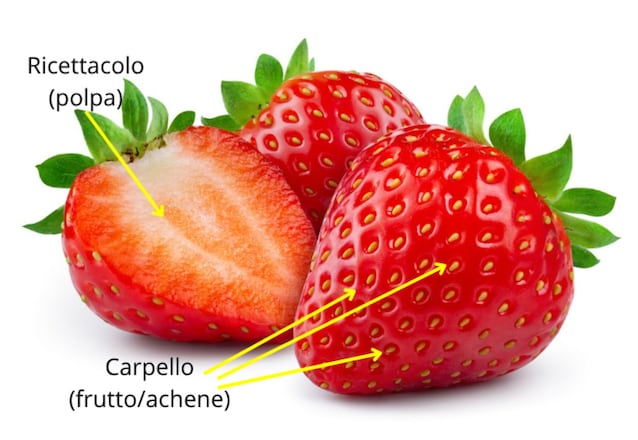
Whether you eat them in fruit salad, with cream, in a cake or simply as they are, we’ll let you in on a secret: Strawberries are not fruits. From a botanical point of view, in fact, the strawberry is considered a false fruit because it does not develop from the ovary of the flower, but from another adjacent tissue, called the thalamus or receptacle. The real fruits of the strawberry, still speaking in botanical terms, are what we call “seeds”, and which are actually called achenes. Strawberries aren’t the only fruit in disguise: apples and pears too. Pineapple, on the other hand, is a multiple fruit. Want another shocking piece of information? Beans And zuchinis instead they are fruits in all respects!
Because the strawberry is a false fruit for botany
The problem with this catfish lies in what we mean by the word “fruitWe generally tend to consider fruit a product with a high water and sugar content: this is why strawberries, apples and pears fall into the fruit food category.
By opening any book botany however, we will read a more stringent definition: the fruit derives solely from the transformation and enlargement of the ovary of the flower after fertilization. Only the ovary! If other structures or floral tissues participate, then we speak of false fruits or accessory fruits.
The ovary, together with the stigma and style, are part of the carpela modified leaf that folds in on itself to protect ovules and seeds. The carpels together form the gynoeciumthat is, the entire female reproductive system of the flower. An important detail because not all flowers have just one carpel and can give life to different structures and fruits.
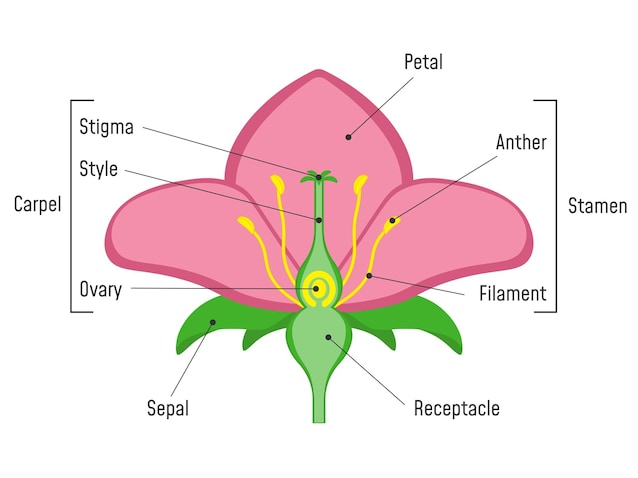
In strawberries (Fragaria x ananassa) the fleshy red part which we like so much derives from the transformation of another floral structure, called thalamus or receptacle, which expands in response to hormones produced by eggs after fertilization of the plant. In the floweryou can recognize the receptacle as that “chubby” part found at the base of the flower: it is not yet a stem but is a sort of cushion on which the various organs of the flower are inserted.
Those that we improperly call ‘seeds’, the small yellow-brownish dots scattered on the surface of the strawberry, they are actually the real fruits! Indeed, if we want to be precise, the technical name is achenes (no, the Achaeans of the Iliad have nothing to do with it). Each of them results from the transformation of a single ovary belonging to a distinct carpel, which also makes it a false fruit aggregate.
What are the unsuspected fruits and the aggregate fruits
The strawberry is not an isolated case, but one of many examples in which the “fruit” we eat does not correspond to the rigorous botanical definition. Other unsuspected false fruits are, for example, the apples and the pears! Even in their case, the pulp we eat is a transformation of the receptacle, while the actual fruit is what we discard: the core!
Following the botanical definition, many foods we consider vegetables or legumes they are actually fruits. Beans, chickpeas, corn And zuchinis: all fruits you didn’t expect. This is because their development occurs solely from the transformation of the ovary. Other “shocking” examples? They also fall under this definition peanuts and chestnutsdefined as “dried fruits” due to their very low level of hydration and their leathery consistency.
Often thepineapple. In reality, it is ainfructescenceor rather than a multiple fruit which derives from the fusion of multiple ovaries deriving from single flowers. In fact, the pineapple flower is an inflorescence, a set of flowers grouped in a common axis.
A similar argument applies to more: the carpels are numerous and separate, and each can give rise to a small fruit (the individual “balls”), forming a aggregate fruit.
