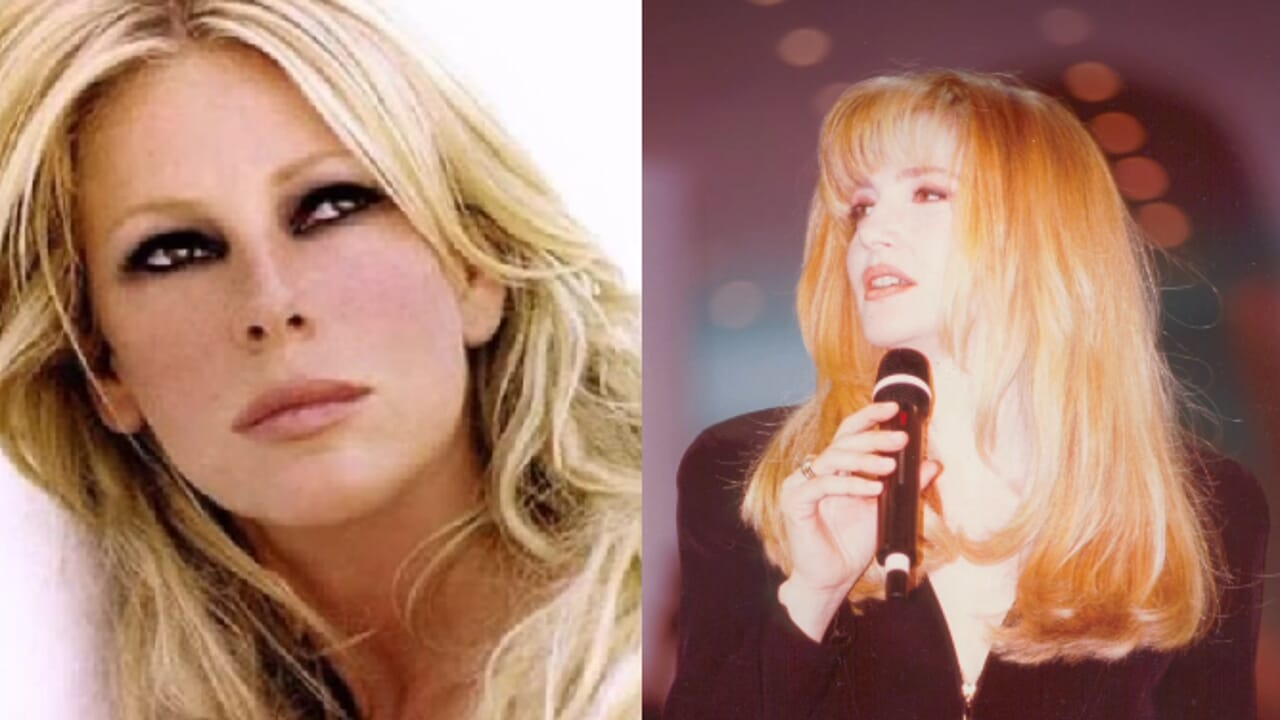
The “as you were in the nineties” trend is a bit boring
“And I don’t want the world to see me/’Cause I don’t think that they’d understand/When everything’s made to be broken/I just want you to know who I am”: a refrain, this refrain from Iris by Goo Goo Dools, and off we go, straight down towards the abyss of regret dragged by the hashtag “What were you like in the nineties?”. Melancholy is the social format of the moment; remembering and remembering what one was like in one’s features, in the way one dressed and posed in front of the camera, the pretext to talk about oneself in a decade evoked as the last of a story suspended between the remote past and the imminent future.
The tendency seems to be that of regret; the intent was to demonstrate, even with a hint of self-assurance, that they were witnesses of an enviable era. Alone, we ask ourselves the ritual question – “what were you like in the nineties?” precisely – with the certainty that someone will be interested in the answer. Alone alone we give ourselves an answer that arrives (unsolicited) in the form of a carousel aimed at self-incense, through the re-proposal of analogue photos, perhaps digitized for the occasion, in which we are beautiful, young and vigorous. Finally, the green light is given to the series of “wow”s expressed in various periphrases useful for praising a charm which, for heaven’s sake, has not been lost in these thirty years, let alone ever.
There are many personalities from the world of entertainment who have joined in commemorating themselves and the era with some yellowed albums made browsable in the form of reels. From Sharon Stone to Drew Barrymor, from Brooke Shields to Brian Austin Green up to “our” Alessia Marcuzzi, Simona Ventura, Lorella Cuccarini, the feeling is that the Nineties have remained here for everyone, on the heart that tears emotions when an object comes back into trend, the TV re-proposes an old commercial or dusts off old programs and the news of the death of actors who are symbols of TV series of the time is learned as a personal mourning.
The narration of a period which, however, exposed in this way risks being handed down only as luminous, full of ideas, enthusiasm and joy of living. Like a series of positive moments and events which, if there were any, were also to counterbalance other decidedly challenging ones from a political, cultural and economic point of view. Because the Nineties were also tiring, very tiring. And in the collective praise given to “how we were”, a mention of “how we were” also deserves a place in history.
The return of “Karaoke”: a program that has already proven to be unworkable
How we were good (but also bad) in the Nineties
The nineties were years full of creativity and modernization. In Italy, television took to the streets and sang Karaoke with Fiorello, “Made in Italy” became synonymous with “done well”, elegance was baptized in the name of Giorgio Armani, while Gianni Versace fueled the glamorous phenomenon of top models. Communication also advanced with the push of the first cell phones which, from status symbols, began to spread to give the idea of being a tool for everyone.
Then there is also the rest to consider, however. The dark side of an optimism that elbowed its way through political scandals, mafia violence and an economic situation that was anything but rosy. The Capaci massacres, Via D’Amelio, Via dei Georgofili; Tangentopoli which revealed a system of corruption and illicit financing of parties and decreed no confidence in the political class; the devaluation of the lira which led to cuts in public spending with heavy consequences for the pockets of Italians, disheartened by a series of events that undermined daily serenity.
So ok, the “nostalgia, rogue nostalgia” that resonates hummed by the thought of a completely different songwriting compared to the Goo Goo Dolls, but these nineties must also be thought of as a whole which in the bouquet of roses and flowers also had beautiful thorns. Just to avoid the illusion of the sugary effect of a period of Eden that never really was.
Because supermodels no longer exist
View this post on Instagram
View this post on Instagram
View this post on Instagram
