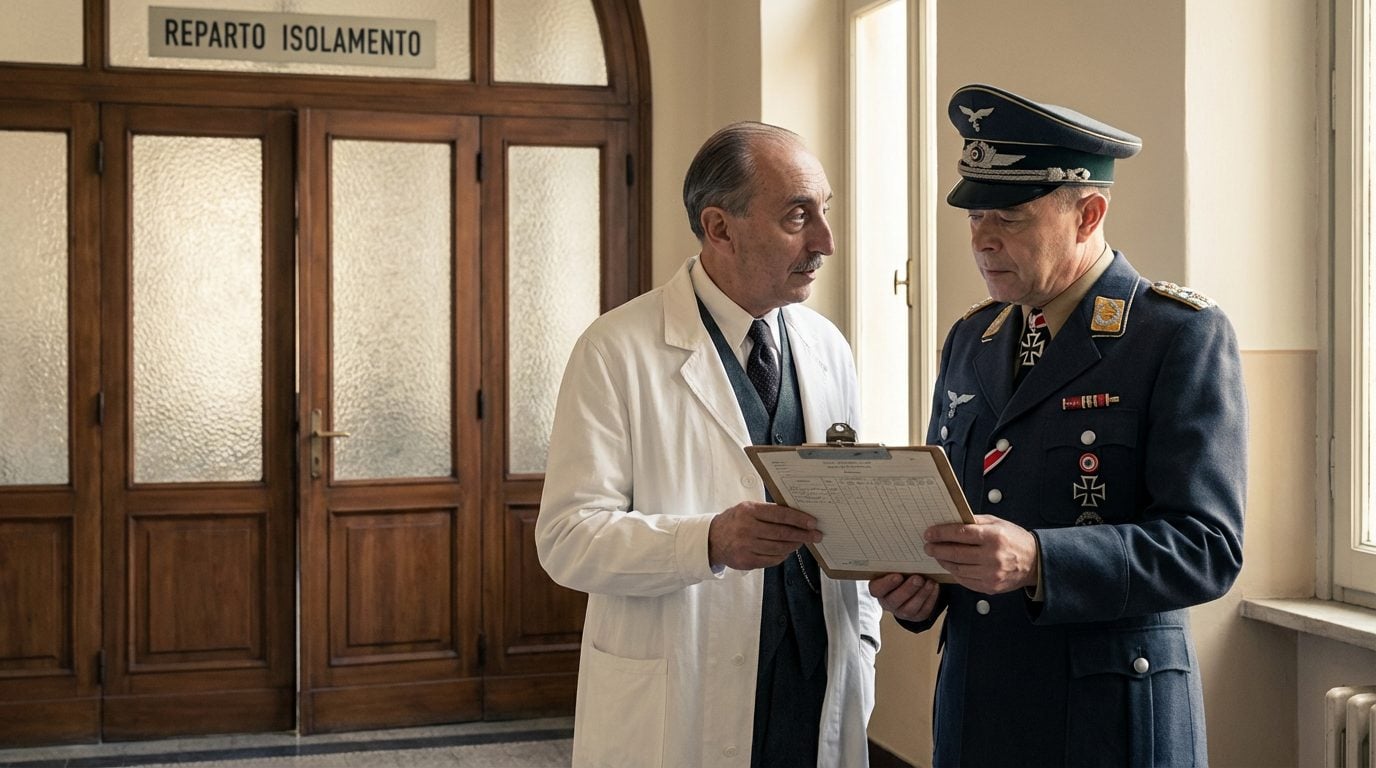
On the evening of Remembrance Day 2026 and on 28 January, Rai 1 pays homage to the victims of the Holocaust with fiction Morbo K, whoever saves a life, saves the whole world by Francesco Patierno. Although there are fictionalized elements within it, the series tells the true story of the doctor Giovanni Borromeohead physician at the Fatebenefratelli hospital who together with his collaborators managed to save some Jews from roundup of the Rome ghettoinventing in 1943 the existence of a contagious disease that never actually existed.
The idea of the false disease came to Borromeo during the Nazi-fascist persecutions of 16 October 1943 against the Jewish citizens of Rome, when the Gestapo entered the city and other homes to arrest around a thousand people. Some of them managed to take refuge inside the Fatebenefratelli, and the doctor promptly thought of a plan to protect the fugitives (Roman Jewish citizens and of Polish origin). So it was that the doctors invented an entire department in which they admitted patients under a false name the unfortunates, and compiled a series of false medical records with “K disease”. The disease was named after German General Albert Kesselring, and all patients “affected” by the disease were known as “Kesslering patients.”
The doctor, who could speak German, explained to the officers that the disease was “very contagious” to ensure that they stopped inspecting the pavilion of affected patients, and that they even discouraged themselves from looking at the names on the files, because “death was practically certain”.
The fake patients then came declared dead once false identity documents arrived that would have allowed him to leak.
The fact that the fugitives had taken refuge inside the hospital was no coincidence: among Doctor Borromeo’s collaborators was the doctor of Jewish origins Vittorio Emanuele Sacerdotiwho at the time was working in the hospital under a false name – who had continued to practice his profession thanks to the recommendation of his uncle, a famous physiopathologist whose pupil Borromeo had been as a boy – and the people who arrived at Fatebenefratelli that day were his patients who didn’t know who else to turn to. Later, Sacerdoti said that after that episode the hospital became a refuge for many persecuted people, such as the partisans. After the armistice of September 8, 1943, some also arrived former fascists worried about suffering reprisals.
Once Rome was liberated and the war was over, Giovanni Borromeo received the Cross of Merit of the Order of Malta and the Silver Medal for Valor. After his death in 1961, he also obtained the recognition of Righteous Among the Nationsas an example of civil resistance against fascist and Nazi abuse and hatred.
