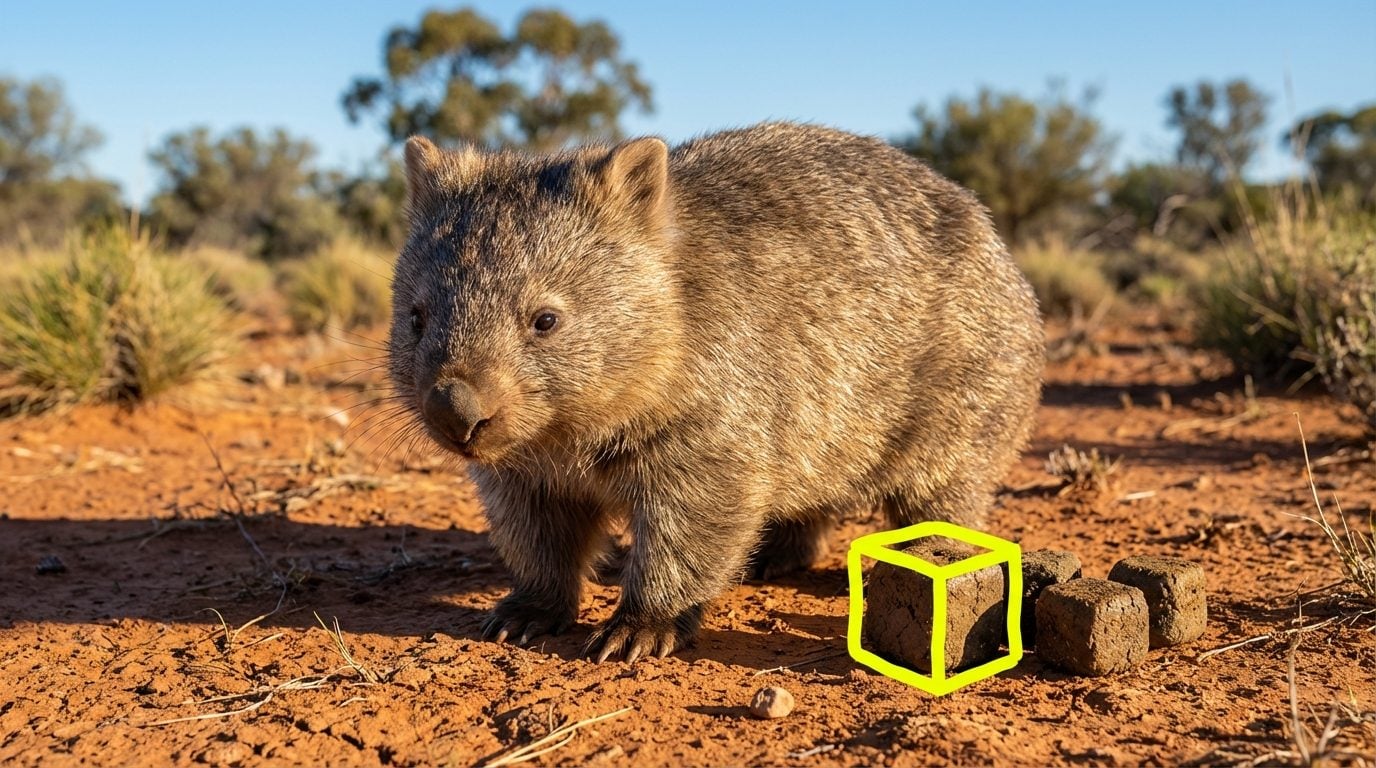
The common wombat (Vombatus Ursinus) – wombat in English – is a marsupial native to Australia. They are robust animals, with short, muscular legs that reach up to a meter in length and hips 20 or 30 kg in weight. With brown fur, strong teeth and sharp claws, they are great diggers. Wombats are full of curiosity: they have a marsupial pouch that opens in the back, a butt reinforced by cartilage to resist the bites of predators and… they do the poop shaped like cubes.
Where the wombat lives and what it eats
Spotted for the first time by British settlers who landed in Australia, wombats owe their name to the Darug language, the Australian Aboriginal language spoken in the Sydney area. Belonging to the Vombatid family and endemic to Australia (they live exclusively there), they are divided into three species. The common wombat (Vombatus ursinus), The southern hairy-nosed wombat (Lasiorhinus latifrons) and the Northern hairy-nosed wombat (Lasiorhinus krefftii) – classified as Critically Endangered (critically endangered) in the IUCN lists.
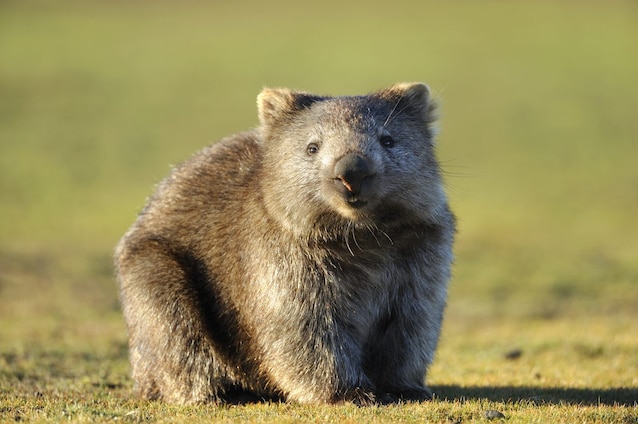
They inhabit a great variety of Australian environments, from humid forests to savannahs and dry scrublands, where they feed mainly on grass, roots and shrubs being herbivores And grazers. Characterized by an activity twilight And nocturnalthey have a very slow metabolism: in fact, they take 8 to 14 days to digest a meal. This is an evolutionary adaptation to arid environments, thanks to which they are able to extract and assimilate every single drop of water from food.
The cube-shaped poop of the wombat
Without a doubt, the most curious characteristics of wombats are theirs I did. Unlike the elongated or ball-shaped shape typical of many animals, these marsupials do the cube-shaped poop.
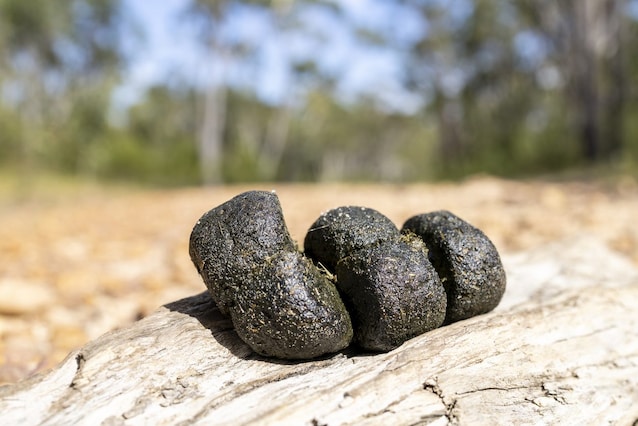
For a long time, science has investigated the reasons. Initially, some theories hypothesized that this shape served to communicate and “brand” the territory stacking them on top of each otherIn fact, feces do not roll away even in sloping areas. Another theory suggested that the shape was simply due to theextreme dehydrationwhich makes the excrement very compact and dry. Or even that the shape was given by a square-shaped sphincter (anus).
According to the most recent and accredited studies – I was worth an award Ig Nobel for physics in 2019 to the researcher Patricia Yang (specializing in animal body fluids at the Georgia Institute of Technology) And David Hu– this very particular shape is actually given by the characteristics of theintestine. By analyzing the digestive tract of some deceased specimens, the researchers have in fact noticed, in addition to a surprising length of about 10 metres, the presence of areas with avariable elasticity that is, an alternation of rigid and soft areas which, by contracting, shape the feces before expulsion.
The rear pouch and how it is defended
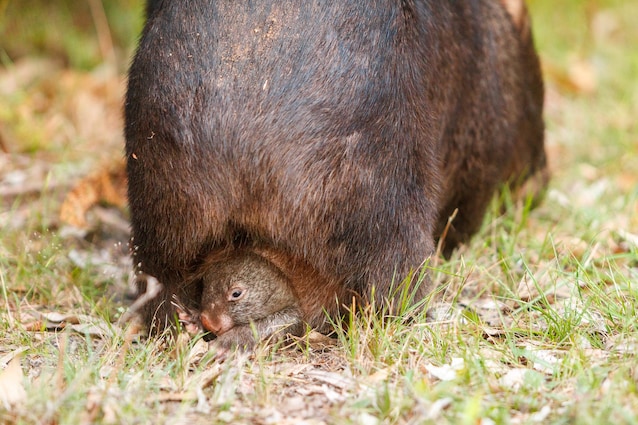
Wombats, who sleep up to 16 hours a day, live in complexes underground dens which dig thanks to their claws and strong legs, hosting up to 10 specimens in the same shelter. But a question arises spontaneously: if they are marsupials and dig the earth, they don’t risk throwing it into the pouch on the little one? No, another ingenious adaptation of the wombat is the opening of the marsupial pouch facing backwardsunlike for example kangaroos, but in a similar way to what happened in thylacine (a now extinct marsupial). In this way, the puppy – which weighs only 1 gram when born – remains safe and clean while the mother digs.
Their burrows offer essential protection against predators such as dingo hey devils of Tasmania. They certainly work as an excellent hiding place, but they could also be transformed into a decidedly unique defense technique. The wombat, in fact, has another surprise: the skin of its bottom is extremely thick and reinforced by cartilagecreating a real armor that protects from bites And “plug” the den.
There are theories, without any definitive proof, that when a predator sticks its snout into the burrow, the wombat uses its powerful hindquarters not only as a shield, but as an actual weapon by crushing the attacker’s head against the top of the tunnel. However, as already mentioned, this defense technique is not confirmed by any scientific study and could be an invention of the web.
