
The transition to maternity it is an event that completely redefines a woman’s life, not only on a personal and social level, but also biological. During pregnancy, a wave of physiological and behavioral adaptations are triggered to ensure the care and survival of the offspring. Today we know that one of the organs most profoundly affected by this transformation is the brain. Pregnancy, affected by a hormonal increase unprecedented, triggers a phase of brain restructuring: some subcortical regions they decrease in volume during gestation, in order to specialize in maternity duties that are about to arrive. On the contrary, the white matter it increases in the first two trimesters and the lateral ventricles expand. After childbirth, a reversal occurs: the cortical reduction attenuates and many regions, including the hippocampus and amygdala, show a recovery or an increase in volumeleading to a brain that appears “younger” in the first few weeks after birth.
How a woman’s brain changes during pregnancy: cognitive fog
The phenomenon commonly known as “pregnancy brain” or “baby brain,” which describes memory lapses and forgetfulness, is widely recognized. Studies indicate that pregnancy is linked to a modest decline in cognitive function, particularly in verbal memory and in theAttentionwith more marked effects in the third quarter. For example, some research has found a decline in the ability to recall auditory verbal information and in prospective memory (the ability to remember to do something in the future). However, short-term memory and implicit memory (the one linked to habits) often appear preserved.
Although mothers often report subjectively memory deficiton an objective level these changes are subtle and generally remain within the normative range of operation. It is hypothesized that this reorganization occurs at the cost of some non-essential cognitive functions, in line with evolutionary adaptation that favors functions crucial to child care.
The hormonal revolution during motherhood and the renovation project
The peripartum period (pregnancy and first weeks after giving birth) is characterized by hormonal surges unprecedented. Imagine them steroid hormonessuch as estrogen and progesterone, as powerful architects and construction managers: their concentrations increase exponentiallyreaching levels never seen before in a woman’s life. These hormones cross the blood-brain barrier and orchestrate the profound reorganization of the central nervous system.
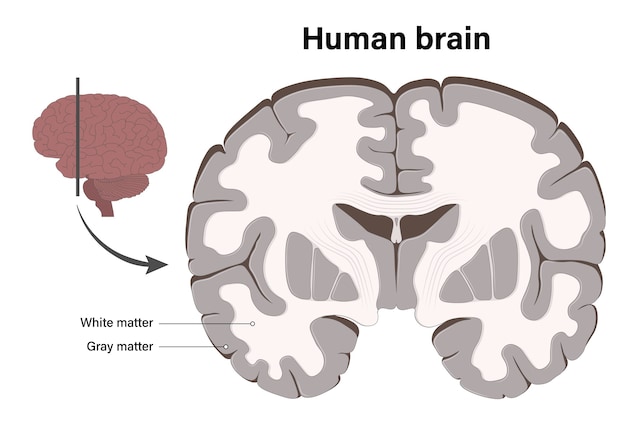
The most surprising discovery regarding pregnancy was one diffuse reduction in gray matter volume in the cortex, observed in new mothers, especially in those with their first pregnancy. This reduction, visible already in late pregnancy, should not be seen as a deficit, but as a process “fine tuning” in which the brain does specializes for the new tasks of motherhood. Like a computer that purges unnecessary apps and data to free up space and optimize performance for essential software, the brain similarly appears to prune less crucial connections to strengthen and streamline networks vital to child care.
The areas of mothers’ brains that specialize
The areas that “restructure” the most are concentrated in the anterior and posterior midline regions of the cortex, as well as specific prefrontal and temporal areas. Many of these areas coincide with the Theory of Mind (ToM) network. This network is fundamental to the social cognition and allows the mother to put herself in the child’s shoes, understanding his needs and intentions even if she cannot express them verbally. Subcortical structures also undergo changes during gestation, includinghippocampus (crucial for memory) and the ventral diencephalon (which contains the hypothalamus, important for maternal behavior), which show reductions in volume.
This reduction in volume should not be interpreted as a weakening, on the contrary, it is one radical reorganization and hormone-driven adaptation, which aims to make i neural circuits existing in this area more efficient and specialized in essential functions for child care. In practice, the regions crucial for the maternal response are optimized.
In contrast to the reduction of gray matter, it has been observed that themicrostructural integrity of the white matterwhich acts like a network of high-speed wires connecting regions of the brain, increases during the first and second trimesters of pregnancy. Furthermore, pregnancy is associated with a decrease in total brain volume and an increase in the volume of the lateral ventricles and cerebrospinal fluid.
Postpartum recovery and long-term inheritance
After childbirth, the dynamics of brain changes reverses. The first few months are a period of recovery and substantial growth of brain tissue. There is an increase in total brain volume, a reduction in the size of the ventricles, and a local and regional increase in gray matter volume in areas such as the hippocampus, amygdala and auditory cortex. Some research indicates that the brain it may seem “younger” from 4 to 6 weeks after giving birth. This rebound is dynamic: the more time that passes after giving birth (in the first few weeks), the greater the increase in cortical volume measured.

The impact of motherhood does not end with the recovery phase. Although initial reductions in gray matter can persist for years (up to six years), long-term studies reveal a positive legacy. Decades after giving birth, women who have had children show a greater global volume of gray matter compared to women who had none. This global increase in gray matter suggests that pregnancy and motherhood may act as a neuroprotective factor against age-related brain atrophy.
In a sense, motherhood, with its demands for flexibility, skill acquisition and continuous adaptation, can be seen as a “enriched environment” for the brain. Just like those who dedicate themselves to a life full of intellectual challenges, the woman who becomes a mother develops more robust and responsive neural circuits, leaving a lasting mark that manifests as greater stamina or better brain health in later years. Ultimately, the maternal brain is a masterpiece of adaptation, transformed to meet the demands of parenting.
Sources
Barba-Müller et al.. 2019, Brain plasticity in pregnancy and the postpartum period: links to maternal caregiving and mental health Luders et al., 2022, The neuroanatonomy of pregnancy and postpartum. Paternita-Die et al., 2024, Women’s neuroplasticity during gestation, childbirth and postpartum. Chechko and Nehls, 2025, From pregnancy to postpartum: the dynamic reorganization of the maternal brain. Orchard et al., 2023, Matrescence: lifetime impact of motherhood on cognition and the brain. Younis et al., 2025, Exploring the influence of pregnancy on cognitive function in women: a systematic review. Hoekzema et al., 2017, Pregnancy leads to long-lasting changes in human brain structure. Pritschet et al., 2024, Neuroanatomical changes observed over the course of a human pregnancy. Aleknaviciute et al., 2022, Long-term association of pregnancy and maternal brain structure: the Rotterdam Study.
