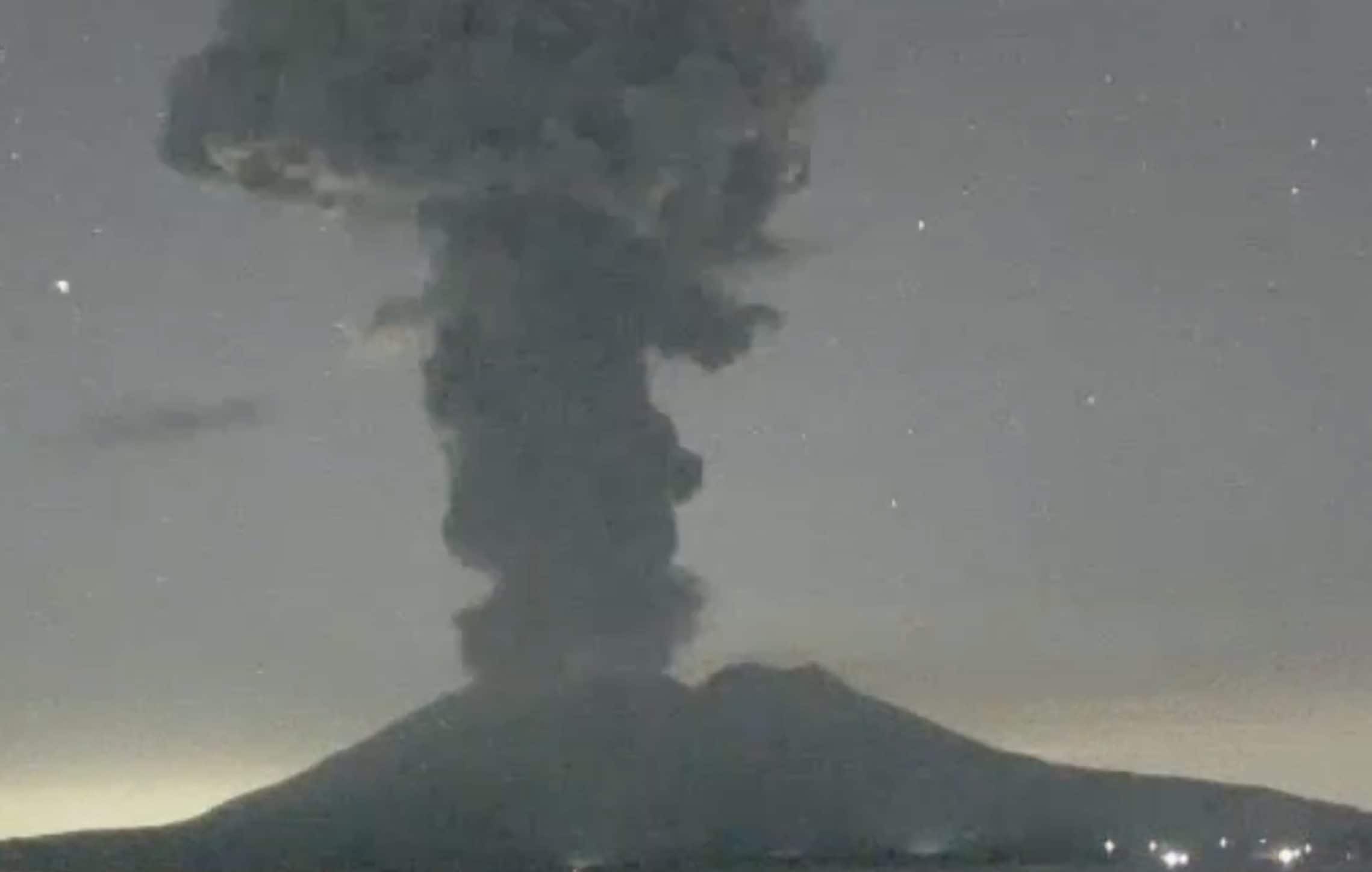
The Sakurajima volcanoin Japanhas once again made itself felt by generating three different eruptions on the Japanese island of Kyushu – in the south-west of the country – raising a column of smoke and ash up to 4.4 km high and causing the cancellation of over 30 flights from the airport Kagoshimalocated nearby.
According to what was reported by the Japan Meteorological Agency (JMA), the first eruption of the volcano was recorded by crater Minamidake around the01:00 on Sunday 16 November (local time, 5pm on Saturday 15 November in Italy), the second occurred around 02:30 and the third and final at 08:50.
The Kyodo news agency later reported that the episode constituted the first volcanic eruption to generate a column of ash higher than 4,000 metres in over 13 months: The JMA confirmed that volcanic ash moved northeastward, eventually hitting nearby Kagoshima and the prefecture of Miyazaki during yesterday.
Authorities reported no injuries or serious damage from the eruption and issued alevel 3 alertThat prohibits approaching the volcano and urges the civilian population to prepare for a possible evacuation, especially in the case of elderly or frail people.
But what are the characteristics of the Sakurajima volcano?
It is a stratovolcano approximately 1117 meters high which is located along the so-called Pacific Ring of Fireor an area characterized by intense volcanic activity. The origin of this volcano is linked to subduction between the Philippine and Eurasian plates: initially the mountain formed an island separate from the rest of Japan but continuous eruptions allowed its connection with the rest of the country.
