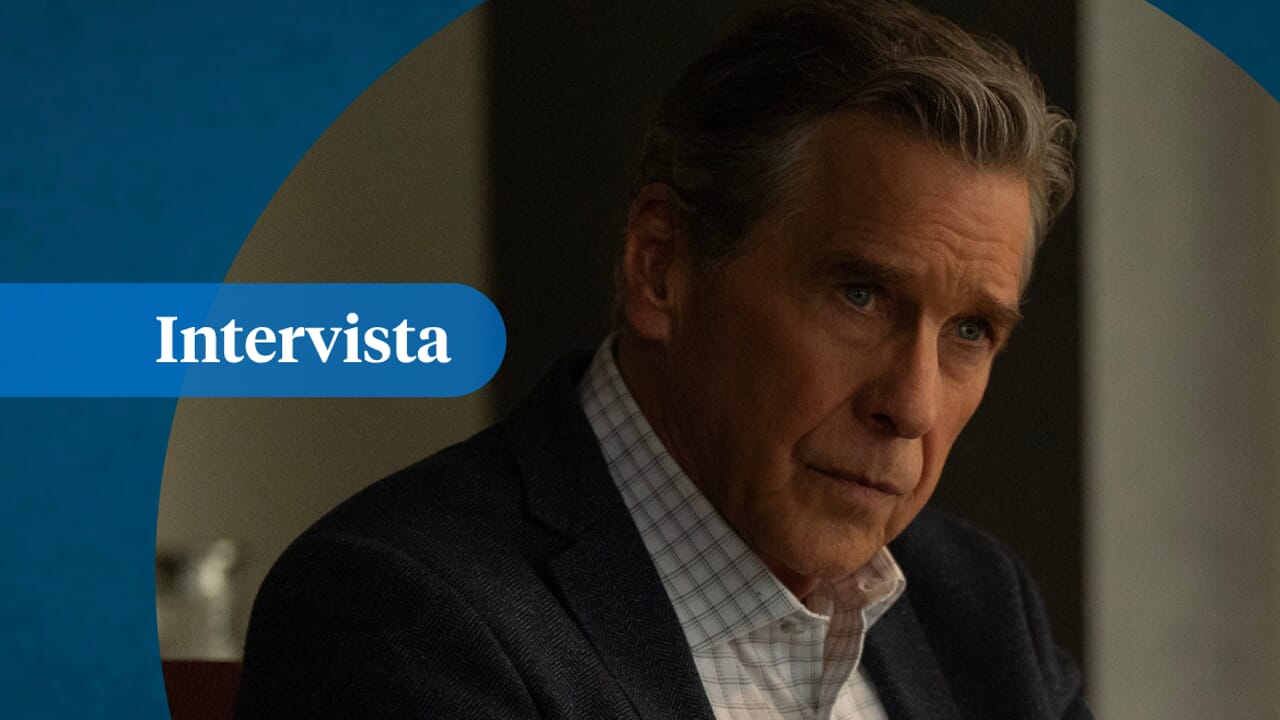
He is one of the protagonists of the series “Virgin River”, a huge success on Netflix and one of the longest-running titles on the streaming platform. Here he plays the role of Doc Mullins, the country’s historic doctor, a multifaceted and profound character who made him enter the hearts of the public. But Tim Matheson is not just “Doc of Virgin River”, he has a very long career behind him. After all, he started acting at 12 years old.
He played Vice President John Hoynes in the 1990s series “The West Wing” – a role that earned him two Emmy nominations – he starred alongside Clint Eastwood in the film “A 44 Magnum for Inspector Callaghan”, alongside Kurt Russell in the western series “Tales of the Frontier” and was the face of many series of the 2000s such as “Cold Case”, “Without a Trace” and “Shark”.
At 78 years old, the American actor, who is also a director and writer, spoke about himself in 360 degrees between the present and the past.
Tim Matheson meets his Italian voice actor
Tim, you are one of the protagonists of “Virgin River”. It’s a real hit on Netflix. Why do you think the public likes it so much?
“I think the world has become so fast-paced, politically crazy and social media bombards us with information whereas Virgin River is about a simple life, a simple town. It’s about people getting along or trying to get along with each other. It’s about being face to face with each other in a beautiful place. I think that’s what people love about the show. And I love the way people react when I meet them on the street – they love the show, it enriches their lives.”
Your character, Doc, has evolved a lot over the seasons. How would you describe his journey?
“Sometimes as people get older they withdraw into themselves and Doc had reached that point but working together with Mel, a young specialized nurse, made him look at life differently and he began to welcome change. He learned a lot from Mel, I think he found a daughter in her.”
And did you learn anything from your character?
“Oh, yes. He taught me what it means to be there for others. And it’s so important and precious. When you play a character like that, in some way, it touches a part of you. Doc encouraged me to be more aware of the importance of being helpful, of being open to others.”
Do you look a bit like Doc in real life?
“I think you find yourself in all the characters you play. And there are so many similarities to my own life that I drew on: Doc made a terrible mistake in the way he treated Hope at the beginning of their relationship. He cheated on her, he hooked up with someone else while he was married to her and ruined a relationship that was extremely precious to him. And I myself went through a similar situation when I was younger and not as wise as I hope I have become now.”
How much has the film and television industry changed since you began your career?
“I’ve seen it grow and evolve. Once upon a time everything was shot on film, now the technology has changed. But in reality it doesn’t matter what you shoot with, whether it’s an iPhone or a large 35 or 65 millimeter camera. What matters in telling a story is a good script, good acting, good direction, the truth and maybe humor. And these things don’t change.”
Perhaps the public’s enjoyment of it has changed.
“Streaming today is very different than it was for us on network TV. I remember with ‘The West Wing,’ it would air on TV and the next day people would say to you, ‘Oh my God, that episode last night was amazing.’ Now they watch the whole season in one weekend but we’re an impatient society and we want everything right away. So this is different but fundamentally I think it’s all the same.”
You make television, but do you like watching it? What do you like to watch when you’re at home?
“I love going to the cinema. The thing I like most about going to the theater or cinema is that you share that experience with a group of people and when others laugh they drag you along with them into a group atmosphere. I love Liam Neeson films. I love good action films and horror films. I like ‘Slow Horses’, Gary Oldman and I love good actors playing interesting roles.”
Is there a movie or TV series you would have liked to be in but didn’t?
“It’s funny because there have been so many shows that I’ve auditioned for and not gotten into, and you kind of forget about it. I auditioned for “Indiana Jones” but I knew I was too young for that part. I had just worked with Steven Spielberg, we got along really well and he wanted me to audition. So I auditioned with Karen Allen.
They called me and said, “Steven Spielberg and George Lucas want someone else, but George Lucas then made a point of telling me that I had the best audition of all but I was simply too young. And I thought, ‘How kind,’ because it helped ease the disappointment of not getting the role.”
But these things happen, you move on and do something else.”
You also wrote an autobiography. What can you tell us?
“It’s called “Damn Glad to Meet You”. It will be released in paperback in June. The book tells the story of when I started acting, when I was 12 years old. It offers advice to young actors on how to evolve and grow and what to focus on in this industry. But for me it is also an opportunity to tell stories of talented actors from the past.
I’m talking about Lucille Ball, Jackie Gleason, Bob Hope and others, like Dick Van Dyke and Debbie Reynolds, incredible characters that young people today often don’t know. And the lessons I learned from them are timeless. I wanted to pass these gifts on to the next generation of young actors as well.”
