Archaeologist Miles Russell proposes to identify Verica, ruler of the Atrebates in the 1st century AD, as a woman. The hypothesis is based on the name and monetary images, but presents several critical issues and is not shared by the majority of scholars.
Verica, the sovereign who between 15 and 42 AD ruled the Atrebates in southern England and who history records as the man – whose exile prompted Emperor Claudius to invade Britain – may actually have been a woman.
This is the hypothesis put forward by archaeological research conducted at Bournemouth University by the archaeologist Miles Russelldirector of field research at the university, and presented in an article in the magazine Current Archaeology.
Starting from one new interpretation of the coins and finds linked to VericaRussell suggests that it was not a king who led the Atrebates, but a queen: a reading that, if confirmed, would rewrite part of the history of the leaders of Iron Age Britain.
However, it is ahypothesis discussedwhich presents many critical issues and which currently affects most of the academic world does not share.
But who was Verica?
Ruler of the Celtic tribe of Atrebates, he reigned over a territory corresponding in part to the current counties of Hampshire and West Sussex, in southern England.
It is best known as “client king” of Rome, that is, a local sovereign allied to the Empire and linked to it by relationships of loyalty, and precisely for this reason it played a role anything but marginal in the history of the British Isles.
Around 40 AD, in fact, in the context of conflicts with the Catuvellauni, another British tribe settled further north, he was deposed and forced to leave Britain, finding refuge in Rome with the emperor Claudius (41-54 AD).
According to the Greek-speaking Roman historian Cassius Dio (155-235 AD), it was precisely Verica’s request for help, who wanted to take back the throne, to convince Claudio to intervene militarily on the island, starting the Roman conquest of 43 AD
But what are the clues on which Russell is based?
To support his interpretation, Russell first points to the name Vericawhich ends with the letter «to“, characteristic recurring in the female names of Celtic Britain of the time.
The same pattern is found in those of Boudica (60-61 AD), queen of the Iceni (tribes of present-day eastern England), e Cartimandua (51-69 AD), ruler of the Brigands (tribe native to what is now northern England).
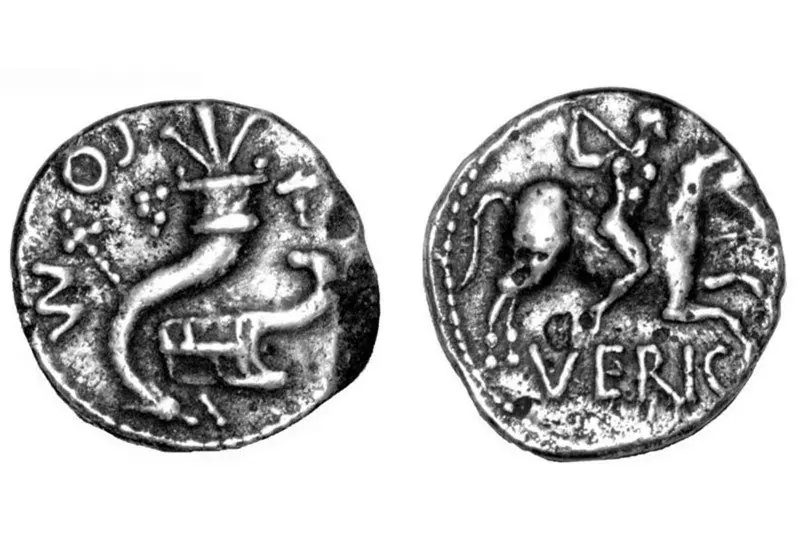
A second element concerns the coins issued by Verica, on which the Latin title appears rextranslated as «king». According to Russell, the term it would not necessarily have been reserved for men and it could also indicate one sovereign.
THE’main topic is made up of Images featured on coins: while other Iron Age British chieftains depicted male warriorsthose attributed to Verica would show naked female figures on horseback, armed with spears. Russell believes that these elements, taken together, support the identification of Verica as woman.
The hypothesis fits into a broader framework of research on the role of women in the societies of pre-Roman Britain.
In the article about Current ArchaeologyRussell also recalls the ancient DNA analysis conducted on 50 individuals buried in Winterborne Kingstonin Dorset (southern England).
The results identified kinship ties between numerous individuals and one mitochondrial lineage shared by several members of the group, compatible with one permanence of women in the community of origin and with the movement of men.
Data which, according to Russell, would help to outline the social context in which a woman could have exercised power. In this case, Verica would join Boudica and Cartimandua as third major female figure leading an Iron Age British population.
As suggestive as the theory proposed by Russell is, his cannot be ignored obvious critical issues. First of all, however rare, British male names ending in “a” are attested by sourceslike Cara, Docca, and Veda.
Furthermore, it must be taken into consideration that the name “Verica” comes to us through coins with a legend in Latinwith a shape that therefore it may have been adapted or declined to make it compatible with the language of the Romans.
Furthermore, the use of the male terminal “rex” on the coins of Verica could hardly be related to her being a woman: it is true that in ancient times in some cases female sovereigns they used the masculine term for thembut these are cases related to eastern world and in much older times.
The main argument used by Russell, namely the female warrior on horseback on a coin minted by Verica, is equally problematic.
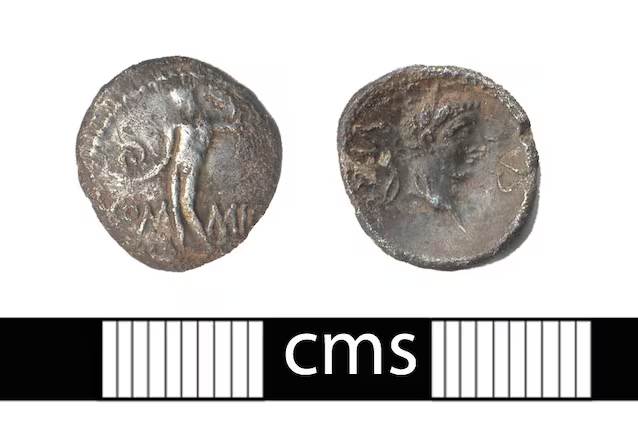
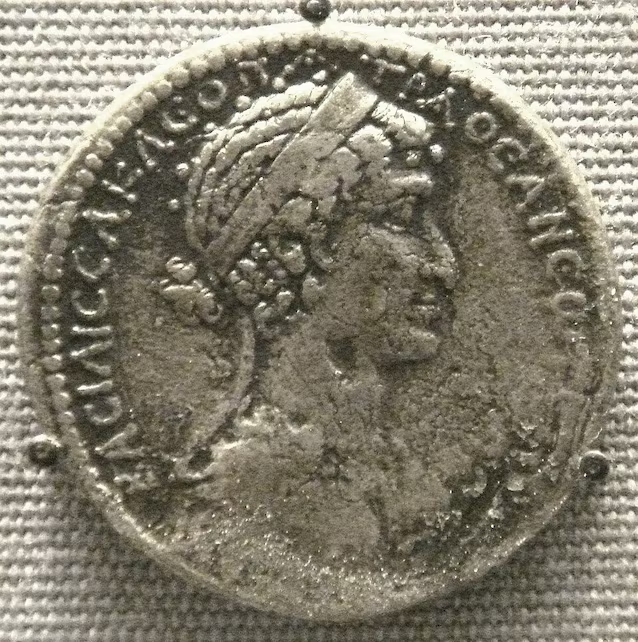
The iconographic repertoire adopted by Verica in its coinage is very varied and influenced by the Roman one. In many coin types, Verica himself is represented on the obverse, according to i typical models of Roman power: in profile, with male hairstyle and Adam’s apple.
The iconographic choices of the themes represented on the other coins, when they are not directly borrowed from the Roman repertoire, can have an infinite number of different interpretations.
A bare-breasted female warrior on horseback (assuming the level of detail in the coinage allows her gender to be distinguished) may simply have been a female warrior deityor a revival of well-known Mediterranean models, such as the Amazons.
Finally, the case of the Winterborne Kingston necropolis is extremely specificAnd it tells us very little about power dynamics in Iron Age Britain, without taking anything away to the depth of figures of great British sovereigns such as Boudica and Cartimandua.
