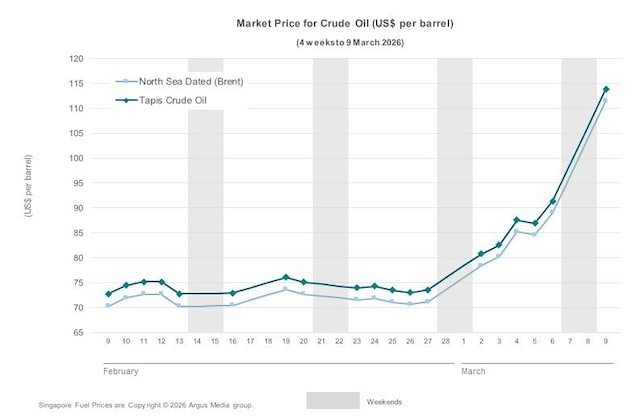
THE G7 finance ministers have asked the IEA for support in evaluating the release of the strategic oil reserves in possession of 32 member countries of the International Energy Agencyafter the war in Iran led the price of crude oil to exceed $100 for the first time since 2022.
As reported by the Agency itself, the States parties are in fact required to guarantee a oil supply equivalent to at least 90 days of importsintended to cushion price increases in the event of natural disasters or conflicts. Italy, for example, has 2.7 million strategic oil reserves.
This collective emergency system overall amounts to 1.2 billion barrels and according to US officials they would be needed on this occasion 300-400 million barrels (25%-35% of total stocks). At the moment the G7 has not yet made any concrete decisions and the discussion will continue in the next few days.
What does it mean to have oil supplies
The IEA aims to facilitate the coordination of energy policies of member countries for ensure the stability of energy suppliesespecially oil. The oil market is particularly vulnerable towards events such as natural disasters, technical accidents and geopolitical tensions. In order to respond to major supply disruptions, IEA member countries have an obligation to detain each a minimal supply of oilwhich was established on the basis of the average daily net imports of the previous calendar year. In particular, oil stocks must equal at least 90 days of net oil imports. Stocks can be in the form of either crude oil both of refined products: countries in which the refining industry is particularly developed will have more crude oil in stock, conversely those that import the majority of refining products will have stocks of refined products. Refined products are converted into crude oil equivalent, which is the amount of crude oil needed to produce a given amount of product.
When are strategic oil reserves used?
When one occurs severe disruption of oil suppliesthe IEA evaluates its impact on the market with the help of industry experts. If the situation is assessed as sufficiently serious to significantly undermine global energy markets, a meeting will be held to determine the need for acollective action by IEA countries. Since the IEA was founded in 1974, five collective actions have been taken: during the first Gulf War in 1991; after Hurricanes Katrina and Rita damaged oil platforms, pipelines and refineries in the Gulf of Mexico in 2005; during the civil war in Libya in 2011; after invading Ukraine twice, in March and April 2022.
How much are the strategic oil reserves?
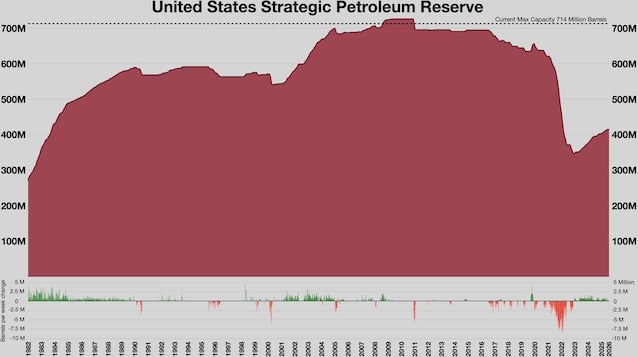
The total oil reserves of the G7 member countries at the end of 2025 they were equal to approximately 250-260 billion barrels: 163.1 billion belong to Canada, 83.72 billion to the United States, 1.5 billion to the United Kingdom, 67.58 million to France, 105.84 million to Germany, 578 million to Italy, 44.11 million to Japan. Of these reserves, those strategic according to the most recent data they amount overall to 43.5 million tons (one ton is equivalent to approximately 6.8 barrels). Italy holds 2.7 million, France 5.1 million, Germany 12.6 million. The United States holds approximately 415 million barrels, while Japan holds 260 million. As for the UK, the rules indicate supplies required for 90 days. Canada has no obligations as a net exporter. As regards the strategic reserves of the 32 IEA member countries, these amount to 1.2 billion barrelswhich is equivalent to just over ten days of global crude oil production. Added to these are a further 600 million barrels of industrial stocks held under government obligations. The overall global strategic reserves instead correspond to approximately 8.2 billion barrels.