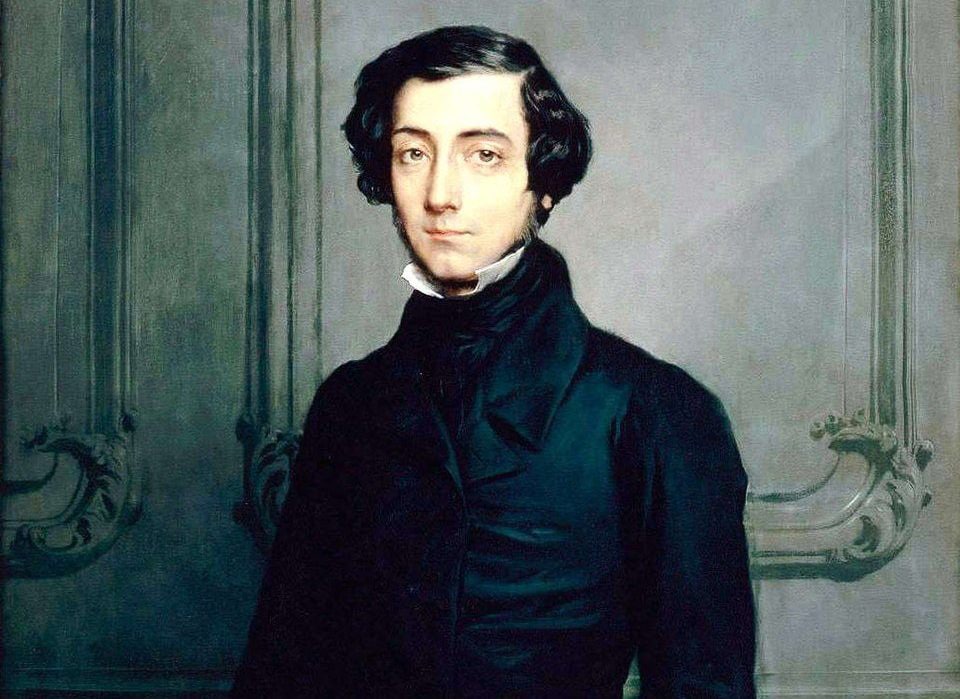
The prophecies of Alexis de TocquevilleFrench jurist and scholar, father of liberal thought, still resonate today with disturbing relevance. Yesterday, 10 March 2026, the President of the Republic Sergio Mattarella he recalled them during a lectio magistralis at the Teatro del Maggio Musicale in Florence, on the occasion of the 150th anniversary of the “Cesare Alfieri” School of Political Sciences of the University of Florence – an event in which he also received an honorary master’s degree in Politics, Institutions and Markets. Mattarella warned against the “dictatorship of the majority“, one of the scenarios identified by Tocqueville in the mid-19th century after studying the American democratic system: democracy, he warned, is not only a guarantor of freedom, but can also deny it. A future, the President recalled, “oscillating between democratic freedom and Caesarist tyranny”. The warning is clear: it is necessary Don’t let the world return to barbarism.
The thought of Alexis de Tocqueville and the concept of “dictatorship of the majority”
Alexis Henri Charles de Clérel de Tocqueville, was born in Paris in 1805: graduated in law, he became a magistrate at a very young age. Mindful of his family’s struggles during the French Revolution, Tocqueville was interested in popular participation in political events. In 1831 he left for the United States with the aim of studying the prison system, and this was the opportunity to closely observe the developments of democracy precisely in the place where, according to the standards of the time, it was most deeply rooted. The USA, in fact, declared its independence from the British Crown on 4 July 1776, creating a new organisational, political and social system.
Tocqueville’s studies became a book entitled its own Democracy in Americatoday the basis of liberal thought, published in two parts, in 1835 and 1840.
In this text he prophesied the concept of “dictatorship of the majority”taken up by Mattarella, that is, the risk that the majority rule of democracy – although based on principles that seek to affirm equality of law – if made absolute could over time undermine those same rights, because it risks silencing the “intermediate bodies”, such as free associations of citizens, religious organizations, local communities, etc., whose social and therefore political weight becomes increasingly smaller. majoritytherefore, it can become despotic And deny freedom rather than promoting and protecting it.
What are Tocqueville’s “prophecies” and what do they reveal
The “prophecies” by Alexis de Tocqueville are so called because the scholar, in his text, identified socio-political scenarios and developments that actually came true.
Among them, for example, Tocqueville analyzed that two powers were emerging in world politics: the United Stateswho based their politics on freedom and individualism and the Russiabased instead on centralized power and authority. One hundred years later, we have indeed witnessed the Cold War between the USA and Russia.
He also explained how the democracywith the passage of time it would have favored freedom, but also a blind individualism which would have led to less cohesive communities, and therefore to the disintegration of the “intermediate bodies” and a consequent one political apathy.
The lack of cohesion among citizens, the individualism based on the guarantee of freedom given by democracy and the presence of other powers which, on the contrary, do not guarantee freedom, would have led over time toincrease in the power of public opinion — also conveyed by the media — thus allowing the “dictatorship of the majority” to establish itself.
