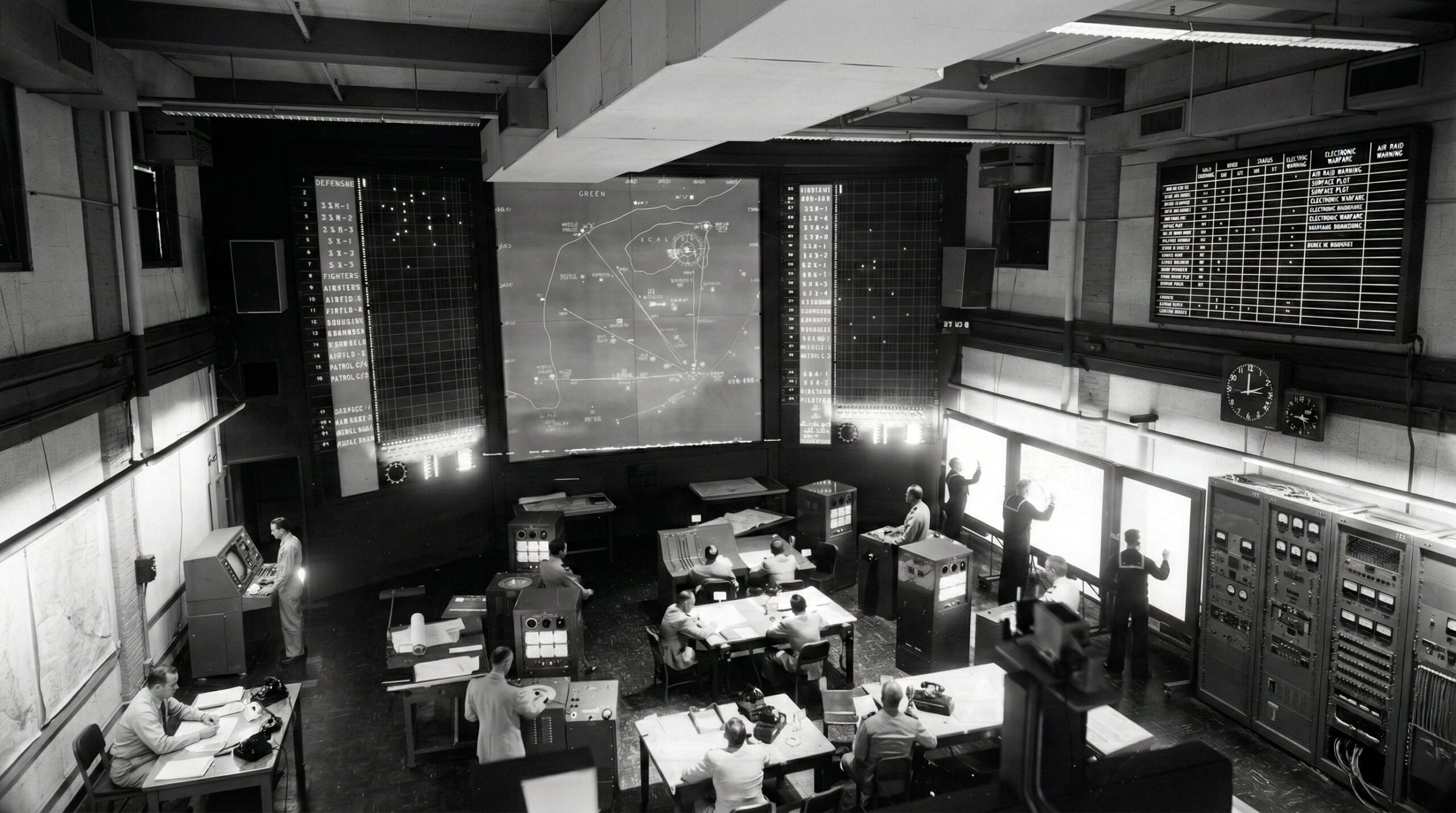
It has always been the main task of armed forces of all countries is to prepare to fight any wars and, to do this, the general states of armies are constantly engaged in the conception, recreation and concrete simulation of operational scenariosalso known by the English name of wargames. There has always been a heated debate on the level of realism that characterizes these simulations, but recent developments in the field ofartificial intelligence they could represent an important technological leap and create previously non-existent opportunities and allow new generations of officers to approach the battlefield in a completely new way.
In the beginning was the Kriegsspielthe first modern wargame
Although theoretical training methodologies in the art of war for military leadership have existed in every era, we will have to wait until 1824 because a Prussian officer, Georg Heinrich Rudolf Johann von Reisswitzpresented the first model of wargames in the modern sense of the term. Given the pragmatic nature of the officer corps of the Royal Prussian Army, this game was simply renamed with the term Kriegsspiel (“war game” in German).
Despite the premature death of von Reisswitz, who committed suicide in 1827 at the age of alone 33 years oldhis invention did not die with him, but soon became an integral part of the training course of the officers of the Kingdom of Prussia first and of the German Empire later.
The importance of Kriegsspiel in Germany reached its peak between the First World War and the Second World War, when the limits imposed by the Treaty of Versailles they made theoretical exercises the only means available to officers of the Reichswehr first and then of the Wehrmacht. Right through the Kriegsspiel they conceived and perfected the revolutionary and infamous doctrine of Blitzkrieg (literally “blitzkrieg”).
The wargaming in the world
Until 1870 the other great powers paid little attention to the Prussiabut the astonishing victory achieved by the Prussians against the France during the Franco-Prussian War totally changed the cards on the table. In fact, the Royal Prussian Armed Forces had no advantage over their opponents either in the number of soldiers or in training or armament; however their officer corps was the most professional in the world and had already been practicing the art of Kriegsspiel which, having thus landed in the Anglo-Saxon ecumene, became the wargames that we all know.
Each country has adopted its own particular approach to wargaming professionalgoing so far as to develop dedicated versions for the needs of ground forces, naval forces and, more recently, air and space forces. During the Cold Warthe best school in wargaming on a global level it was that Sovietthanks to the real experiences gained during the conflict, which were then also made available to the allies of the Warsaw Pact and, more generally, of all armies and communist revolutionary movements fighting against the West and its allies around the world.
At the same time, the wargaming saw a process of relative decline in United Kingdom and in United States of Americabut the bloody experiences learned during the so-called “limited wars” (first of all: the Vietnam War) quickly convinced the high military levels to make up for lost time, also helped in this sense by a new powerful event: the IT revolution.
The introduction of artificial intelligence: lights and shadows
The introduction of computer it revolutionized the world and, obviously, it also had its effects on the most recent developments in the art of war. If in 19th century Prussia i Kriegspiel they were none other than board gamesthe moderns wargames revolve around sophisticated computer simulationsthe same ones that have allowed the military computer games sector to be created from scratch over the last three decades.
The development ofartificial intelligence represents the latest and current stage of this evolutionary trend. Thanks to this support, the military can now analyze scenarios that were previously simply impossible to contemplate, for example aerial maneuvers so demanding that they push the human body’s ability to withstand it to the limit.
Furthermore, by knowing the tactics and operational doctrines of a possible enemy, Artificial Intelligence can play the role of “active attacker” putting planners to the test as if they were facing a real and reactive flesh and blood enemy fighting a real battle and not a pre-selected set of static scenarios.
Lastly, the development of Artificial Intelligence offers a glimpse of the possibility, especially for large and medium powers, of deploying powerful autonomous weapon systems who can do without it human control to accomplish the mission. This possibility is triggering heated debates both for its ethical implications and for the dangers connected to a possible loss of control, as already predicted in cult science fiction such as the saga Terminators.
