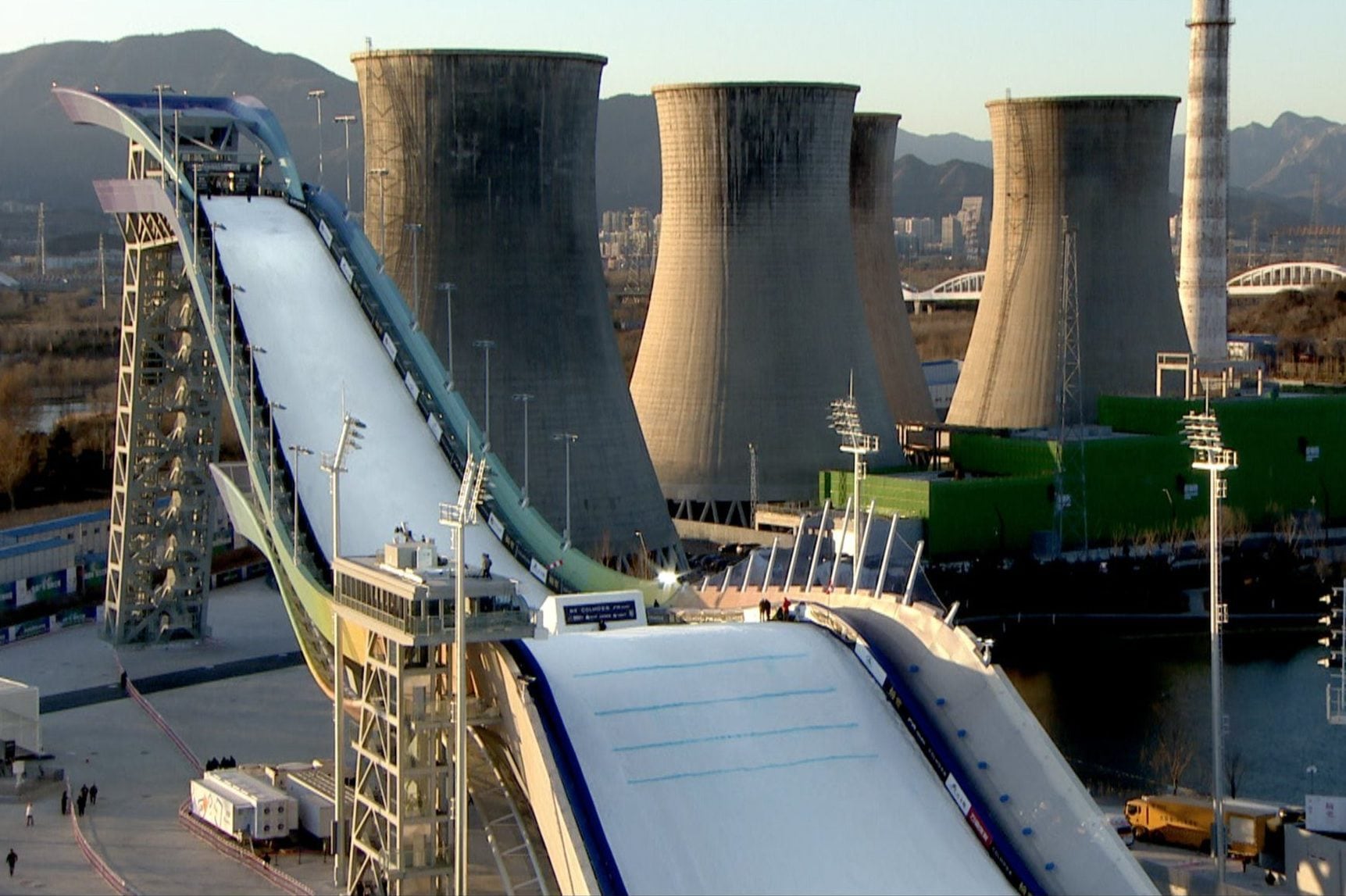
The moment a city or country obtains the assignment of Olympic Gamesthe public debate almost always follows the same script. On the one hand the enthusiasm for the event, on the other the fear that, once the brazier is extinguished, many expensive infrastructures built specifically to host the Olympic competitions will be abandoned. It is an image that over the years has become a cliché: the Olympics as a great but spectacular event unable to leave a positive legacy. To actually understand what happens to the Olympic infrastructures in the long term and how much truth there is in the prejudice of “cathedrals in the desert”, a long study was carried out by theOlympic Studies Centre of the International Olympic Committee, which analyzed the 982 plants used in 53 editions of the Games, from the first modern Olympics in 1896 to the Beijing 2022 Winter Olympics. How many permanent facilities were built specifically for the Games? How many of these have been reused, repurposed, or abandoned?
Between “cathedrals in the desert” and excellence in reuse: data
This great census made up of hundreds of inspections and consultations with the managers of the facilities includes not only the competition facilities, but also the stadiums of the opening and closing ceremonies and the Olympic villages. However, temporary structures are excluded, which by definition are dismantled at the end of the event.
The first data that emerges is surprising in its simplicity: 86% of the permanent Olympic facilities analyzed it is still in use today. A number which, alone, calls into question the idea that a large part of the Olympic infrastructure is destined for abandonment.
To be judged “in use”, the facility does not necessarily have to host high-level sporting events today, but can be reconverted for new uses: cultural events, concerts, fairs, conversion into commercial structures. The percentage of facilities in use increases as we approach the most recent editions of the Games, rising up to 94% if we consider the Games from 2000 onwards. This is because the concept of “Olympic legacy” in recent decades has explicitly become part of the candidacy criteria of the cities that propose to host the Games.
A practical example is theOval Lingotto in Turin: built to host speed skating at the 2006 Games, it was then used as an event and exhibition space, but it also hosted many high-level sporting events, from skating to indoor athletics, before returning to its original function and hosting skating again at the next Winter Games, those of 2030 assigned to the French Alps. It therefore emerges that the Olympic legacy is not only sporting, but also urban and social. Many facilities survive not because they continue to host Olympic finals, but because they manage to fit into daily life of the city that hosts them.
Even large systems last a long time
Another widespread belief is that it is especially the largest and most complex structures that become problematic after the Games. Stadiums, Olympic villages, velodromes, large swimming pools or facilities for very specific sports such as ski jumping or bobsleigh are often cited as examples of waste. Here too the data tells a different story. The study isolates 238 so-called “complex venues” and shows that the89% of them are still in use. In many cases these are the systems that benefit from more careful planning, because they represent investments that are too significant to be left to chance.
This does not mean that management is always simple or economically sustainable without difficulty, but it suggests that size and complexity, alone, are not a condemnation of abandonment.
The Italian experience: Cortina, Rome, Turin
Italy also offers interesting examples to understand how the Olympics can leave a lasting legacy. It was the first Italian city to host the Olympics Cortina d’Ampezzo in 1956. Of the systems created for that edition, the only one not used to date is the Trampoline Italy of the ski jumping, closed in 1990 and now being renovated to make it a sort of monument to the Games of 70 years ago. The ice stadium hosted the Olympic curling competitions and will be the scene of the Paralympic closing ceremony at the Milan-Cortina Games, while the Eugenio Monti bobsleigh track, closed in 2008, has been rebuilt for the 2026 Games.
Rome in 1960 it was the only Italian city to host the Summer Olympics and is often cited as one of the most successful cases, because it made extensive use of existing facilities or those placed in a consolidated urban context. The Foro Italico and the Olympic Stadium they are still central places for Italian sport and major events today, and together with the Sports Hall designed by Pier Luigi Nervi they are part of the 81% of infrastructures created for those Games that are still used today.
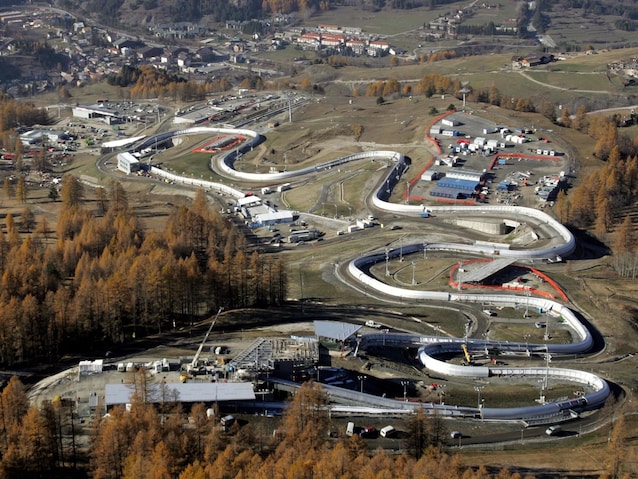
Turin 2006 it is probably the most discussed case, as well as the most recent and often taken as a reference for the Milan-Cortina Games. 87% of those venues are still in use, with a very positive legacy left in the city by spaces such as the Palaisozaki (now Inalpi Arena), which today hosts the ATP Finals and many international concerts, the Palavela or the Oval Lingotto. A different story when infrastructures in mountain areas are taken into consideration, with two important structures now abandoned: the bobsleigh track of Cesana and the Pragelato ski jumps.
Agenda 2020 and the paradigm shift
An important turning point came with theOlympic Agenda 2020 of the IOC, which radically redefines the way of conceiving the Games. The declared objective is to reduce costs and impacts, favoring the reuse of existing infrastructures and the use of temporary structures.
The results of this approach are already visible. Paris 2024 used almost exclusively venue already existing or temporary, Milan-Cortina has chosen a widespread approach throughout the Alpine arc to limit the creation of new infrastructure, while Los Angeles 2028 has announced that it will not build new permanent facilities.
Of the 982 venue permanent taken into consideration, that 14% that are no longer in use it has been largely demolished or replaced over time by new infrastructure with purposes other than the Olympic ones. Only 30 plantsout of almost 1000 analyzed, is currently closed or in a state of abandonment without an alternative function. A 3% which represents a statistical minority rather than the norm.
Considering these data, the Olympic Games can be considered as a accelerator of urban transformationquickly catalyzing investments that lead cities to deal with the issue of sustainability in the long term. The data does not automatically absolve all past Olympics, nor does it deny that problematic examples exist, but they tell a much more nuanced reality than the one that often dominates public debate.
