
Map the brain of a serial killeryou can … or at least that’s what some neurocriminologists are trying to do. Each serial killer has very different characteristics from each other: number of victims, motive, methods of execution of the crime. Scientific evidence, however, found common traits involving psychological, neurobiological and even genetic factors. Child trauma, reduction of gray matter, alteration of a specific gene (5-HT1B), disproportionate activation of some neurotransmitters seem to be the main responsible for violent behavior, reduction of the sense of remorse and empathy.
History of the study on serial killer
Looking for common traits in serial killers is not a totally recent ambition. In the nineteenth century, Cesare Lombroso (1835-1909), Italian doctor and anthropologist to whom the merit of having founded the so-called criminal anthropology, developed the theory of “criminal man born “claiming that the criminals presented some Physical traits and distinctive anatomical which made them recognizable and which naturally predisposed them to deviance. According to Lombroso, signs like elusive forehead, pronounced jaw, large cheekbones, large and asymmetrical ears, bruised and close eyes, gathering nose, low stature and other physical peculiarities, they were clues to a sort of “atavism“: A return to primitive stadiums of the human being. In practice, the criminal was considered an individual left back in evolution And therefore inclined to violent conduct.
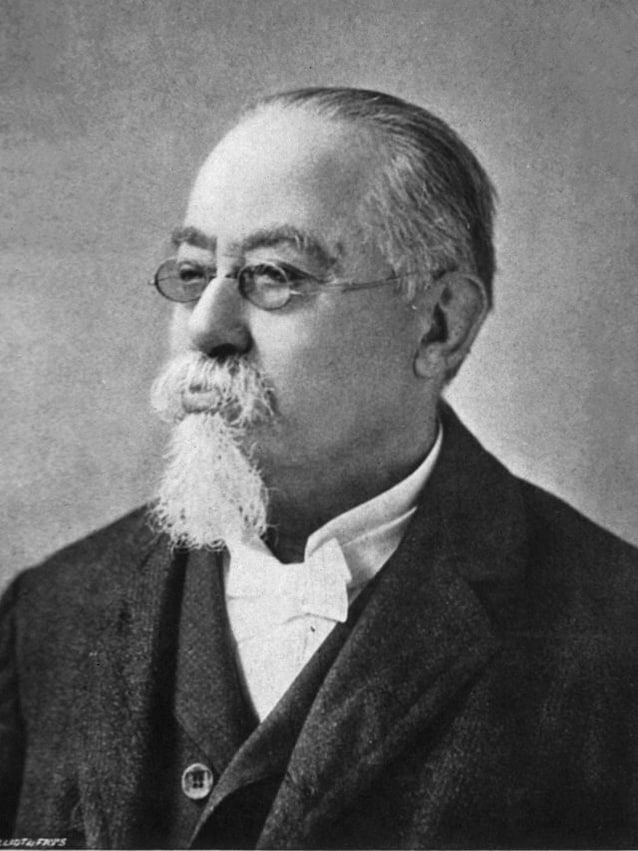
These ideas are obviously outdated today, not only because without scientific basesbut also because they are simplifying and stigmatizing. However, they contributed to promoting the idea that criminal behavior could be the subject of scientific study And they inspired subsequent research on the origin and nature of the crime.
To date, in fact, thanks to the Neuroimmagine techniques And to the study of psychological municipalities, neurocriminologists begin to provide the first responses on a scientific basis concerning the origin of the criminal behavior. What emerges is that behind a serial killer there is never a single factor, but a complex combination of psychological, neurobiological and even genetic causes.
Psychological factors
One of the main factors considered as triggering the conduct of the serial killers is to have suffered anparticularly traumatic childhood. Data in hand, over 90% of serial killers have been the victim of violence, abandonment experiences or have undergone sexual abuse (from strangers or family people). Living in a violent family context can generate a experience of in children constant fear; This scenario has as a psychological consequence to repress feelings, anesthetize emotions to defend themselves from pain and limit the development of empathy. In a study of 62 male serial killers, it was observed that 48% had been abandoned by the reference figures. It has also been observed that minors having a parent in prison and/or considered socially dangerous present greater levels of crime and aggression.
There are also three other factors connected to serial murder: Pyromania, cruelty to animals and child urinary incontinence. More than 60% of the serial killers would have suffered from night enuresis during childhood and almost everyone would have tortured animals tortured. Studies were conducted in which 153 subjects who tortured animals were analyzed and compared them to a control group. Those who tortured animals had a five -time higher probability of committing acts of violence such as aggression, rape or murder. As for Pyromania, there are no specific neuroscientific data; However, clinical studies show that this disorder appears in greater frequency in antisocial and psychopathic personalities and therefore already inclined to criminal behavior.
Neurobiological factors
The modern techniques of magnetic resonance imaging have shown that in many serial killers there are brain changes. A Reduction of gray matter in the prefrontal cortexseems to compromise impulses control. It is like having a less effective inhibitory brake. A study conducted on criminal psychopaths, in fact, observed a reduction of 22.3% of the prefrontal gray matter and an alteration in limbic system (deputy in the regulation of emotions), to explain the lack of empathy and the sense of remorse. There neurobiology It also reveals to us how greater activations are involved than norepinephrineimplicated in aggressive pipes, together with adrenaline and dopamine.
In general, there is an agreement in attributing to theamigdala (which is part of the limbic system) a key role in the processing of moral emotions: When this area of the brain works in an altered way, a reduction of moral sense, a weak sense of remorse and empathy and a lower ability to distinguish what is right and what is wrong is observed. This imbalance can encourage the emergence of criminal behavior. To simplify, it is as if this altered mix of neurotransmitters translated into an ineffective impulses control, greater ease to activate reactions of anger and aggression and, finally, pleasure and gratification in the violent act.

Genetic factors
From very recent studies and still in the investigation, they hypothesize possible genetic predispositions to the behavior of the serial killer. An example is the alteration of the 5-HT1B genewhich regulates the serotonina fundamental neurotransmitter in controlling the aggression of mood. Mutations or variants of this gene may increase the vulnerability to aggressive behavior, Especially if associated with environmental trauma and brain dysfunctions.
It is important to underline that not all people who have experienced childhood trauma have brain alterations or have particular genetic variants become serial killer. Most people with these characteristics lead a normal life. However, research has shown that there is a statistical connection: as many risk factors add (trauma, biological vulnerability and unfavorable social context), The probability that criminal behaviors emerge significantly increases. Who knows if Jack’s magnetic resonances The Ripper, or Dahmer or the monster of Florence could have guarded us! Perhaps science could not have foreseen the course of their life, but it reminds us that evil generates chains of consequences, and understanding it is the first step to break them.
