The debate on the use of the bisphenol A (BPA) in products in contact with foods and drinksafter Professor Matteo Bassetti (director of the Infectious Diseases Clinic of the San Martino Polyclinic in Genoa) returned to discuss the topic in a post on Facebook. The European Union, in reality, had already prohibited the use of this substance in December 2024: the ban followed the latest scientific evaluation of the European Food Safety Authority (EFSA) which in April 2023 had reduced the tolerable daily threshold (TDI) of BPA to 0.2 nanograms per kilo of body weightcompared to the previous temporary threshold of 4 micrograms per kilo of body weight: a reduction of approximately 20,000 times!
In fact, EFSA has found, in addition to the potential of endocrine disruptor for which BPA is particularly famous, a high risk to the immune systemwith the possibility of developing pulmonary allergies and autoimmune diseases. To allow industries, especially small and medium-sized enterprises, to adapt to the legislation, they were given 18 or 36 months of adaptationbased on the compound to be replaced.
What is BPA and what is it for: the history
Bisphenol A (BPA, for fans of the nomenclature 4,4′-isopropylidenediphenol) is a substance that we have known for over a century and is mainly used in production of plastics and resins. It was synthesized for the first time in 1891, but remained without practical applications for a long time until in the mid-1930s, the English doctor Edward Charles Dodds took it out of the drawer, discovering its activity. estrogenic while trying to develop a synthetic estrogen. From here perhaps one could have guessed that, by mimicking the effects of a hormone, perhaps it was not so safe. But it wasn’t like that. From that moment on its history can be defined in a few words: from riches to rags.
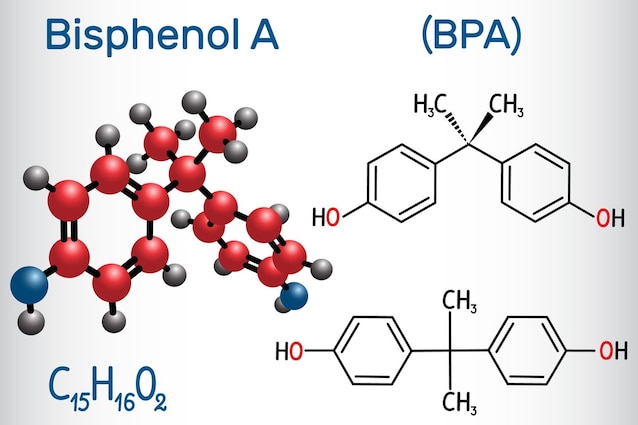
It never became a drug, but in the 1950s American and Swiss chemists used it to synthesize the first epoxy resinsand at the end of the decade, in 1957, Bayer chemists used it as the main building block (monomer) of polycarbonatebasically long chains of BPA. Thus one was obtained hard plastic and resistant, transparentlight and economical and was exploited literally in every field: from electronics to the automotive industry, from safety equipment to food containers.
During the twentieth century, BPA became one of the most produced chemical compounds in the world and is used not so much on its own, but as a precursor in the synthesis of other materials. The problem arises when these materials come into contact with food. In these cases, as increasingly documented in recent years, small quantities of BPA can pass from containers to food (in technical jargon, it is called migrating) and finally into our body, creating quite a few health problems. All this has inevitably (e.g fortunately) led to increasingly stringent regulations on products containing BPA and its derivatives, up to the current ban.
Where is BPA found?
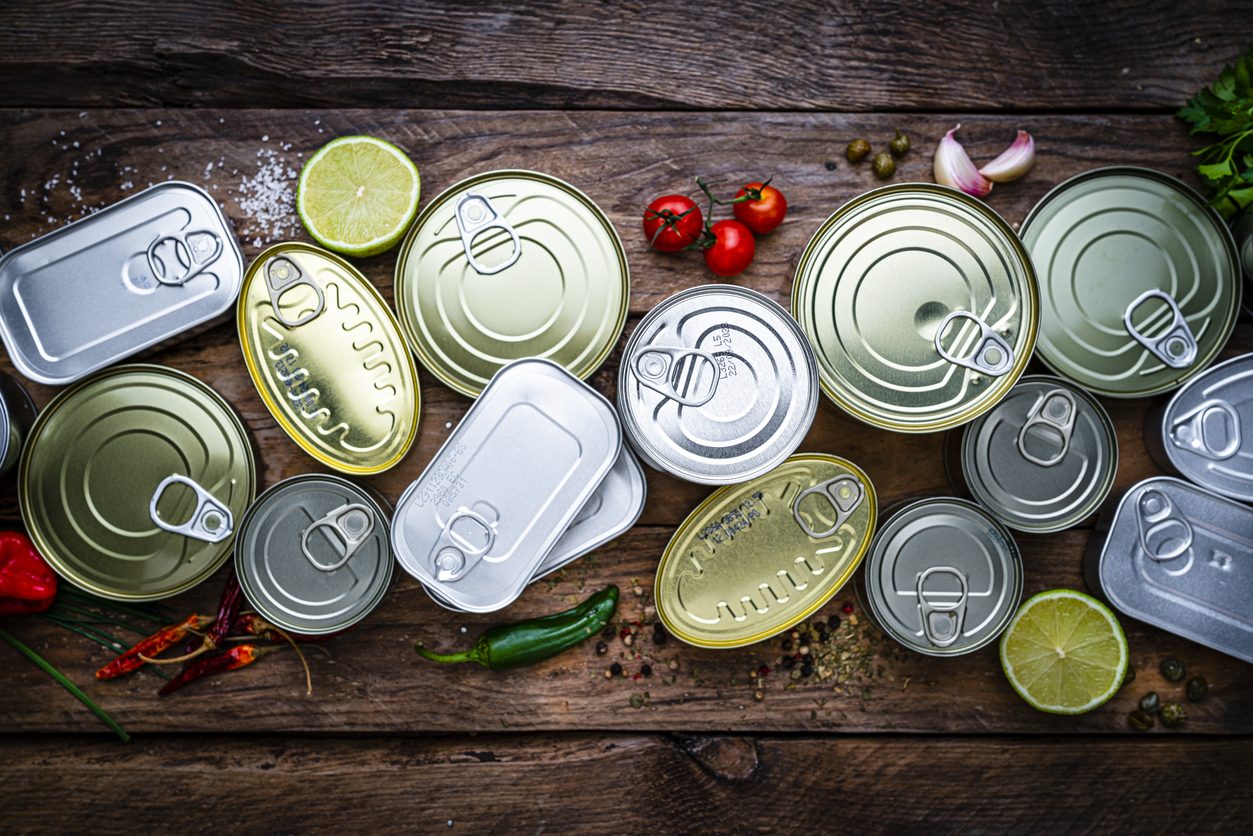
BPA is almost everywhere. Like polycarbonate, it is found in plastics of food containers, in cake and biscuit moulds, in kitchen utensils, in reusable plastic bottles, such as those used in water tanks. Epoxy resins produced from BPA are instead used as paints and internal and external coatings of cansboth those for drinks and those used to preserve food, metal cans, and industrial tanks for food. It can also be found in inks from printing (for example the receiptswhere however it has already been banned since January 2020), adhesives and other materials that make up food packaging.
What health risks does it pose?
BPA is classified as endocrine disruptordue to its ability, when it enters the organism, to mimic estrogenaltering the hormonal balance. According to what was reported by the Istituto Superiore di Sanità, and as confirmed by EFSA analyses, BPA can interfere with the development of reproductive, nervous and immune systems. Toxicity appears to be limited in adults, and those who pay the most are fetuses and newborns: given that their ability to metabolize foreign substances has not yet fully matured, exposure during fetal development and early childhood makes them particularly vulnerable to the toxic effects of this molecule.
However, the main risk that led to the December 2024 ban concerns the immune system. The 2023 EFSA assessment, carried out by analyzing more than 800 studies published from 2013 onwards, found that laboratory animals had an increase in helper T lymphocytes (a type of white blood cell) in their spleen after being exposed to BPA. Although they play a key role in cellular immune mechanisms, their abnormal increase can favor the development of allergic lung inflammation and of autoimmune diseases.

Following these new data, EFSA has established the tolerable daily threshold (TDI) of BPA a 0.2 nanograms per kg of body weightand according to current exposure data, we are all well above this threshold. Hence the ban.
What does EU legislation require and why are the products still on the shelves?
On 19 December 2024, the European Commission adopted Regulation (EU) 2024/3190, which prohibits the use of BPA in all materials and articles intended for contact with food. The ban also involves derivatives of BPA and similar compounds: so there is no risk of it being replaced with something that would essentially have the same negative effects.
The regulation did not come into force immediately, but was foreseen adjustment period to allow companies to adapt to new regulations and avoid an interruption in the distribution of these products throughout Europe. Imagine the entire “canned food” department disappearing from one day to the next!
For most products, the adjustment period is 18 months from entry into forceand should therefore expire in June 2026. During this period, companies can continue not only to market items already in stock, but also to produce others (and sell some) according to the old rulesbut they must organize themselves to move on to the new formulations.
As can be read in the Regulation, some food packaging, especially those in contact with acidic products, such as processed fish products (such as canned tuna or sardines), are more difficult to replace and therefore the adaptation period is extended to 36 months.
Exceptions: in which cases BPA can still be used
BPA is used in the production of m componentsmicro and ultra-filtering membranes or for reverse osmosis used in the food industry. These membranes are essential for ensuring the safety of, for example, dairy products, filtering out viruses, bacteria, heavy metals and pesticides. The migration of BPA in these contexts is considered negligible and since there are no alternatives anyway, neither use remains permitted.
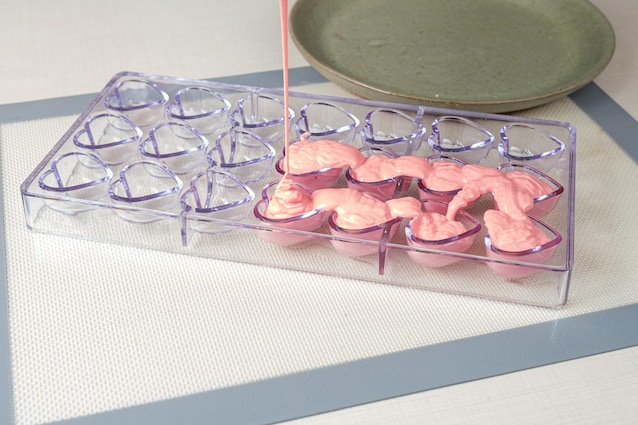
The same applies to some reusable components in professional food production equipment (candy moldsgaskets, etc), but for a different reason. Replacing all equipment immediately would entail disproportionate costs, especially for small and medium-sized businesses. In both cases, the long-term goal is replacement with safer alternatives.
The previous stages of the bans
The legislative history of BPA is an interesting example of how European food safety and control works. Before arriving at the 2024 decree, there were in fact increasingly stringent bans on the use of this compound. The first regulatory push against BPA dates back to 2011, when the European Directive 2011/8/EU banned the production of polycarbonate baby bottles containing BPA, a targeted measure out of concern for the vulnerability of newborns.
The 2015 EFSA evaluation identified, as a provisional value, the tolerable daily intake of BPA at 4 micrograms per kg of body weightor. A few years later, the European Regulation 2018/213 in 2018 introduced a specific migration limit of 0.05 mg of BPA per kg of food and expanded the ban to glasses and polycarbonate bottles for infants and young childrenextending the restrictions also to paints and coatings of packaging intended for baby food.
