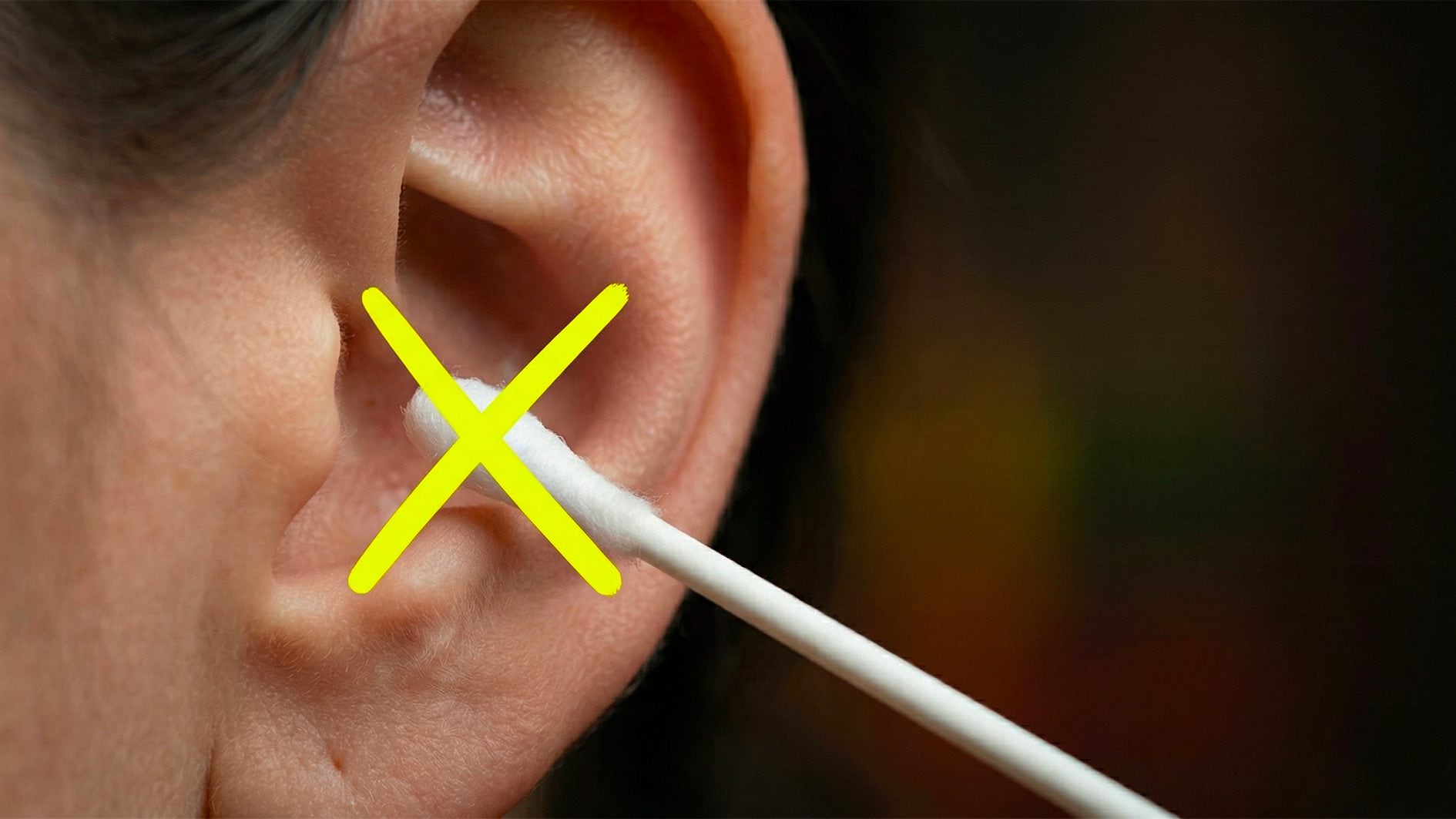
How many times have we found ourselves cleaning our ears and wondering what that yellowish waxy substance that accumulates in the ear canal is for? Earwax or earwax in English from a chemical point of view it contains lipids, proteins and other chemical compounds. It is often perceived as something unpleasant that should be eliminated as soon as possible. Yet it is one of the most useful secretions produced by our body, with a precise and well-studied role. It is, in fact, a natural waxy substance produced by our body in the ear clean, protect And lubricate the external auditory canal. There are two types of earwax in the world: dry and humiddetermined by genetics: this is established by a variant of ABCC11 gene. Regarding cleaning, the guidelines ofAmerican Academy of Otolaryngology do not recommend the use of cotton buds which, instead of cleaning, push the earwax even deeper, putting the health of the eardrum at risk.
How earwax is formed and what it is used for
Earwax is a complex mixture produced by two types of glands present in the external auditory canal: the sebaceous glandswhich secrete sebum, and the ceruminous glandswhich produce a watery secretion rich in active substances. Added to these are keratinocytes, skin cells that naturally shed inside the duct. The result is a dense substance, with a color that varies (in healthy conditions) from yellowish-white to orange-brown, which covers and protects the entire ear canal.
Earwax serves a function protective. It traps microorganisms, dust, sweat, dead cells and hair, preventing them from reaching the tympanic membrane. However, it is not limited to acting as a “mechanical filter” but, being slightly acidic (pH around 6) and containing antimicrobial substances, it is also a chemical barrier against bacteria and fungi.
Under normal conditions, earwax does not accumulate indefinitely. Thanks to jaw movements – such as those we make when chewing or speaking – it moves towards the outside of the duct, where it can mix with hair and other particles before falling out or being removed naturally.
Types of earwax: dry and wet
One of the lesser-known aspects of earwax is that its characteristics are determined by genetics. There are two types of earwax: humid And dry. The gene responsible for the presence of one or the other in each of us is called ABCC11and is located on the chromosome 16. Depending on the variant inherited, a person will produce earwax of one type or another.
The earwax humidrich in lipids, is soft and sticky, yellow or brown in colour: it is the most widespread type in populations of European and African origin. That dryon the other hand, is gray or light brown, crumbly and with a much lower lipid content: it is the most common variant in Asian populations.
Ear cleaning: cotton swabs are not recommended by the AAO
Despite being among the most common personal hygiene items in homes, cotton swabs are not recommended by all major international medical authorities. As reported by the guidelines ofAmerican Academy of Otolaryngology – Head and Neck Surgeryinserting the cotton swab into the ear canal does not remove the earwax, but it pushes him deeperrisking forming a cork. In more serious cases, a sudden movement can cause abrasions, infections or even perforation of the eardrum.
According to a study published in The Journal of Pediatrics and cited by the portal of National Federation of Medical Associations (FNOMCeO), from 1990 to 2010 in the United States beyond 263,000 children and young people under 18 have ended up in the emergency room for ear injuries caused by the use of cotton swabs.
As the Cleveland Clinic (world-renowned hospital excellence), in the vast majority of cases the ear it does not need to be cleaned: earwax migrates outward on its own. At most, it is possible to gently wash the external auricle with soap and water, without ever introducing anything inside the canal.
However, it may happen that it accumulates in excess to the point of obstructing the ear canal, causing a sensation of muffledness, hearing difficulties, buzzes (tinnitus) or nuisance. In these cases, the advice is always to contact your doctor or a specialist.
