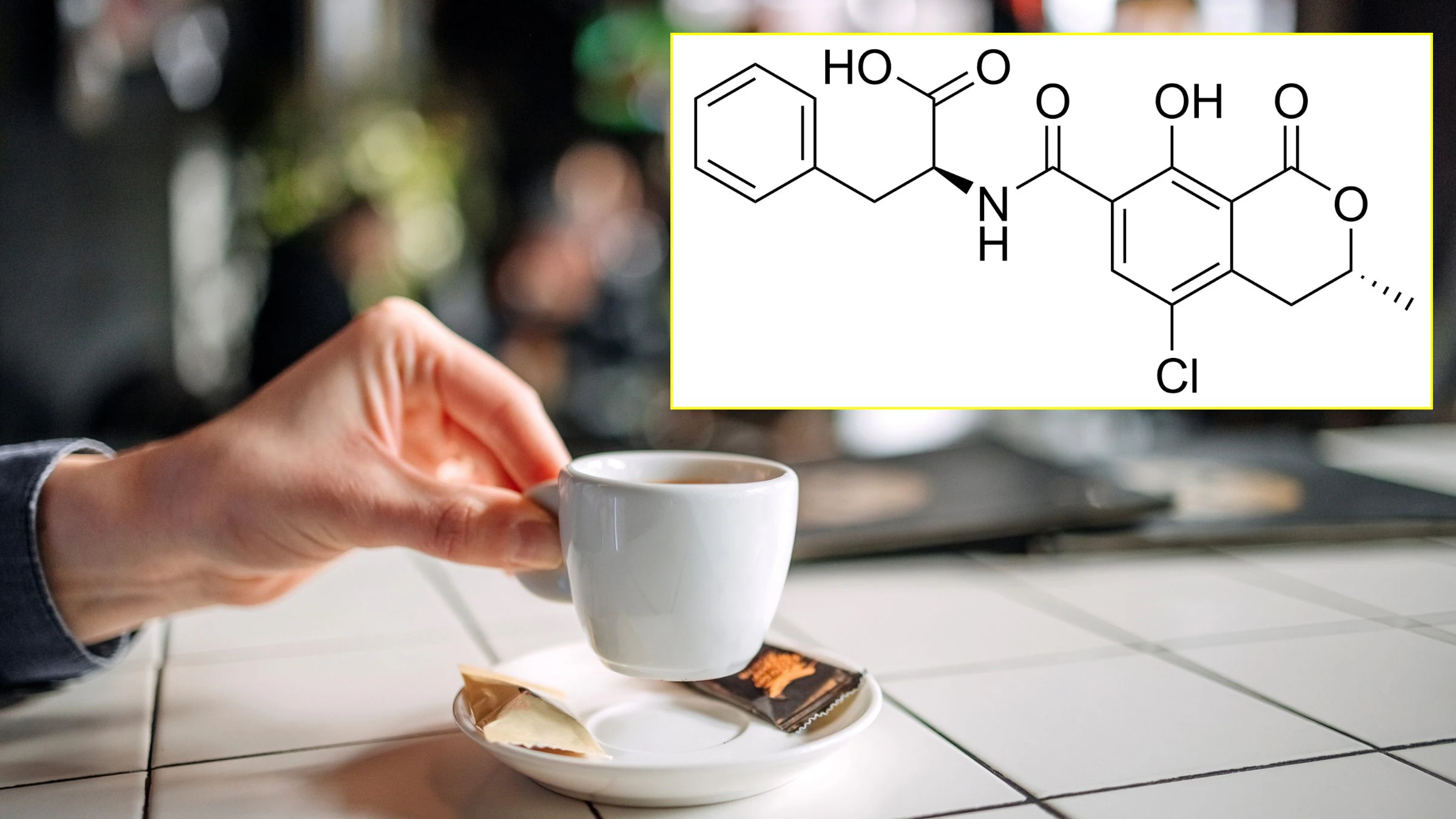
The Ministry of Health has published the official recall of a batch of ground coffee (Bialetti “Perfetto Moka” flavored with caramel) due to the presence of ochratoxin A beyond the legal limits. It is a natural mycotoxin produced by some fungi of the genus Aspergillus and Penicillium in some incorrectly stored agricultural preserved products such as cereals, coffee beans, cocoa beans and grapes. The measure concerns exclusively the 250 gram packs of the lot LC5 BD149Twith a minimum shelf life set at 29 May 2027, is not a generalized recall of all the packages produced. If you have this specific product at home, as the document specifies, you must not consume it and you must return it to the point of sale.
What is ochratoxin A and where is it found?
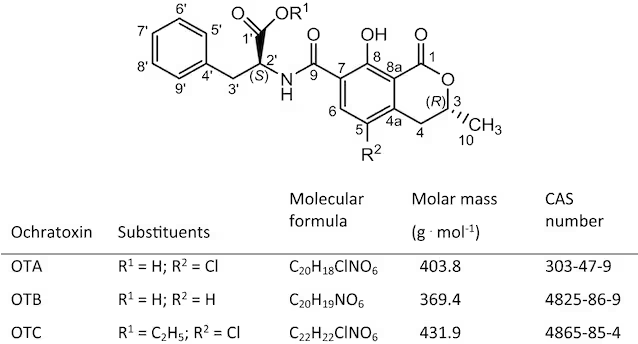
THE’ochratoxin A (OTA) is a mycotoxin, that is, a toxic substance produced in nature by the metabolism of some mold. Specifically, it is produced from mushrooms of the genera Aspergillus And Penicilliumabove all A. ochraceus, A. carbonarius And P. verrucosum. These organisms proliferate along the production chain (from the plant to storage in warehouses) if humidity levels are too high or in general they are subjected to inadequate conservation, contaminating various products such as cereals, dried fruit, cocoa, wine and, indeed, coffee. As explained in the EFSA (European Food Safety Agency) technical document which evaluates the risk of ochratoxin in foods, the high temperatures of roasting (over 180°C) partially sterilize the beans, eliminating the problem. However, heat destroys between 70% and 90% of the toxin. The remaining fraction survives thanks to a solid bond with the complex carbohydrates (polysaccharides) of the grain.
What happens is that during the extraction and preparation phase (infusion, espresso, filtration) the hot water used to prepare the coffee breaks these chemical bonds, releasing the toxin into the drink. The amount of OTA that ends up in the cup depends on how much water we use: a transfer of 54.9% for a long coffee, 32.9% for an espresso which goes down to 22.7% for a small coffee.
What are the real risks to human health
From the point of view of human health, the problem of ochratoxin it is not acute toxicitywhich is why EFSA reassures that drinking a contaminated cup does not cause immediate intoxication. The main risk is thechronic accumulation: once in circulation, the OTA hooks up to thealbumin (up to 99.98%), the main transport protein present in the blood. Only 0.02% circulates freelymaking disposal very slow. The time to halve its concentration (half-life) in the human body is in fact approximately 35 days. In practice, being absorbed very quickly but eliminated extremely slowly, repeated and close intakes do not have time to be “disposed of” and tend to add up.
The target organ of this accumulation is the kidney (nephrotoxicity). The toxin enters the kidney cells by taking advantage of the entrance doors already present and normally used to extract the waste to be eliminated from the blood, the inorganic anion transporters (OAT) oi ATP-dependent transporters. This is why, in studies on various animal species (mice and pigs), it is precisely this organ that shows damage first, up to the appearance of kidney tumors in rodents at the highest doses. Although the damage is established in these experimental models, there is still no direct evidence for humans and the European Authority specifies that the risk could be overestimated on the basis of the epidemiological studies currently available.
Precisely because the mechanism of action is not entirely clear and more recent studies have suggested that OTA could be genotoxic by directly damaging DNA, in 2020 EFSA overcame the old “tolerable weekly dose” (the TWI of 120 ng/kg of body weight today no longer valid) taking a more conservative approach based on exposure margin (MOE). This is a very large safety “buffer”, which requires that daily exposure to ochratoxin be at least 10,000 times lower than the minimum dose capable of causing the development of tumors in laboratory animals.
Precisely to avoid the risks associated with long-term exposure, the European Union (Regulation 2023/915) has set very strict limits: 3 micrograms per kilo for roasted coffee and 5 for instant coffee.
