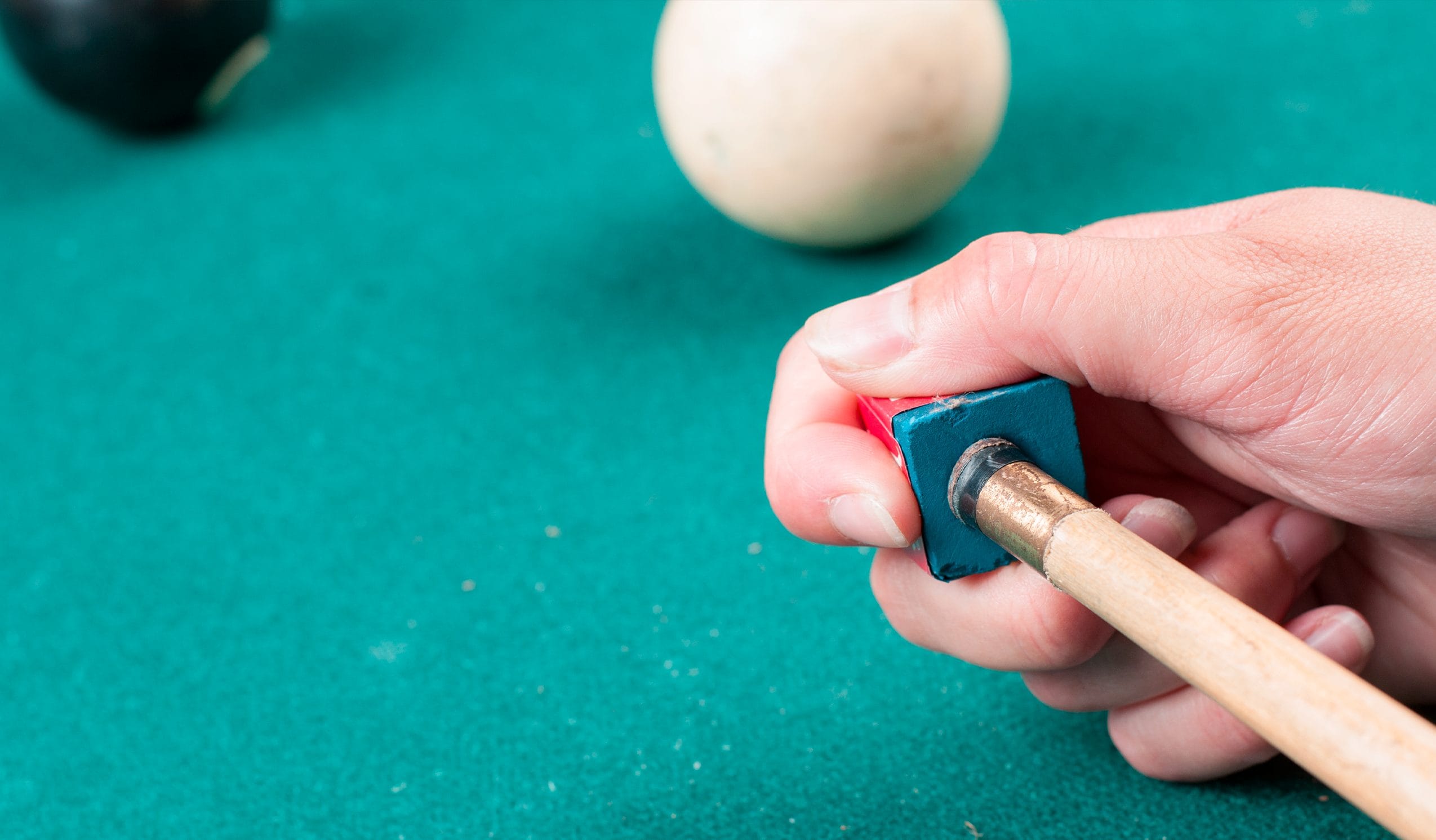
Anyone who has ever played billiards you will surely have noticed that there are always gods present next to the table small colored chalk cubes which – as many films and TV series have taught us – must be rub yourself on the tip of the cue. But what exactly is this practice for? Its main purpose is to improve friction between the tip (also called cuoietto) and the ball.
Without the chalk in fact it is possible that the cue slips on the ball, causing shots imprecise – and this is a problem especially at a competitive level or when you want to impart particular effects to the shot. Using chalk instead, yes improves griplimiting errors. But be careful: when we talk about “plaster” from pool, we’re not actually talking about plaster strictly speaking, that is, of calcium sulphate. There formulation of billiard chalk varies from company to company but all are roughly based on the patent of Hoskins and Spinks of 1897. Here la is indicated as the main component silica (SiO2), with a small percentage of binders and of granular materials, such as the corundum, an aluminum oxide. Over time, dyes have also been included, in order to have different color variations of the same product.
This mix of ingredients allows you to obtain a material capable of join to leather of the cue and to have the right grip with the billiard balls – which, at the time the patent was filed, were still made of ivory.
Obviously There is not just one type of billiard chalk: depending on the composition, cubes with different properties are obtained. Different disciplines of billiards, such as carambola And snooker, require different types of chalk: this is linked to the fact that the weight of the balls is variable and each discipline requires different effects to be imparted. Furthermore, to ensure correct performance of the plaster, it is best not to limescale too much during its application, so as to distribute it evenly.
