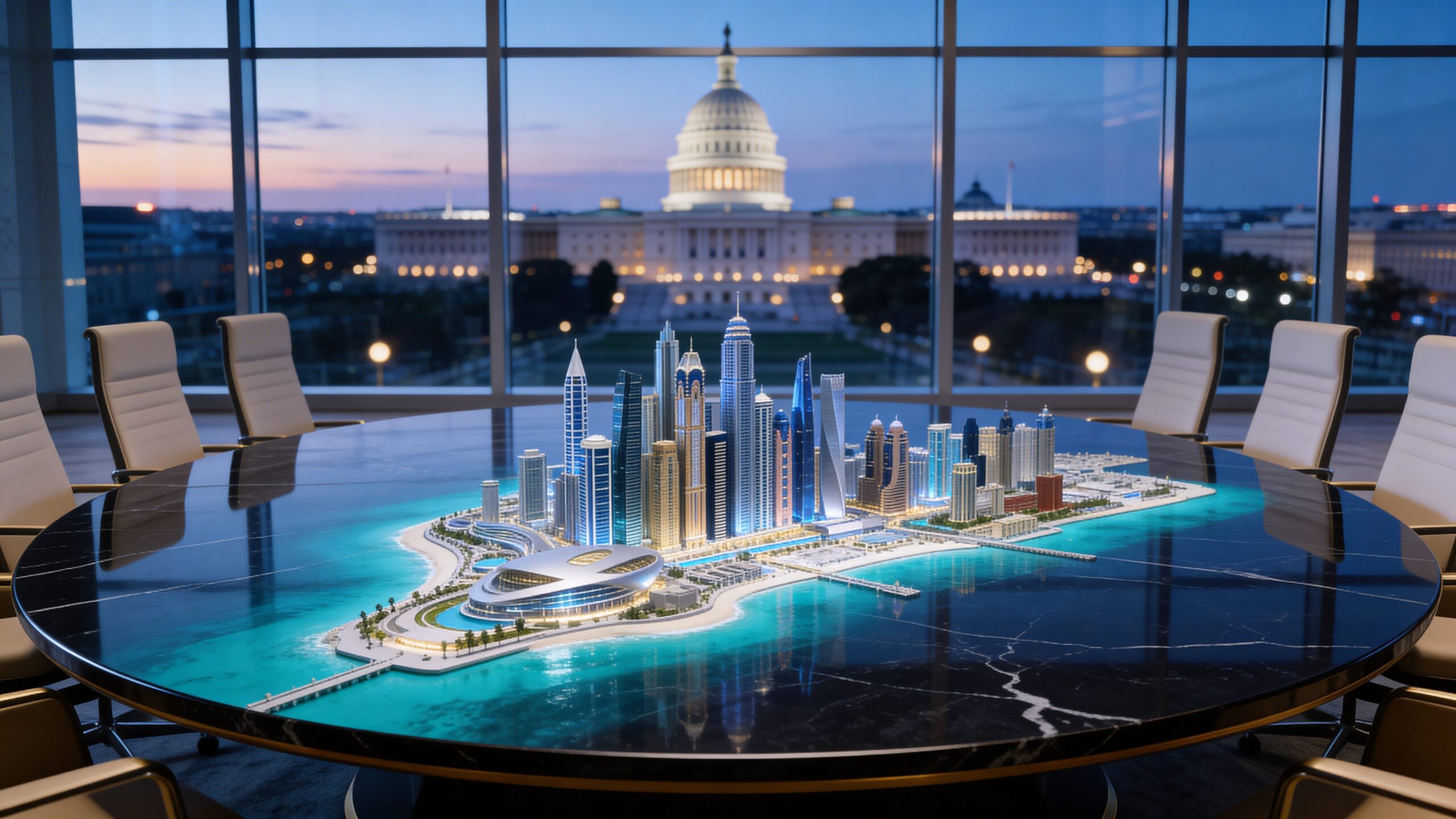
The Board of Peace (abbreviated as BoP) is an international organization established in January 2026 by the American president Donald Trump to manage the reconstruction of Gaza Strip following the conflict between Israel and Hamas. The founding statute – signed by 23 countries during the World Economic Forum in Davos last January – gives the BoP a global mandateand precisely by virtue of this “the Board will monitor the United Nations to ensure that they function correctly”, quoting the words of the tycoon.
Yesterday (Wednesday 19 February) a Washington there was the first meeting and inauguration of this “peace table”, and in addition to the members who accepted Trump’s invitation, representatives of ItalyGreece, Romania and Cyprus, who participated as observersand the same goes for the European Union, which has chosen the Commissioner for the Mediterranean as its representative Dubravka Šuica.
According to the US president, BoP members promised more than 5 billion dollars for the reconstruction of Gaza and for humanitarian aid, and that the United States alone will allocate 10 billion. Nine other countries, including Saudi Arabia, Qatar, the United Arab Emirates, Kuwait and Kazakhstan, have pledged more than $7 billion overall.
How the Board of Peace is constituted
The BoP has a hierarchical structure strongly centered on the figure of founderwho holds the presidency for life and with full powers. In fact, Trump is the only one to decide who can join the board, which countries to expel, impose vetoes on changes to the statute and designate his successor.
In addition to the chairman, there is a main board and an executive board. The Main Council it is made up of the leaders of 24 member countries, while – as we said previously – other countries participate only as observers. The Executive Council includes prominent figures in politics and finance, such as the former British Prime Minister Tony BlairTrump’s son-in-law Jared Kushner and the Secretary of State Marco Rubio.
Why the Board of Peace is controversial
As highlighted by several newspapers, the operating mechanism of the BoP is somewhat unusual for international diplomacy. For example, countries must make significant contributions if they want to become permanent members of the Board (about approx 1 billion dollars to stay inside beyond the first three years).
The goal of the BoP, according to Trump, would be the implementation of the “20-point plan” for Gaza, which provides for the total disarmament of Hamas and the creation of a International Stabilization Force (ISF) of 20,000 soldiers (complete with troops supplied by countries such as Indonesia and Albania) to be stationed in the territory.
The point that should leave you most speechless about this plan, however, is that of “Mediterranean Riviera“: the BoP in fact aims to transform the Gaza Strip into a tourist and technological hub financed by billions in investments (managed directly by it) bypassing traditional UN channels. There has been no shortage of criticism in this sense, given that the intent is to build a glittering landscape for wealthy vacationers on a land where genocidal events have occurred. If the plan is successful, the suffering for Gazans could also continue for another reason: unlike the UN charter, the statute of the Board of Peace is extremely vague on human rights and could prioritize the stability and business of the “Riviera”, trampling on the civil rights and political aspirations of local populations “in the name of peace and security management”.
However, it seems that the main doubt about it is whether it could become a sort of “anti-UN” in direct competition with it. According to many observers, the Board appears to be set up as a sort of private club where who pays counts or who is on good terms with the person in charge.
This leads to a much bigger problem: if countries start diverting their budgets from UN funds to the BoP to get consideration from the Trump administration, the UN could be left high and dry. Inevitably, at that point, there would be a collapse of vital agencies (such as the UNHCR or WHO), which would have less and less budget to manage humanitarian crises and peacekeeping missions (which require a significant amount of money). On the other hand, the BoP would only focus on areas of strategic interest to its members, ignoring “unprofitable” crises.
The position of Italy
For the moment, Italy maintains a cautious and supportive position observation active with respect to the Board of Peace. It therefore seems that for now our country is only looking out the window: it does not want to be excluded from the reconstruction processes in Gaza, but it does not even want to formally join a body that openly challenges the UN.
Neither on one side nor the other, as has happened with other diplomatic issues. Like the other observer countries, Italy wants to monitor that Trump’s organization does not trample on European interests in the area, without however becoming a formal accomplice.
