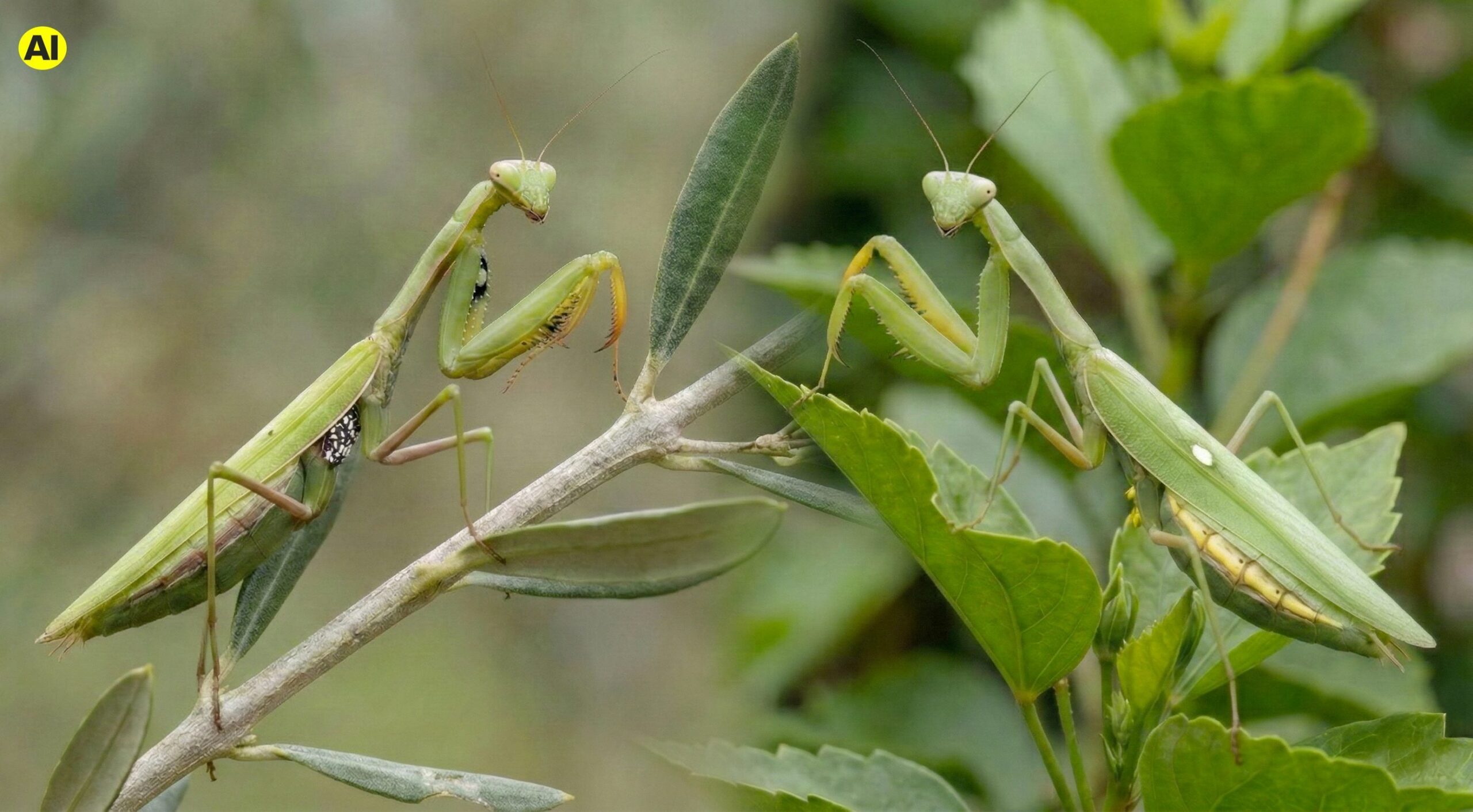
A recent study published in Journal of Orthoptera Research analyzes the impact of two species of mantises also arrived in Italy from Asia: la Asian giant mantis (Hierodula tenuidentata) and the Indochinese giant mantis (Hierodula patellifera). The entomologists who authored the research demonstrated that the two Asian mantises have a remarkable reproductive capacity, compete with praying mantises (Mantis religia), are very voracious and prey on a large number of pollinating insects and, in some cases, small amphibians and reptiles. These two species alien they join a whole series of invaders, now well known, such as the red-eared slider (Trachemys scripta), the nutria (Myocastor coypus), the catfish (Silurus glanis) or the blue crab (Callinectes sapidus).
Where alien mantises come from and how they arrived in Italy
All mantises are part of the Mantodea Order and there are many of them over 2400 species in the world. The Asian giant mantis comes from India and Central Asia and is now widespread in cultivated fields, gardens, woodlands and urban areas. The Indochinese giant mantis is native to China, India, Japan, Korea, Nepal and several Pacific islands and has spread in Lombardy on trees in urban environments and on mulberry crops, favored by hot-humid climatic conditions. He immediately showed the ability to adapt even to difficult climatic conditions (sudden hot – cold alternations) unlike other insects and above all to spread easily in anthropic environments.
Both alien species (Hierodula tenuidentata and Hierodula patellifera) have been reported in Italy since the years 2015-2018 and are now rapidly expanding in numbers, especially in the Northern regions. They most likely arrived together with goods from the East or with imported material for nurseries. Indeed, some ootheques (cases in which mantises lay their eggs), compatible with these two species, were collected on bamboo brooms shipped to Italy from Asia. When the first specimens were reported in the Po Valley, their potential impact was still unknown, but researchers were already hypothesizing a possible competition for resources with our praying mantis.
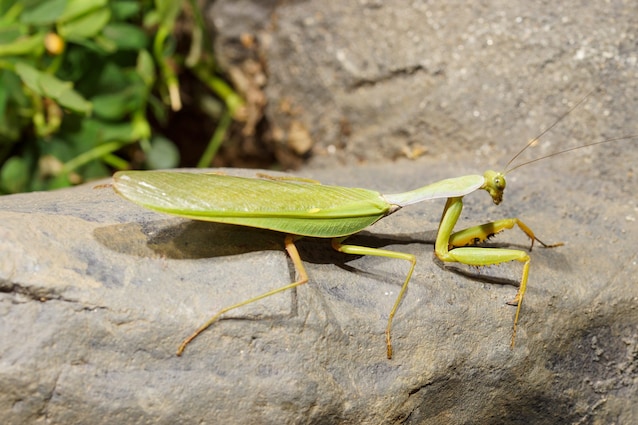
The invasion is dangerous for local biodiversity
Their nature as voracious and very adaptable predators determines a advantage over many other species, as clarified by the study just published. Researchers have in fact demonstrated that alien mantises have a high reproductive capacity. On average they come out of each ootheca as many as 209 young nymphs: almost double compared to the Praying Mantis.
Furthermore, they feature bass cannibalism rates and good juvenile survival rate. The results also report that male praying mantis they are attracted to female alien mantisonly to be devoured! Finally, the newcomers manage to prey on a wide range of insects which also includes pollinators wild bees and the domestic bee (Apis mellifera), as well as small lizards (Podarcis muralis) and tree frogs (Hyla perrini).
Luckily the aliens turn out to be a appetizing morsel for cats and for birds such as great tits, woodpeckers and nocturnal birds of prey.
How to contain them?
For mantises have been published specific guidelines with the aim of limiting their spread and mitigating negative impacts on ecosystems.
According to the guidelines of the Ministry of the Environment and Energy Security, the institutions have the task of evaluate risks and economic impacts resulting from their presence, organize rapid detection systems in ports and airports, strengthen the import controls of goods from regions at risk, support initiatives that involve citizens in monitoring and reporting alien mantises
How to distinguish the two species of mantises and report them: the characteristics
Many times citizens’ contribution is essential in reporting “new invasive species”. Most of the observations reported in the study, in fact, were obtained thanks to the voluntary contribution of ordinary citizens who, through the so-called citizen sciencecollected data and information which was then made available to researchers. Reports of sightings can be made via specific apps such as those associated with the Alien Mantis Project, but citizens can also collaborate with experts to remove individuals or oothecae, check for the presence of alien mantises even in gardens or urban areas, and can avoid purchases of plant species that are not appropriately controlled, which could be contaminated.
The new aliens are very difficult to distinguish from the praying mantis that we are used to, therefore it is usually advisable to take a photo and report it. But if you are a very careful observer, here are some details to help you recognize the two new aliens:
- if you see one obvious dark spotsometimes spotted with white on the internal side of the coxe (i.e. the first part of the front legs), clearly visible, it is a Mantis religion;
- if you see the internal margin of the anterior coxe with yellowish spines and they are there two lateral white spots on the wings it’s one Hierodula tenuidentata;
- if you see the internal margin of the anterior coxae with little pronounced thorns3 or 4 of which have a clear yellowish plate at the base and there are two lateral white machines on the wings, these are Hierodula patellifera.
