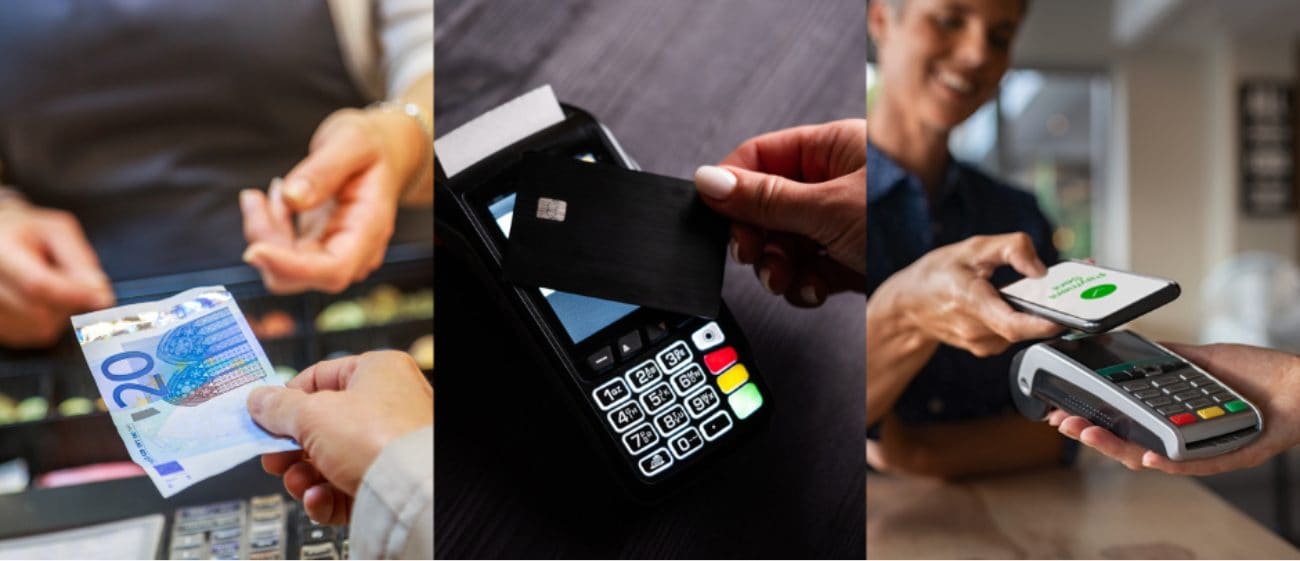
“Do you pay in cash or by card?” It’s a question we hear almost every day now. And beyond convenience or simple habit, a mechanism could be hidden behind our choice we are not fully awarewhich can unconsciously influence ours purchasing behaviors (and the size of your shopping cart). According to neuroscience (applied to neuromarketing), the payment method could affect the intensity of one unpleasant sensation that we experience when we pay (especially in cash), call pain of paying (literally “pain of paying”), associated with the activation of some brain areas related to negative or painful experiences. Instead, according to recent studies, pay with smartphonescould lead to an increase in the so-called pleasure of payingon the contrary “the pleasure of paying”: a sensation rewarding which could increase ours propensity to spendsometimes making us less cautious and more prone to impulsive purchases.
Paying with cash is a “painful” experience
For much of its history, to pay for a good or a service, beyond barter, human beings have been able to count on only one extremely material means: the exchange of banknotes and coins. Let’s think about it: when we pay in cashwe spread out the crumpled banknotes with our hands, we listen to the jingle of the coins hitting each other and we observe the colors of the banknotes. In short, paying in cash is atangible experience: we touch the money, we count it and, above all, we give it away conscious manner.
Yet, even when we purchase something we crave, the our brain tends to give more weight to what we lose relative to profit (a phenomenon known as loss aversion), especially when talking about money. Precisely for this reason, theact of paying often evokes one unpleasant sensationdefined by neuroeconomics scholars pain of paying (literally, “pain of paying”).
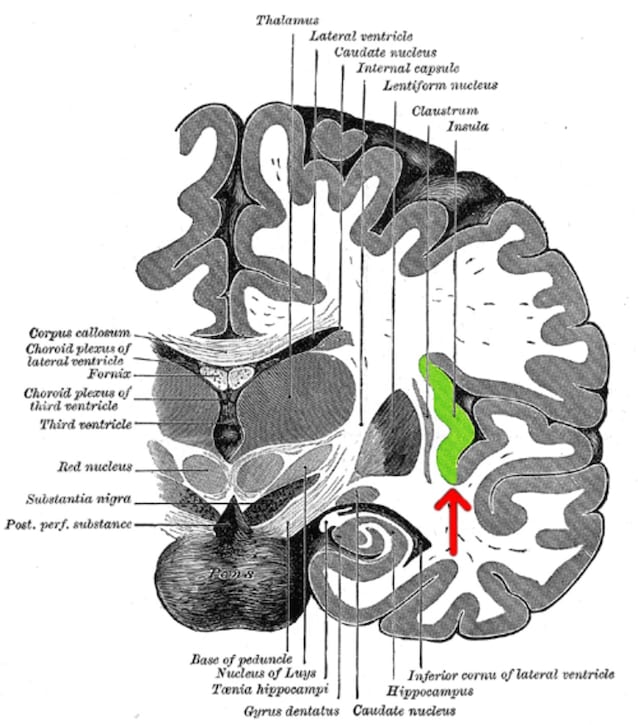
For some it may sound like an exaggeration, yet it may not be a simple metaphor. Some studies have in fact observed that the act of paying is associated with a increase in activity from the anterior portion of the insulaa brain region involved in the processing of negative emotions and in the perception of pain. In other words, for our brain spending money could really resemble, at least in part, a small wound.
Paying by card could reduce the “pain”
If for millennia cash represented the only form of money, today people pay more and more often with credit cards and debit cards. On the other hand, pay by card it is often much more convenient and immediate compared to cash, but even more “invisible”: we don’t touch the banknotes, we don’t count them and, above all, we don’t physically see our money go away like cash. In short, payment becomes less transparent.
It is no coincidence that several studies suggest that paying by card (especially high amounts) functions as a sort of “financial pain reliever”, reducing the sensation of pain of paying And activation of the insula compared to paying in cash, thus making the expense less “painful”.
This is why, as various consumer psychology studies demonstrate (and let’s be honest, our personal experience too), when we pay by card we tend to be more “spendthrift” and prone to unplanned expenses. And this is even more true in the case of credit cards. In this case, in fact, the payment is not charged to time of purchasebut only at the end of the month and mixed with other accumulated expenses, thus “tricking” the brain on real perception from the amount spent.
Paying with a smartphone could make us more impulsive
Paying with a smartphone is undoubtedly the most convenient method: just load an account on your wallet to have the world just a tap away. Not surprisingly, as with traditional cards, so do digital payments reduce the feeling of pain of paying. But there’s more: a study published in 2022 by Zhejiang University (Hangzhou) observed that pay with your smartphone is associated with the activation of neural signals typically related to rewarding experiencesgenerating a feeling of pleasure which scholars call “pleasure of paying” (literally, pleasure in paying).
But how is it possible that paying can become apleasant experience? Let’s imagine the scene: we are in line at the supermarket checkout, while we while away the wait between a game and a message on WhatsApp. Our turn arrives and, not even time to place the goods on the counter, the transaction is completed in just a few taps. No money from count or watch disappear, no code to enter as with physical cards. Everything happens not only extremely fleetingly (requiring less involvement), but also efficient and fluidtwo qualities extremely “appreciated” by our brain which make payment anfulfilling experience.
The smartphone, then, is not mainly used to pay: we use it to talk to friends and family, watch TV series, listen to music or browse social media. In short, all extremely activities pleasant and rewarding. For this reason, when we pay, the brain could associate the act of payment at positive emotions already linked to the smartphone (a phenomenon known as conditioned learning), sometimes pushing us into impulsive purchases that, if we paid in cash, we would perhaps evaluate more carefully.
Sources:
Ceravolo MG et al., Cash, Card or Smartphone: The Neural Correlates of Payment Methods, 2019 Ma Q. et al., Why does mobile payment promote purchases? Revisiting the pain of paying, and understanding the implicit pleasure via selective attention, 2023 Wang M. et al., Pleasure of paying when using mobile payment: Evidence from EEG studies, 2023 Banker S. et al., Neural mechanisms of credit card spending, 2021 Gafeeva R. et al., What else can your payment card do? Multifunctionality of payment modes can reduce payment transparency, 2017
