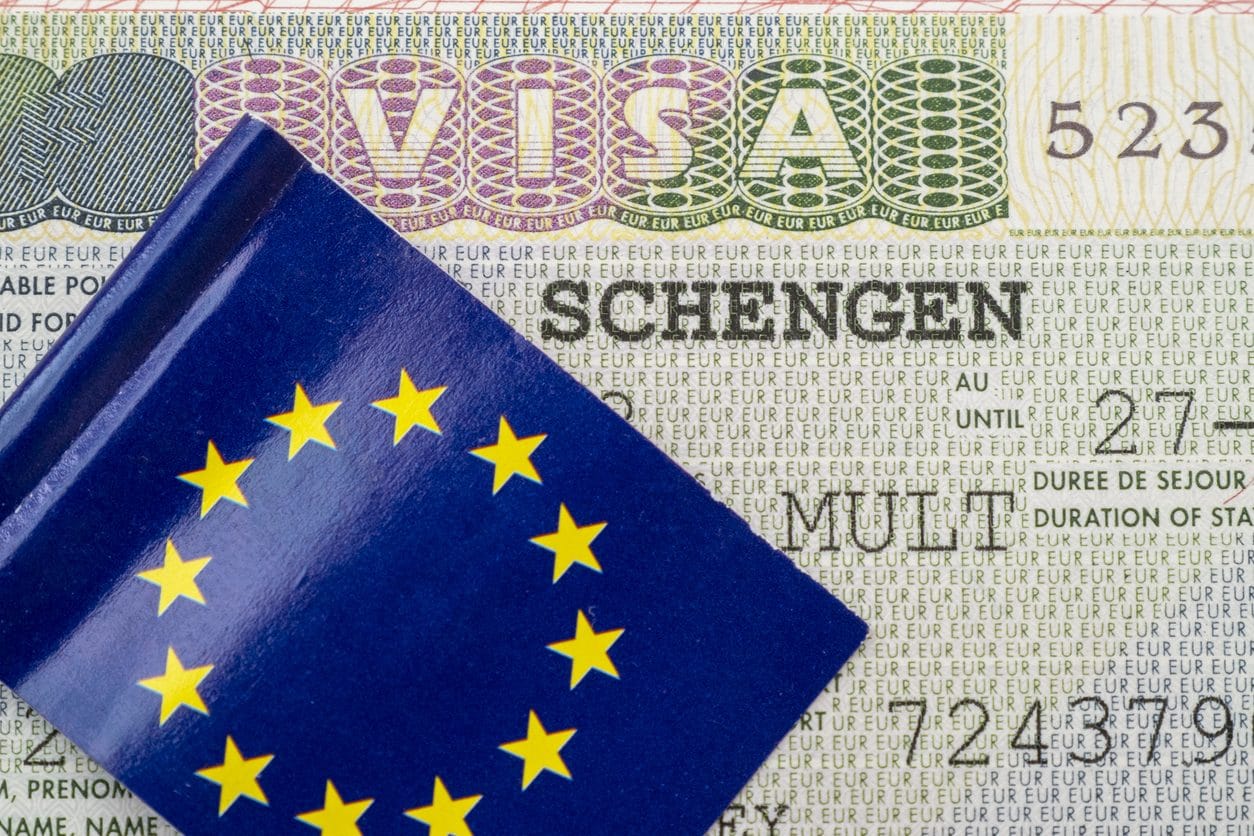
The Schengen space is An area of 29 European countries In which men and goods circulate freely, without being controlled at borders. The name is due to the town of Luxembourg in which the first agreement was signed. The space in fact originates from a 1985 agreement, Signed by five countries: Germany, France, the Netherlands, Belgium and Luxembourg. Italy joined in 1990. Since 1999 L ‘acquis of Schengen (the set of Schengen rules) was integrated in the European Unionin the sense that “automatically to the Member States” is applied, unless they explicitly ask not to adhere or join the agreements. Today it allows more than 450 million people to circulate freely among the member countries without the need to undergo borders checks.
Under certain conditions, however, these borders checks can be restoredas happened on some occasions due to migrations or the risk of terrorism.
What is the Schengen space
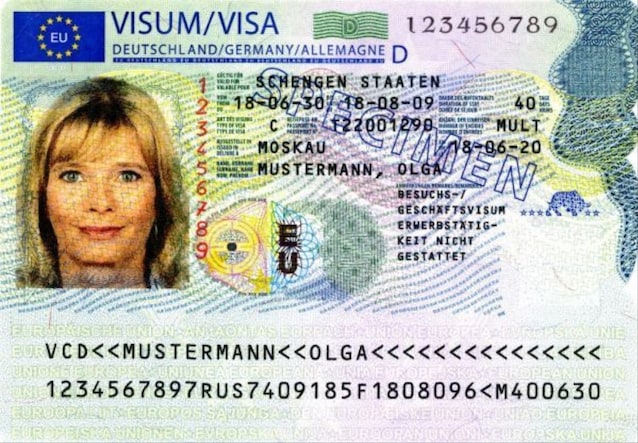
The Schengen space, also known as Schengen areais a territory made up of 29 states of the European continent, in which borders controls have been abolished. Men and goods can circulate freely: to go from one country of the Schengen space to another it is neither the passport nor the entrance visa and an identity document is sufficient. Towards the External countriesthe Member States of the Schengen space apply one common policy: citizens of many states, including most of the American ones, can enter Schengen countries without visa, needing only the passport; Citizens of other countries, including most of the African and Asian states, need visa both for entry and transit. The visa, however, is Valid for the entire Schengen arearegardless of the country that emits it.
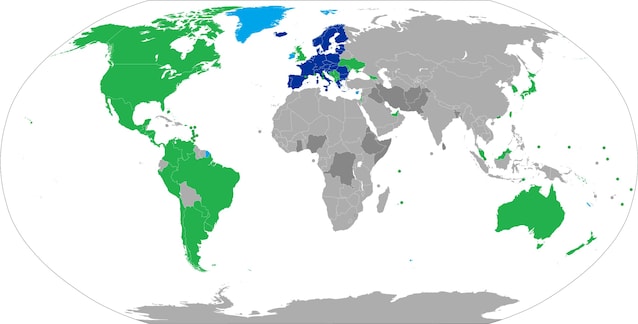
In the Schengen space, customs checks are also abolished for goods. However, in certain circumstances the countries have the opportunity to restore borders checks, as happened for crisis of migrants and for the risk of terrorism. For example, on some occasions France has restored controls to the border with Italy, in Ventimiglia, due to migratory flows.
Which countries are part of it
29 countries are part of the Schengen space: 25 States of the European Union (ie everyone except Ireland and Cyprus) and others Four countries of the European continent (Norway, Iceland, Switzerland and Liechtenstein), not part of the EU. In the Schengen space, moreover, there are four Small states Which, although not officially adhering to the agreements, in fact hold the borders open: San Marino, the Vatican city, Andorra and Principality of Monaco.
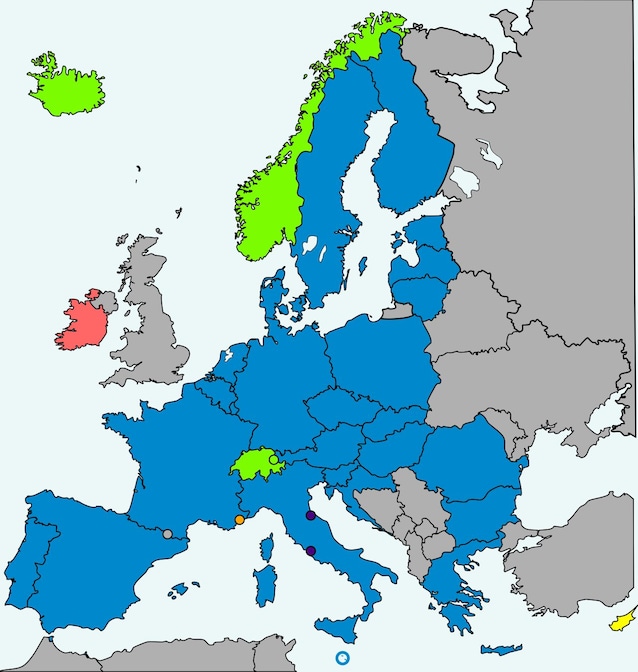
Schengen agreements do not apply to some territories of the member countriesin which there are border controls for goods and people. These are islands or dependencies located on other continents. Among them, the French overseas territories, such as the French guyana in South America and various Pacific, Atlantic and Indian islands; the Dutch overseas territories (Aruba, Curaçao, etc.); the Quargo Islands of Norway; Greenland and the Fær øer of Denmark. In addition, Greece provides for special conditions for access to Peninsula of Monte Athosa semiautonomous territory inhabited by a monastic community.
History of the Schengen space
The Schengen space originated in 1985, when Germany, France and the three Benelux countries (Netherlands, Belgium and Luxembourg) signed a agreement for the elimination of borders controls. The agreement was signed in the Luxembourg town of Schengen, which gave its name to the space.
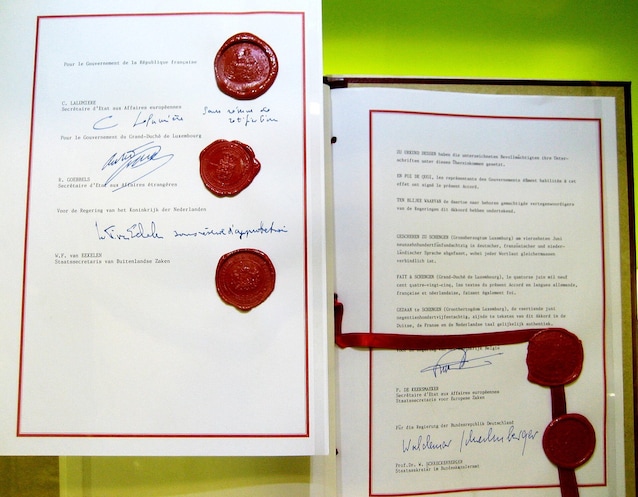
The 1985 agreement followed other treaties, including the Application agreement of 1990. Messi together, the agreements that regulate the space form theacquis of Schengen. After the signing of the first treaty, Many other countries They joined the Schengen space. The first, after the five founders, was theItaly in 1990. In 1999 the Treaty of Amsterdam The Schengen system in the European Union has “incorporated”, eliminating borders controls between member countries. The treaty, however, allows countries not to join the Schengen space or only partially adhere to you. That’s what he decided to do theIrelandwhich provides for controls for borders, and who, in the past, when he was a member of the EU, had chosen the United Kingdom. Furthermore, the Republic of Cypruswhich, however, is bound to join you in the future.
