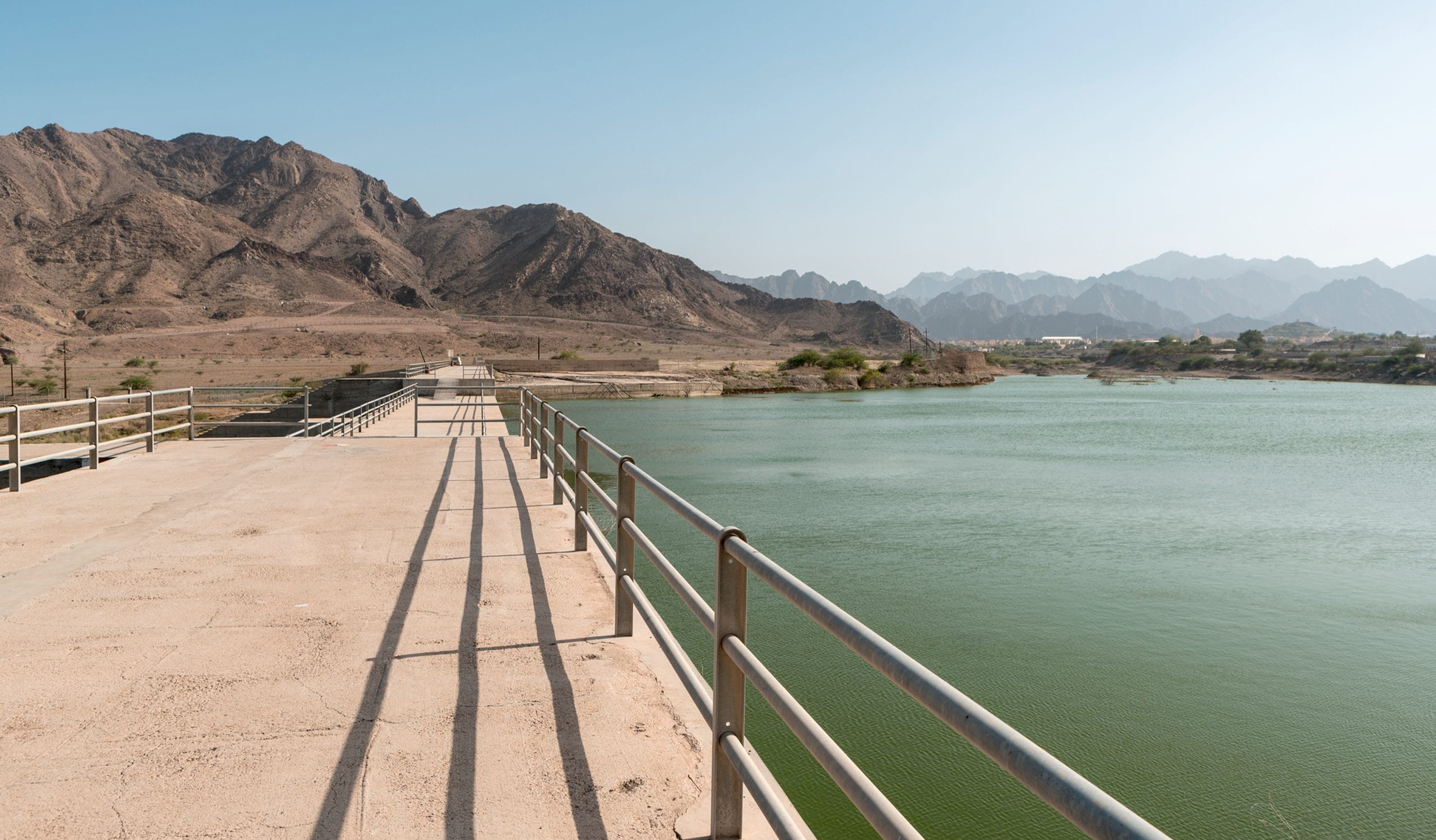
There Hatta hydroelectric power station it is one of the United Arab Emirates’ most ambitious interventions in the field of renewable energy. This is the first pumped hydroelectric power station (pumped storage hydro power plant) of the region and is surrounded by the Hajar mountains, 4 km from the city of Hatta and approx 140 km from Dubai. From the construction challenges imposed by the complex geology of the site to the use of specific materials such as roll-compacted concrete, the Hatta project offers an emblematic example of how engineering can adapt to extreme environmental conditions to produce clean energy on a large scale. The system, developed by DEWA (Dubai Electricity & Water Authority), also fits into the framework of Dubai Clean Energy Strategy 2050: strategic plan with which the emirate aims to cover 100% of the electricity needs of the city of Dubai with renewable sources by 2050.
How the hydroelectric plant works
The Hatta hydroelectric power station stands out for one operating mode truly particular and, from an engineering point of view, of great interest. The project is not based on a single dam, but on a complex system composed essentially of three elements main. The first is the upper pelvislocated at the top of the mountain and contained by two dams, 72 and 36 meters high respectively. The second is the lower pelviswhich uses the Hatta dam already existing on site, appropriately modernized and renovated to meet the new needs of the plant. The third is the heart of the hydroelectric power plant, located underground: a turbine system which, by exploiting the cyclical movement of water downwards and upwards, typical of pumping systems, allows the production of electricity.
The plant built underground with Francis turbines
The plant was built in undergroundabout 60 meters deep, also in response to the very high summer temperatures. The turbines are thus housed inside a large cylindrical well35 meters in diameter and 70 meters deep. Furthermore, these are not conventional turbines, but Francis turbines equipped with asynchronous motor-generators dual fuel. This technology allows the rotation speed to be modulated, which is particularly useful when the water level varies (a condition that is far from rare in a natural context such as that of the region). As a whole, the Hatta hydroelectric power plant will be able to produce up to 250 MW of clean energy: sufficient power, to have a point of comparison, to simultaneously power approximately 250,000 homes.
There construction of underground tunnel
From an engineering point of view, the construction of this complex system of dams represented a considerable challenge for engineers. One of the main critical issues concerned the construction of the underground tunnel necessary for the movement of water from one basin to another. The extraordinary hardness of the rock of the Hajar mountains has forced the use of the technique of drill & blastbased on drilling and the controlled use of explosives to advance inside the rock mass. The tunnel, 1.2 km long and 7 meters wide, was lined in the first 320 meters with high strength steelso as to withstand the high stresses generated by the fall of the water, which occurs from a difference in altitude close to 180 metres.
The use of roller compacted concrete
One of the most used materials in the construction of dams is roller compacted concrete. Its use follows a relatively simple but highly effective process: the concrete is not cast in a single solution inside the formwork, but rather spread in successive layers and then compacted through the use of compressor rollers. This technology allows us to obtain extremely resistant and stable structures, a fundamental characteristic to allow the dams to optimally withstand the very high loads generated by the millions of cubic meters of water that they are called upon to contain.
