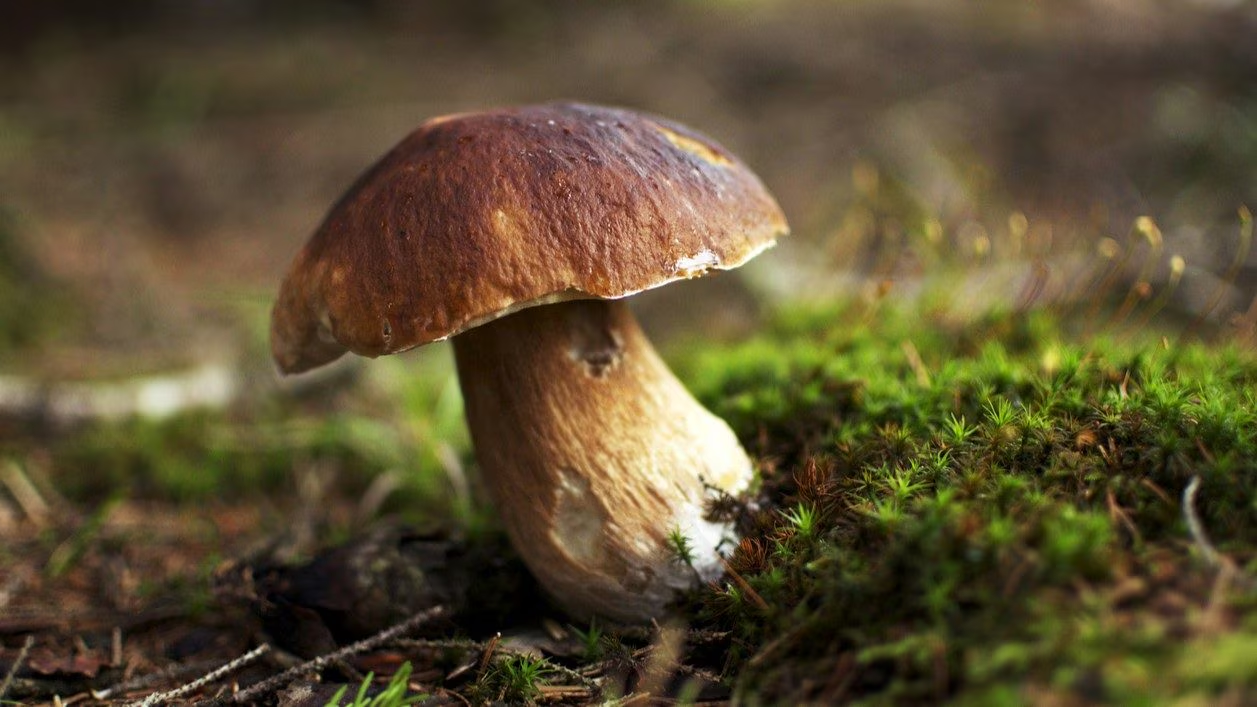
Porcini grow in association with tree roots. They appear mainly between late summer and autumn, but the period varies depending on the place and the year: rainfall, temperatures and soil humidity contribute to creating conditions favorable to their appearance.
Rain often accompanies the appearance of porcini mushroomsbut the period in which they appear also depends on the temperatures, the water present in the soil and the trees with which they live. In general, porcini mushrooms grow between late summer and autumnwith differences between places and years. Indicatively, they pop up between 10 and 14 days after heavy rain but studies conducted in Italian and Spanish forests suggest that both the conditions of the harvest months and those of the previous months matter. The structure of the forest can also modify production: to understand when to expect porcini mushrooms it is therefore necessary to consider the climate and the environment in which they grow together.
The porcini mushrooms we pick are only part of the mushroom: where they grow
The name porcini refers to several species. Work published in 2023 includes four European species: B. edulis, B. aereus, B. pinophilus and B. reticulatusalthough most studies focus primarily on Boletus edulis.
What we collect is the fruiting bodythe part of the mushroom that appears above the ground. Below the surface, however, develops myceliumthe part of the fungus present in the soil, associated with tree roots. This relationship is one symbiosisan association that brings benefits to both: the mushroom contributes to the absorption of water and nutrients by the plant, which in turn provides it with nourishment.
The appearance of porcini mushrooms and the presence of the fungus in the soil are therefore two different things. As Parladé and colleagues explain, the production of fruiting bodies can be irregular: not finding any does not prove that the fungus has disappeared from the soil. It is also for this reason that studies can combine the counts of porcini mushrooms with analyzes of the underground mycelium.
Porcini mushrooms are found in different forest environments. The review by Hall and colleagues describes associations with trees such as chestnut, beech, oak, birch, pine and fir. The various species included in the group can be associated with different trees depending on the location. The fungus can be present near isolated trees, although it is more easily encountered in the woods. It is often associated with mature trees, but the article also reports findings in young birch forests, so high age is not a prerequisite in every environment. The soil can also have different characteristics. Hall and colleagues analyzed samples from locations in England, Scotland and New Zealand, finding highly variable chemical characteristics.
When they grow: a season that changes from year to year
Again according to Hall, most fruiting bodies generally appear in late summer or autumnbut occasional spring appearances are also reported. The timing varies with the environment, for example in the United Kingdom the period described is normally from August to October, while in Northern California it begins at the beginning of November and continues until the end of December. Even if you stay in the same place, the best month can change. On Monte Amiata, in Tuscany, Salerni and colleagues analyzed three years of observations, from 2000 to 2002, in an artificial forest dominated by silver fir. The counts were carried out daily during the periods of greatest production, especially between August and November. In the first two years the maximum production fell in October, while in 2002 it moved to August, two months earlier. The authors link this trend to weather conditions: in the last year the hottest month was June, followed by a rainy summer.
According to studies, after how many days do porcini mushrooms appear?
The Monte Amiata study, published in 2023, also addresses this question. The researchers worked on 36 areas of 250 m² each, comparing portions of the forest with different interventions on the trees. Some of these areas had been thinned, that is, deprived of part of the trees, with different intensities; others, however, had been left intact. In half of the areas of each treatment, the litter, i.e. the layer of dead plant material present on the ground, was also removed. To study the relationship with meteorological events, the authors compared porcini counts on each of the 21 days following heavy rainfall (days with at least 20 millimeters of rain considered intense) and temperature peaks. A positive correlation emerged between intense rainfall and production, especially on the twelfth day following the eventin different treatments. In simple terms, those rains were associated with higher counts of porcini mushrooms. The relationship emerged especially in areas where litter had been maintained.
However, the response changed with treatment: in the most thinned areas, negative associations were also detected between intense rainfall and production in some subsequent days. The twelve-day data therefore concerns the production observed in those experimental conditions and does not establish a fixed growth time for the individual porcini mushroom, nor does it guarantee that a new appearance will occur after each rain.
The weather before the season also counts
García-Bustamante and colleagues studied twenty years of data, from 1995 to 2014, in 18 permanent Scots pine plots in Pinar Grande, in the Spanish province of Soria. Every week, during the production season, the porcini mushrooms were collected and their number, fresh weight and cap diameter were recorded. The data was then compared with rainfall, temperatures and soil conditions.
Overall, the analyzes indicated favorable conditions associated with cooler summers, moisture before and at the beginning of the production season, and mild autumn temperatures. The relationship with rainfall took on particular importance at the start of the season, also considering the previous months. However, the authors reported some contrasting responses between the two local weather stations used: the relationship between weather and production was not identical in all analyses.
The work of Parladé and colleagues, however, examined the production of Boletus edulis in the same area using data from 2008 to 2015, and found a positive association with average autumn precipitation, between September and November. In that series, however, the statistical analyzes did not support the existence of relationships with the rainfall of previous seasons or with the average temperatures considered. These are comparisons carried out over different periods and with different analyses.
The temperature of the ground helps to understand the end of the season
In García-Bustamante’s study, local terrain measurements were available for the period 2012-2014. The temperature was detected at a depth of 20 centimeters. The productions observed were mainly in the range between 8 and 14 °C of average weekly soil temperature, with the maximum production values around 12 °C. These are underground measurements, to be distinguished from the air temperature indicated in weather forecasts. Towards the end of the season, the cooling of the land emerged as a factor capable of limiting production, even when water was available. The observed interval describes that forest and that three-year period. The age of the trees also mattered: it was seen that the class of pines that were between 51 and 70 years old at the beginning of the monitoring provided the greatest contribution to production. Instead, on Monte Amiata the greatest increase in porcini was observed in areas with moderate thinning and maintained litter, and removing litter was associated with lower counts. The response of porcini mushrooms to the climate is therefore part of the concrete conditions of the forest, from the soil to the plants with which the mushroom lives.
