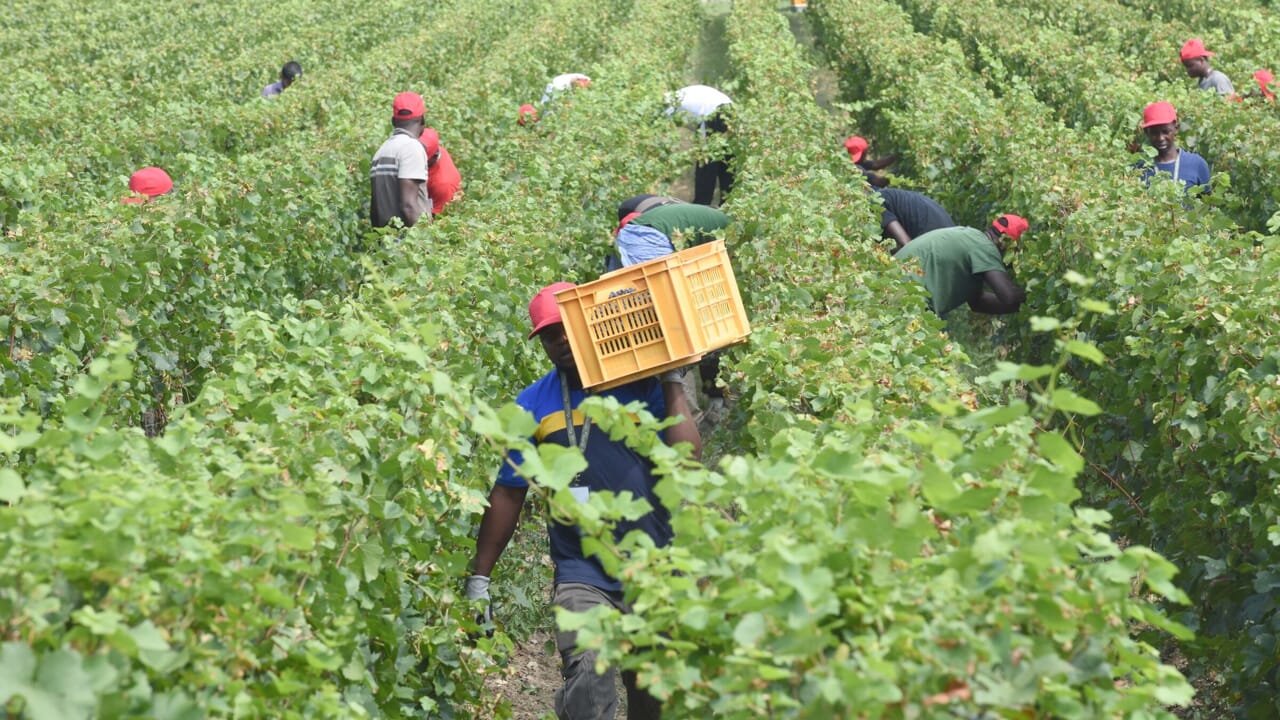
In the ghettos of Foggia, among the orange plantations of the Gioia Tauro plain, in the countryside of Campania and Basilicata, every year thousands of foreign workers wake up before dawn. A corporal, a ramshackle van, a day in the fields for a handful of euros await them. Gangmastering, the system of illicit intermediation of agricultural work, is one of the structural plagues of Italian agriculture, fueled by the vulnerability of migrants, the permeability of agri-food supply chains and a labor market that has made opacity one of its consolidated characteristics.
It is in this scenario that PIU Su.Pr.Eme fits in. — acronym for Individualized Paths to Exit Exploitation — an integrated program of public and social policies launched in October 2019 and active until 2023, co-financed by the European Union as part of the Pon Inclusione – European Social Fund 2014-2020 and by the Ministry of Labor and Social Policies. With initial funding of 32 million euros, provided by European Cohesion Policy, the project represents one of the largest and most complex interventions ever deployed in Italy to combat irregular work and the exploitation of third-country nationals in the agricultural sector.
“This project was born thanks to a common effort of the five regions of the South, Puglia, Sicily, Calabria, Basilicata and Campania, who put their forces together to overcome a problem that unfortunately grips their territory: that of the exploitation of labor and gangmastering”, Roberto Venneri, Secretary General of the Puglia Region, explains to Europa Today.
A structural plague with deep roots
The gangmaster is an alternative economic system, which thrives where institutions are absent and where the condition of a foreigner, often irregular or in a legally precarious position, transforms the worker into a commodity. The corporal recruits the workforce, transports them, houses them, controls them. He manages the daily lives of the laborers in exchange for a share of the already meager wages. He is often the only person who speaks the same language as the worker, the only point of reference in unfamiliar territory.
The five southern regions – Puglia, Calabria, Campania, Basilicata and Sicily – are the areas with the highest concentration of the phenomenon and PIU Su.Pr.Eme. acts exactly in these territories. It does so by focusing on the individual dimension, building a personalized path of emergence, emancipation and autonomy around each migrant who is contacted.
Invisible lives in ghettos and undeclared work
These are mostly people who live in conditions of institutional invisibility: citizens of third countries, sometimes even regularly present in Italy, but trapped in circuits of undeclared work, housed in ghettos or informal settlements, without access to basic services.
“We have implemented housing programs, transport facilitation, civic-linguistic training programs and specialist training for work. This has allowed us to restore dignity to workers who were exploited, especially in the fields and in other sectors. And it has allowed us to overcome those barriers that existed between workers and communities”, says Venneri.
The network of branches as the first contact in the area
To accompany people along these paths, the program has activated a series of concrete and complementary measures.
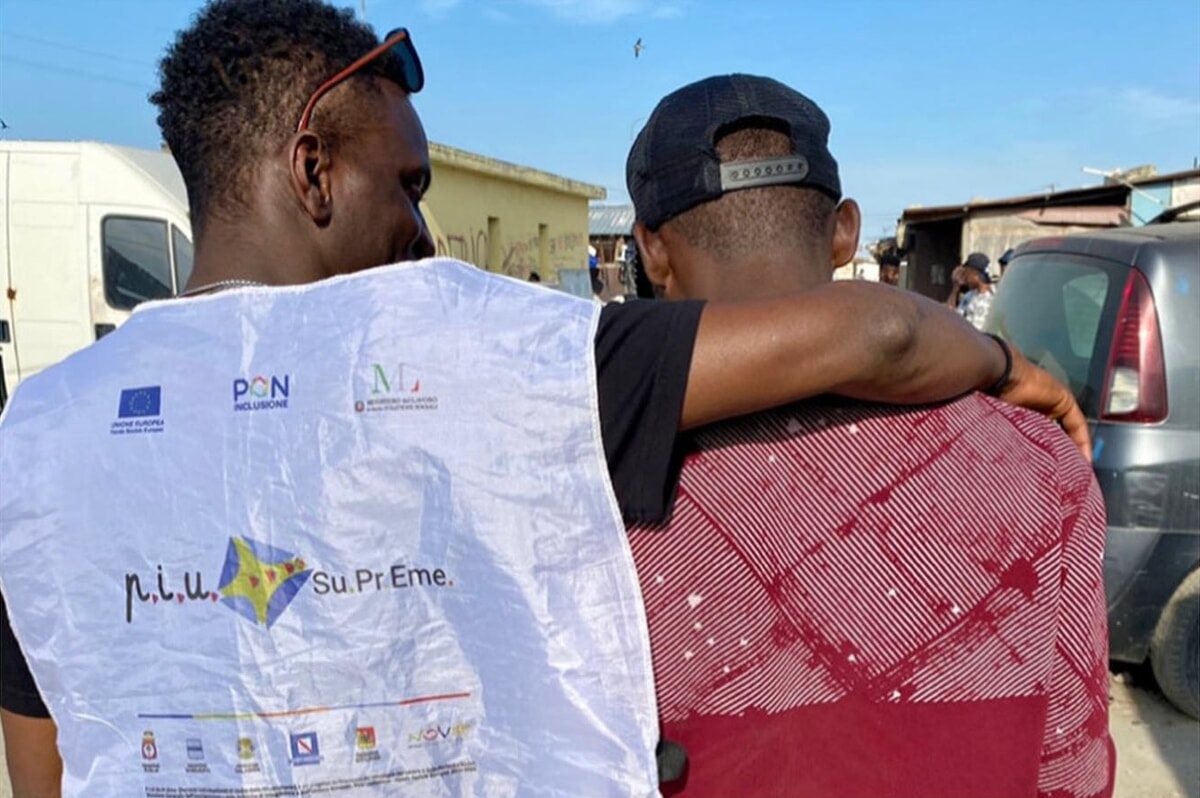
The network of local branches represented the first point of contact. Through the strengthening of information, orientation and support desks, and above all thanks to the interventions of outreach and proximity, that is, by physically going to the places where people live and work, the project operators also reached those who would never have entered a public office on their own initiative.
The inter-institutional Anti-Corporate Help Desk has strengthened this service: a toll-free number, an application and an integrated multilingual portal have made information and services available on request, removing the linguistic barriers that often constitute the first wall between the foreign worker and his rights.
Home and training to escape exploitation
Support for housing then addressed one of the toughest structural issues: the condition of those who live in ghettos or informal settlements. The program experimented with the creation of a social housing intermediation agency, the promotion of shared housing solutions and the granting of subsidies for rent. The objective was not only to find a house, but to break the link of dependence on the corporal, who often also controls access to accommodation.
Training and job placement constituted the cornerstone of the medium-term activities: information and training courses, internships and accompaniment to employment centres, as well as active work to connect job supply and demand to remove workers from the circuit of illicit intermediation.
Social microcredit as a lever of autonomy
The social microcredit action then introduced an innovative element: economically supporting the beneficiaries in the most critical phases of the path towards autonomy, combining the financial component with a social inclusion component. For those wishing to embark on an entrepreneurial path, the program also included support and the provision of contributions for the launch of start-ups, with attention to the ethical sustainability of the activities.
The health interventions, also carried out through mobile clinics with multidisciplinary teams, have guaranteed access to health to those who, due to their condition of marginality and mobility, would otherwise have remained excluded from the health system. In Puglia, the AReSS (Strategic Regional Agency for Health and Social Care) played a central role, operating with mobile units in the territories of the Capitanata, one of the most critical areas of the Foggia area in Italy.
“There were many first results. Among these the creation of a transport network that could finally remove migrants from the game of gangmasters, the creation of guesthouses that host workers, especially non-settled ones, who arrive in the summer period to harvest tomatoes or citrus fruits”, explains Venneri.
“And we also assigned individual qualities to each migrant involved in the project, resources to help them lead a dignified life and integrate into the territory, and we structured interventions dedicated to healthcare, where NGOs also gave us a strong hand. The third sector was fundamental because this population lived abandoned in the camps and one of the main objectives was to reintroduce them into the social system”, he added.
The numbers of socio-occupational inclusion
During its actions, Supreme reached around 3 thousand citizens of third countries with information and orientation activities and accompanied around 1,500 people on structured socio-occupational inclusion paths. The initial contact was not always easy, due to the fear and mistrust of the migrants.
“There are street units that do outreach and they go to the territory. At the beginning there was a collaboration between cultural mediators and the National Labor Inspectorate, with professionals going to the fields to interview workers, especially migrants, and understand whether they were classified correctly, whether they had a contract, whether it was legal work or not. This helped a lot,” says the Secretary General.
Supreme 2
Starting from the experience gained with Supreme, a second phase was also launched, Supreme 2, a more structured program that expands the intervention over a longer time horizon, strengthening cooperation between regions and aiming to consolidate territorial services against labor exploitation.
“The work is continuing. Now it is a program that continues with other resources and will see further developments especially on housing, which remains the weak point at the moment”, concludes Venneri.
