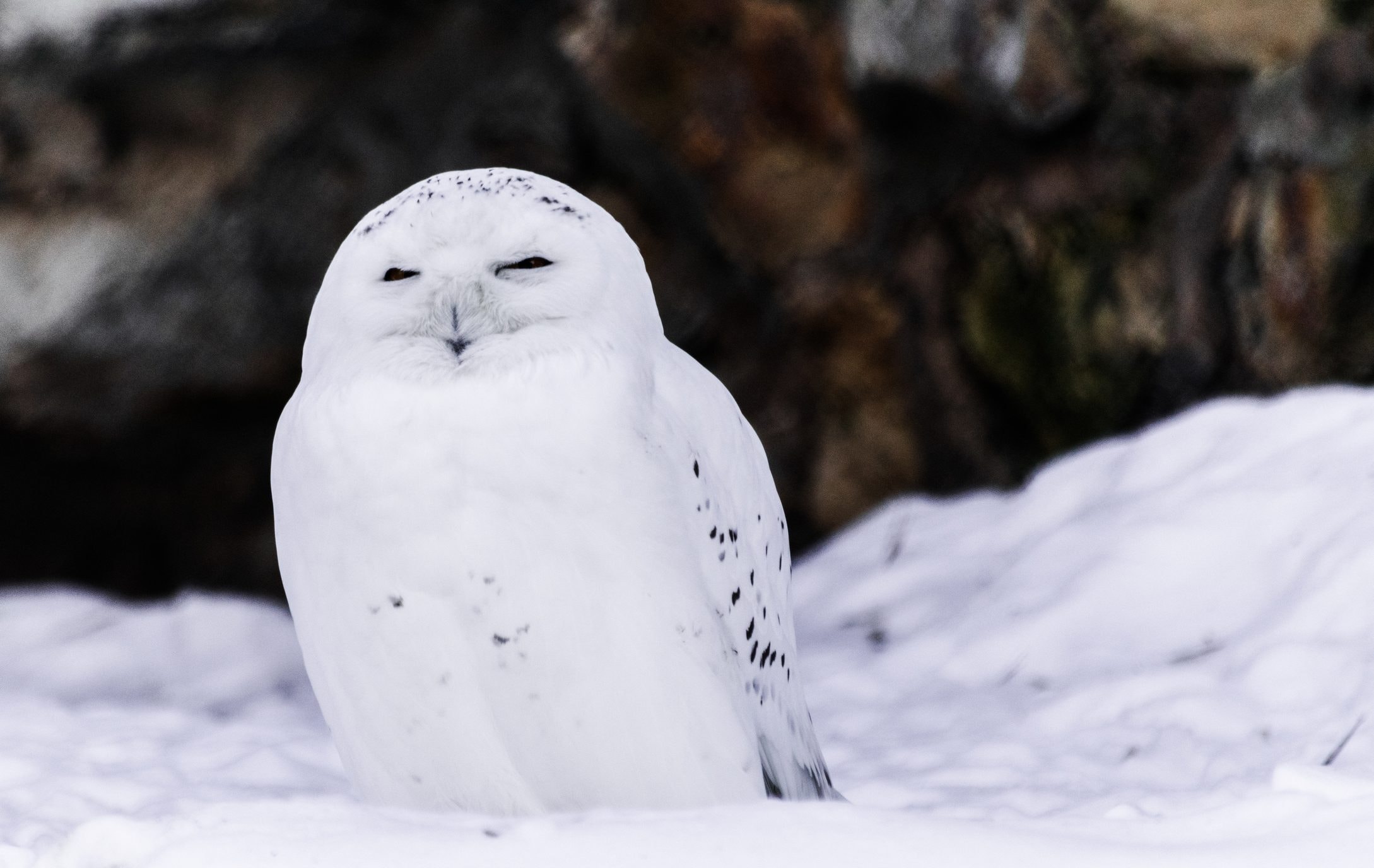
It is among the most iconic and majestic birds of prey in the Arctic Circleimmortalized in the pages of Harry Potter with the name of Edwige: it is the snowy owl, Bubo scandiacus. A species that presents peculiar morphological and behavioral characteristics that differentiate it from other members of the Strigidae family, which includes other owls, owls and tawny owls. It is often mistakenly called the “snowy owl”, but recent genetic analyses they confirmed that it is actually an owl and not an owl. It lives in the Arctic circumpolar region, settling further north during the summer and migrating further south in the winter months, for follow the movements of its favorite prey – lemmings. Unfortunately, the habitat of this bird of prey is decreasing due to climate change: in Swedenonce very frequented by these birds, the snowy owl was in fact declared extinct in 2025.
Characteristics of the snowy owl
In addition to its color, the snowy owl has some peculiar characteristics that distinguish it from other owls. It is in fact mainly a species daytimewhich prefers to hunt during the day unlike the other members of the Strigid family. In fact, spending the summer season in the Arctic Circle, where the days can be even 24 hours of lightingadapting to hunt only during the night would make little sense: the snowy owl’s vision is therefore very well adapted to light, and is more similar to that of diurnal birds of prey. Snowy owls also they nest on the ground in open spaces rather than among trees – a combination of behaviors that makes these animals easy to spot in their natural environment.
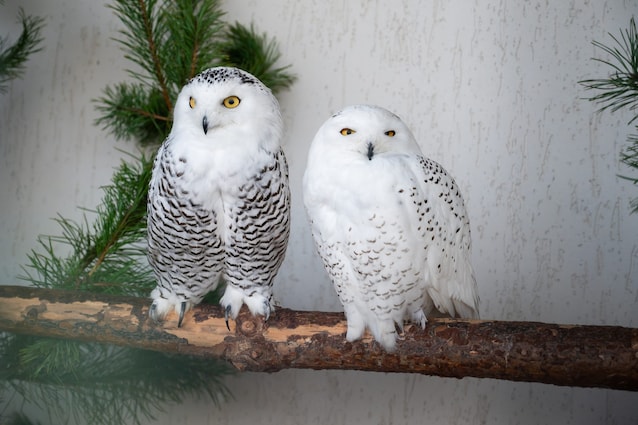
As with most owls, the snowy owl is sexually dimorphic, with females larger than males: females weigh approximately 2 kg for a height of 65 cm, while males weigh 1.7 kg for a height of 60 cm. It is one of the largest birds of prey in the animal kingdom, with a wingspan of 1.7 metres. Another difference between males and females, as well as size, is in color: males tend to be in fact whiter of the females, which instead have a mottled plumage full of gray and brown feathers. Which is why the “owl” Hedwig was actually played in the Harry Potter films by male birds: in addition to having a more contrasting and iconic white color than the females, the small size made the specimens easier to handle for the young actors of the saga.
Migration, predation and habitat
Snowy owls are one migratory species which moves a lot not only based on temperature but also on the presence of prey. During the summer, these birds nest at a latitude of about 60° in the Arctic tundra areas of Russia, Scandinavia, Greenland and Canada, and then move to more southern latitudes during the winter months, touching on countries such as the USA and China. I am an example of irruptive species, or what it manifests sudden and dramatic population changeswith mass movements linked to the presence of their favorite prey. Although they are predators capable of feeding on fish, frogs and small birds, snowy owls prefer lemmingsmall Arctic rodents whose population density can undergo explosions followed by periods of strong reduction, depending on the presence of food. This leads to the number and reproductive cycle of snowy owls being highly dependent on that of lemmings.
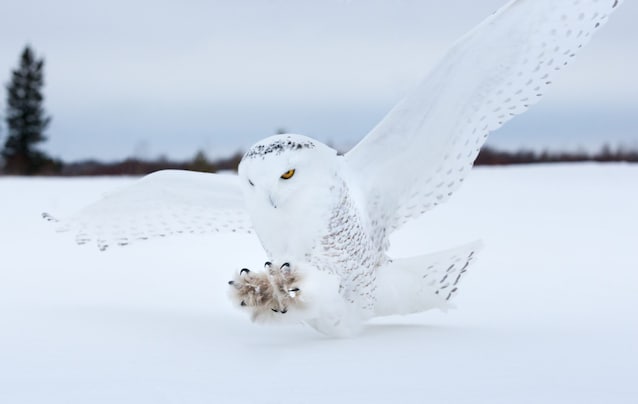
Snowy owls are excellent predators that rely on both sight and hearing: they are in fact able to perceive, from sound vibrations, the presence of lemming which dig into the snow even at a depth of 20 cm, and to calculate their position precisely and then dive into the snow and capture them with their powerful claws. Snowy owls are also known to hoard prey if it is available – it is not uncommon to find a nest of baby owls surrounded by dozens of dead lemmings, captured by their parents.
The extinction of the snowy owl in Sweden
The snowy owl’s dependence on temperature and prey populations makes this species very susceptible to climatic variations – today only 14 thousand to 28 thousand specimens survive. The IUCN Red List of threatened species classified the snowy owl as “vulnerable”, and recently this species has disappeared even from regions it once frequented. In 2025, in fact, Sweden has declared the species officially extinct on national soildue to habitat loss and climate change. Until the 1970s, hundreds of pairs used to migrate from the Arctic to nest in the Swedish mountains, but from 2015 onwards no chicks were born and no pairs were seen nesting, leading conservation groups to declare this majestic animal functionally extinct.
