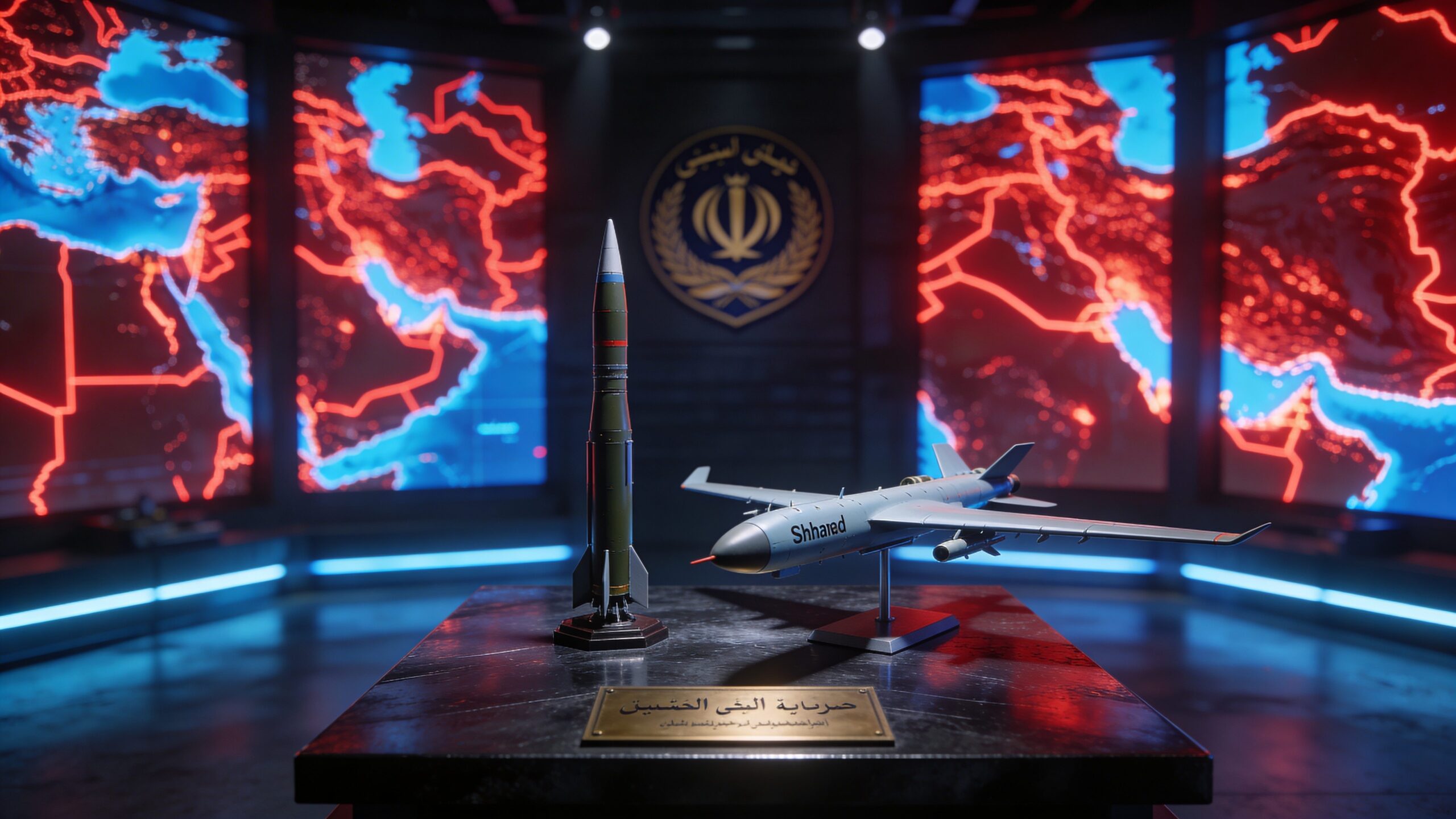
In the chaos generated by the latest events in Iran i Iranian Pasdaranan armed body born after the 1979 revolution, seized the opportunity and on Monday 2 March they would have let the local media know that they had The office of Israeli Prime Minister Benjamin Netanyahu was attacked. From the “Guardians of the Revolution” – as this militia is commonly called – one seems to have left response to US attacks: objectives are the American bases in the Persian Gulf and the Israeli cities.
The news is still not certain, but the conflict seems to be spreading, and understanding something about it may seem increasingly complicated. But… who are these Pasdaran?
Who are the Pasdaran: the “State within the State”
To answer, we need to go back almost fifty years.
The Pasdaran, or the Islamic Revolutionary Guard Corps (IRGC, in English Islamic Revolutionary Guard Corps) were born in 1979immediately after the Islamic Revolution led by Ayatollah Ruhollah Khomeini.
At the time, the newborn regime had an urgent problem: the traditional army was still that of the Shah, made up of officers often trained in the West and of dubious loyalty to the new theocracy. Khomeini therefore needed an armed force that did not simply defend the country’s borders, but that protected and propagated the values of the Revolution. Thus the Pasdaran, the “Guardians of the Revolution” were born: a parallel army, ideologically devoutwith a mandate that went far beyond conventional military defense. Over the years, however, they have become more and more powerful, evolving into a sort of “octopus” which controls the state itself.
To explain, in addition to having the control over a large slice of Iran’s GDPmanage infrastructure, energyoil, banks and telecommunications. They also control brute force or, better said, ground forces, navy, air force and even intelligence. But not only that: the Pasdaran control a group paramilitary used to brutally repress street protests (as seen in early 2026).
For these two reasons, being part of the Pasdaran is a real privilege, a point of arrival for a few that guarantees above-average salaries and social privileges reserved only for this kind of elite that has its hands in everything.
So, little by little, they created one Parallel state capable of self-financing and circumventing international sanctions through the black market. This control grants its members exclusive access to luxury goods, elite education, and medical care that ordinary people can only dream of, making de facto who is part of one privileged caste. For the Pasdaran, therefore, defending the regime is not only a question of national pride, but first and foremost an economic necessity to protect their wealth and status.
And that’s not all, because the Pasdaran have created an elite for foreign policy operations, the Go Qudswhich transforms small local groups into the so-called “Axis of Resistance”. In practice, the Quds act as strategic advisors and supply weapons to subversive groups active locally (both in Iranian territory and in other Middle Eastern states), so that they can maintain control throughout the country. In fact, through the Quds Force, they are also coordinated Hezbollah, Houthis, Iraqi militiasbringing Iranian influence throughout the Middle East. If the Quds Force did not exist, Iran would be an isolated regional power, but there is and it is a real global threat capable of influencing oil prices in New York simply by giving an order to a militia thousands of miles away.
What the Guardians of the Islamic Revolution are doing after Epic Fury
With the “Epic Fury” of 28 February by the United States to Iran, the Pasdaran hierarchy has suffered some shocks. Among Donald Trump’s declared objectives, in fact, is that of behead the leaders of the regimean action that has already started “with a bang”: in fact, several killings have been confirmed in the last 48 hours, including that of the Supreme Leader Ali Khameneithat of the commander Mohammad Pakpour and the secretary of the National Security Council Ali Shamkhani.
Despite this, the Pasdaran continued to respond to Israeli-American attacks with a swarm of drones and missiles (more than 800 drones and hundreds of ballistic missiles) against Israel and US bases in the Persian Gulf (in Kuwait, Bahrain, Qatar) and attacked two oil tankers in Strait of Hormuz, and then closed it definitivelycausing a surge in oil prices and crippling global LNG trade.
The Pasdaran are therefore facing a series of significant problems, while trying to manage, in addition to the external chaos, also the internal one: in fact, it is becoming increasingly difficult to maintain the control over the populationwhich is manifesting again just as happened a few weeks ago.
Meanwhile, the conflict has also spread to Lebanon with exchanges of fire between Hezbollah and Israel, while the European Union has officially designated the IRGC as “terrorist organization“, freezing his huge assets abroad.
Ahmad Vahidi: who is the new commander of the Pasdaran
In this scenario, the baton has passed into the hands of the brigadier general Ahmad Vahidijust appointed new commander-in-chief of the Pasdaran.
Vahidi is a veteran which perfectly embodies the hardest and most strategic soul of the organization: yes first commander of Go Quds in the 1980s and subsequently Minister of Defense and Interioris a man used to moving between intelligence and special operations. His rise, which occurred after the killing of the aforementioned Mohammad Pakpoursignals the regime’s willingness to rely on an “iron hand” expert in asymmetric warfare and which has close ties in the Axis of Resistance.
However, heavy international shadows hang over him, including a Interpol arrest warrant for the 1994 attack on the AMIA in Buenos Aires. With him in command, the Pasdaran seem to want to send a clear message: despite the losses, they will not stop. And the clash will become even more frontal and unpredictable.
