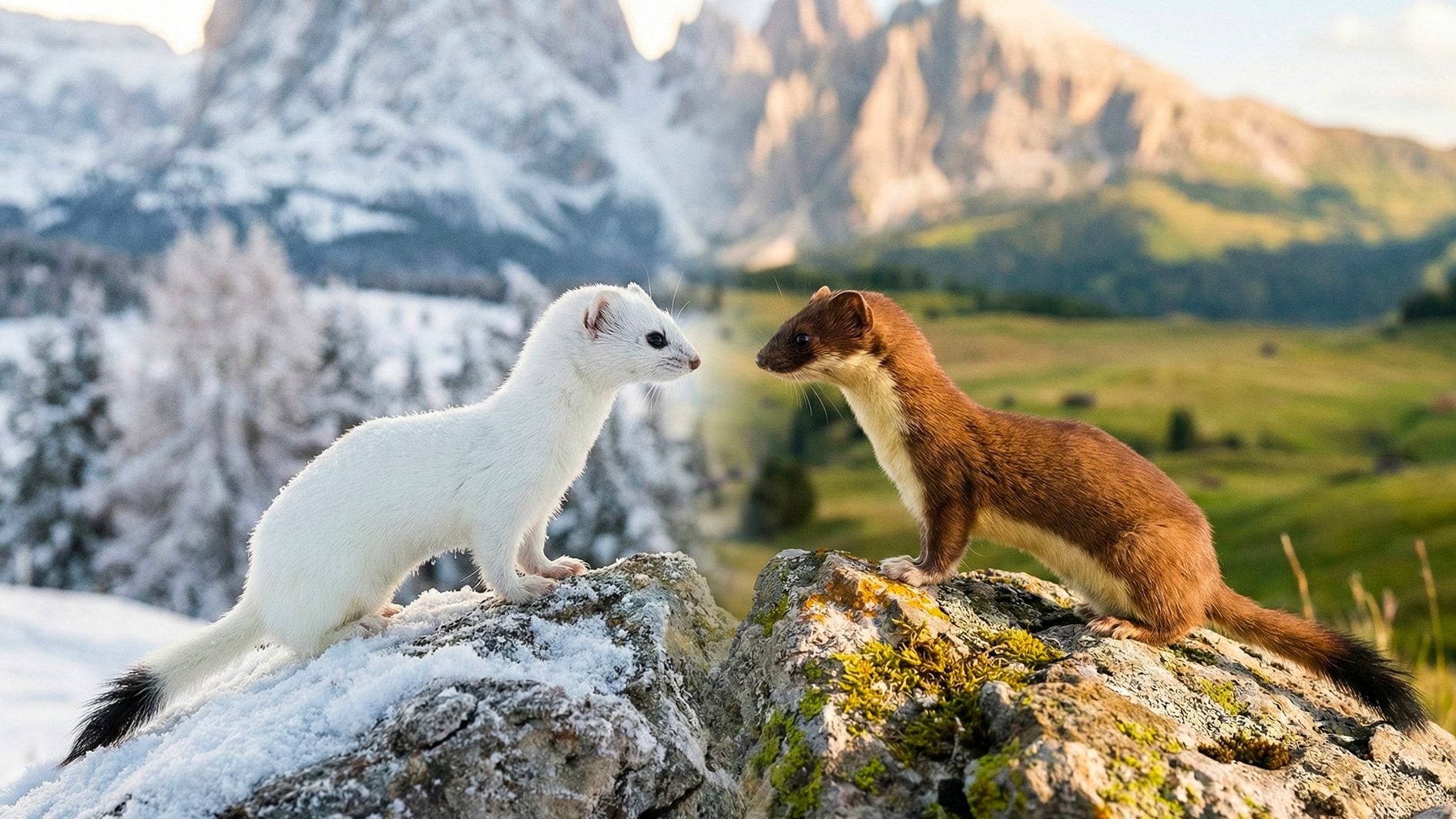
Tina and Milo are the Olympic mascots of the XXV Olympic Winter Games and the XIV Paralympic Winter Games of Milan-Cortina 2026. They are two stoats (Mustela erminea), sister and brother, with white and brown coats. They have a particular symbolic value: Tinadiminutive of Cortina, with a white cloak, represents i Olympic Games and his motto is “Dream big!“; Milowhich stands for Milan, with a brown coat, represents i Paralympic Gameshe is missing a leg, but he supports himself with his tail and his motto is “Obstacles are trampolines!“. Presented to the public on 7 February 2024, they were designed by the students of the “Costantino Mustari” comprehensive institute in Taverna, Calabria. The group of students with the idea of the pair of ermine brothers won the national contest launched in 2024 by the Olympic Committee and their drawing was chosen from over 1,600 proposals from schools across Italy. The two ermines represent inclusion, young people, the Italian territory and now characterize Olympic merchandising with soft toys, gadgets and t-shirts. Agile and agile inhabitants of the Alps, they are perfect representatives of the places where the Olympics are taking place.
What animal are we talking about? The ermine and its habits
The ermine (Mustela erminea) is a small one Mustelid mammalclose relative of the weasel (Mustela nivalis) from which it can be distinguished by the tip of its black tail. The body is thin and elongated, and the male (187-325 mm) is larger than the female (170-270 mm), even though the guys drew them the same height. He has very quick movements, he is agile and equipped with a particularly flexible spine: he is therefore an athlete worthy of the Olympics.
It is distributed in Europe, Asia and the United States, adapts to the most disparate environments, but prefers high altitude woods, forests and prairies. In Italy, it lives only in the Alps and in mountain environments up to 4000 m above sea level and is, therefore, typical of the places where the Olympics are taking place this year. It is a carnivorous predator, but is also adapted to eating fruits and berries. He is also a good “distance runner” (athlete specialized in cross-country racing), given that it makes long journeys every day and needs to feed every 4 hours: in winter, it reduces its activity and carries it out mainly during the night, when it hunts for small rodents. Young males in their first year of life move away from the family unit in the summer and go to conquer new territories. Their den is made in holes or in tree hollows and is covered in hair, dry grass and leaves.
Mimicry for all seasons: how the ermine’s coat changes
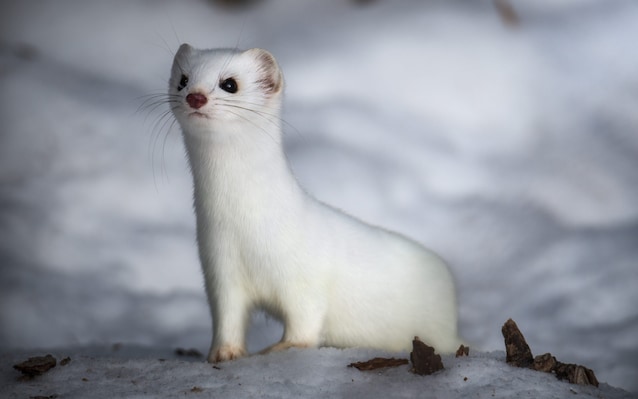
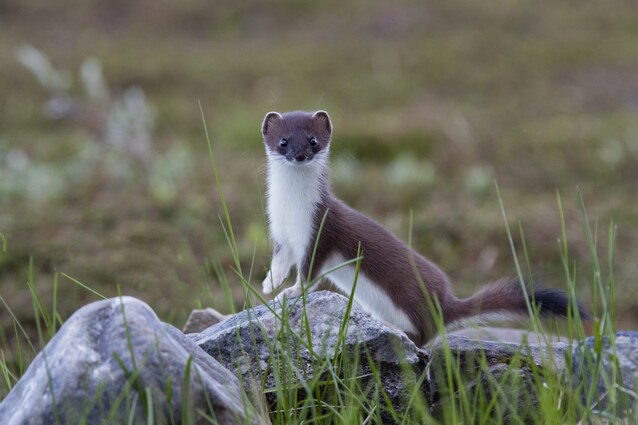
The ermine presents seasonal dimorphism: in fact, both sexes have a spring-summer coat with a reddish brown back and a white belly and throat and a completely white winter coatbut with a black tail tip in both winter and summer. In this way it manages to camouflage itself well among the branches and the ground in the summer and on the snow in winter to escape predators.
In the past, the winter fur of the ermine was particularly appreciated and used to make stoles and cloaks for nobles and authoritative figures; in fact, even today i Magistrates of the Court of Cassation they are also called “stoats” precisely because of the cape they wear at official events. The seasonal change of coat color is induced in these animals not so much by the cold or by the presence of snow, but by photoperiodthen from reduction in day length and sunlight in the winter. A recent study has highlighted the fact that shorter periods of snow cover due to climate change are affecting the survival rate of these small mammals, as the absence of a snowy landscape makes them conspicuous with their white fur and therefore easier to prey on.
Why an ermine was chosen as the symbol of the Olympics
There are two mascots representing the Milan-Cortina 2026 Games stoatssymbolic mammals of our Alps and masters of adaptation. The official mascots are called Milo And Tina: a simple but effective play on words that recalls the two host cities (Milanus and Cortina).
The details are not just aesthetic, Tina (with a light coat) from white colour recalls the winter livery of the ermine and is the symbol of the Olympics Milo (with a dark coat) represents the Winter Paralympic Games. An anatomical detail makes Milo special: he was born without a paw. However, he learned to use his tail as a support for walking and running. It is a powerful message of adaptation to underline that disability is not a limitation, but a characteristic that has stimulated the development of an alternative and creative solution.
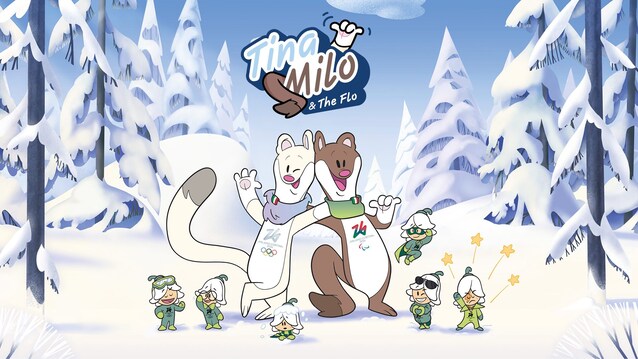
The choice of these two cute mustelids came through a popular survey at the end of an ideas competition involving students from all over Italy, chosen from over 1,600 projects sent by primary and secondary schools.
