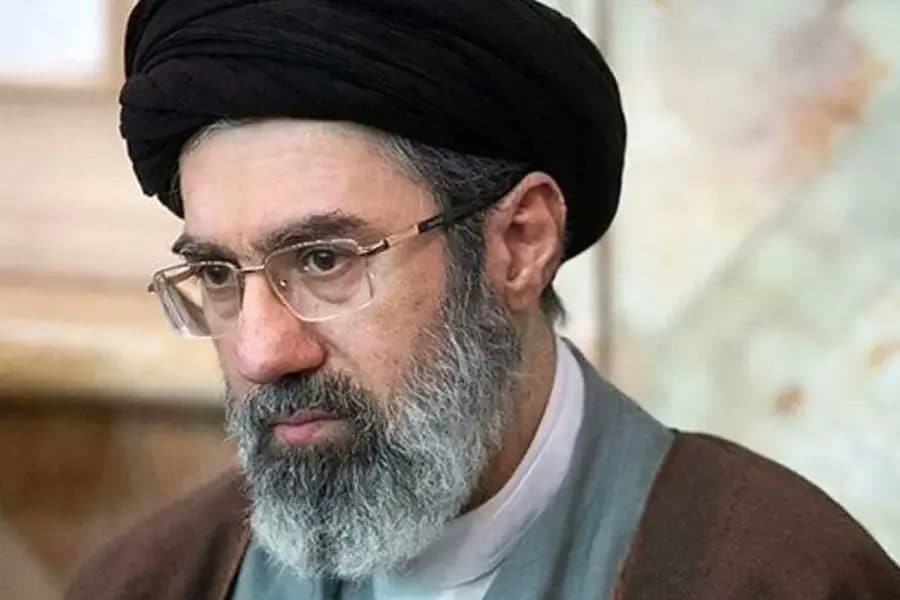
There new Supreme Leader of Iran is Mojtaba Khamenei, second son of Ali Khameneithe Ayatollah who led Iran for 37 years, killed in recent days by the United States and Israel’s bombing of Tehran. The appointment would be made byAssembly of Expertsfollowing a strong pressure on the part of Pasdaran.
Mojitaba, a 56-year-old Shiite cleric, has for years been considered by the Israeli elite as their favorite son and more influential of the late Ayatollah, and in the inner circle of the Revolutionary Guards there were those who expected him to take his place.
But essentially, who is Mojitaba and what has he done so far?
Born in Mashhad in 1969, the second son of Ayatollah Ali Khamenei built his power away from the spotlight. After his theological studies in Qom, Mojitaba served in Habib Battalion during the bloody Iran-Iraq war (1980-1988), and it is precisely during this experience that he managed to forge indissoluble bonds with the leaders of Pasdaran.
Unlike his father, Mojtaba has never held elective positions or public institutional roles, preferring to operate from within the Office of the Supreme Leader. In this headquarters of absolute power, he has worked for decades to influence strategic appointments in the areas of security and the economy.
Many claim that Mojitaba is the supervisor of the militias Basijthe paramilitary force that has killed more than 40,000 Iranians during protests in the last two months. This ruthless management of dissentcombined with control of vast economic assets of the countrymade him the most feared and powerful man in Tehran, preparing the ground for that dynastic succession which, until a few years ago, seemed incompatible with the very principles of the Islamic Republic.
His strategy aimed atsystematic elimination of rivals interior. Sanctioned by the United States already in 2019, it has transformed international isolation into an opportunity to armor the security apparatus, making its current rise the result of ruthless ten-year planning.
His appointment as Ayatollahwhich took place in the last few hours, was not free from criticism, especially towards the traditional clergy: this is because as early as 2022 the official media linked to the seminars of Qom they had started referring to him as “Ayatollah”, although he was not, in fact, one at the time. Qom is the holy city of Iran par excellence, and is considered the “Vatican of the Shiites”: without the support of its supreme scholars, it is impossible to govern Iran as a Supreme Leader.
In any case, authoritative sources such as the Encyclopedia Britannica and other geopolitical analysts underline how this was a “political” rather than academic step: in fact, Mojtaba had already held advanced law courses in Qom. This official “promotion” was not liked even abroad: in fact, there was no shortage of accusations of corruption, linked to the opaque management of the family’s financial resources.
For critics, his rise represents the final betrayal of republican ideals in 1979 in favor of one theocratic monarchy hereditary. Despite the financial shadows and the deficit of religious charismahis iron control over the institutions silenced any internal dissent, giving him the very role he aspired to.
