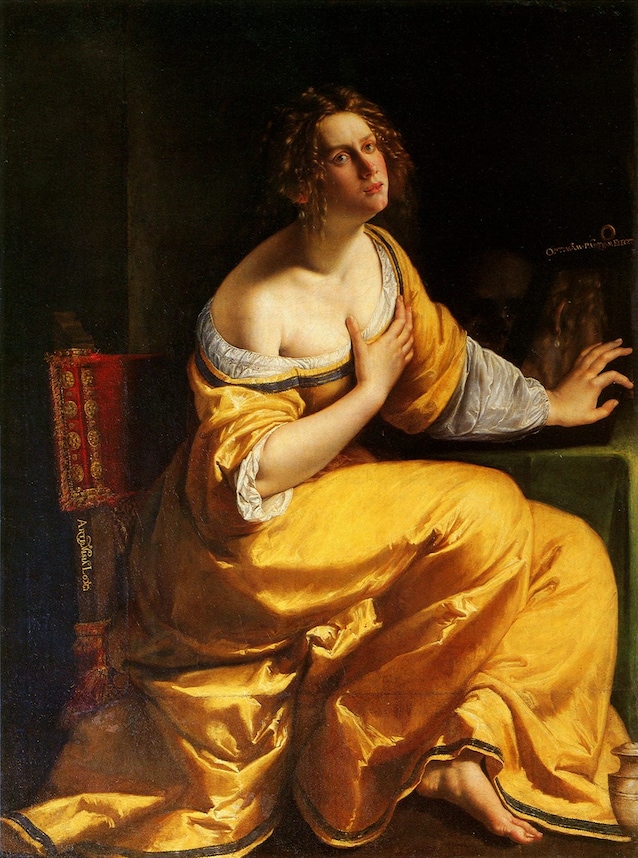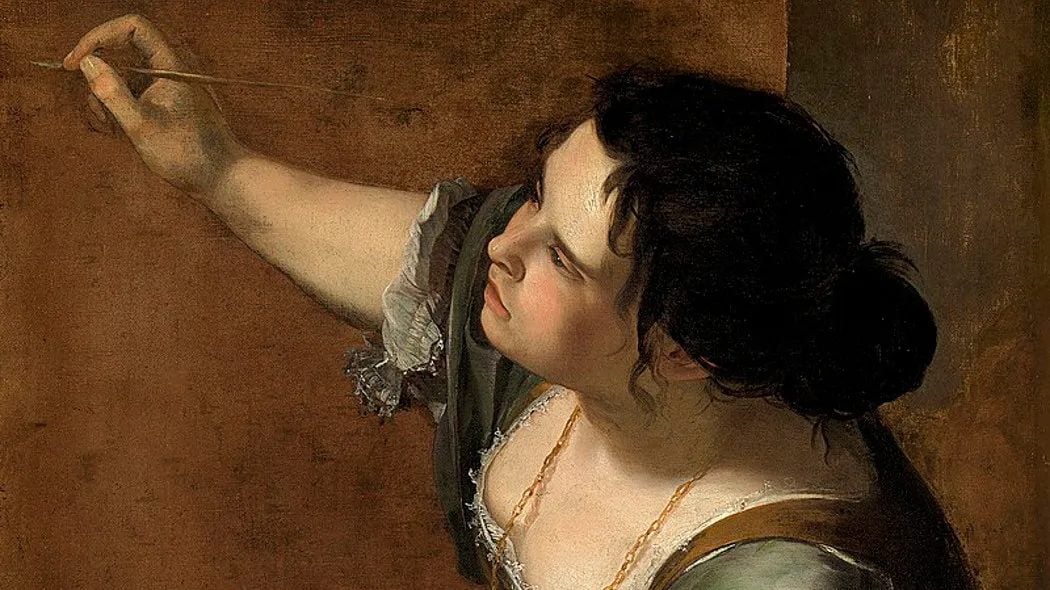
In recent years, many forgotten female artists have been rediscovered, a work that arises from the desire to rebalance the narrative of art which has been (and often still is) historically unbalanced in favor of men. Among these, it is increasingly famous and appreciated the great painter Artemisia Gentileschione of the few artists who, despite living in a closed society prejudiced against the abilities of women, managed to establish herself as a leading figure, despite adversity.
The life in brief of Artemisia Gentileschi
Born in Rome in 1593Artemisia grows up already surrounded by the arts: having demonstrated a precocious talent, her first teacher was the father, Horace, very close to Caravaggio, who taught her the rudiments of the trade while maintaining, however, a fairly conflictual relationship.
A sadly known episode in the life of Artemisia Gentileschi is that of sexual assault suffered at the age of 17 at the hands of Agostino Tassi, his father’s collaborator. Probably to avoid conviction, Tassi promised Artemisia to marry her, even though he already had a wife. He was then denounced by Orazio and this led to the trial whose documents allowed us to understand the story (including the torture to which the painter was subjected “to be certain of the truth”) but also many details of Artemisia’s life. Tassi was convicted and exiled, although a few years later he managed to return to Rome. According to some readings, this terrible aggression, which Artemisia recounted in detail in her diary, and from which she may never have recovered psychologically, spilled over into her work: for some critics, especially from the feminist area, this is why his painting became brutal; for others, however, it aligned with the grim taste typical of seventeenth-century art.
Married to the Florentine painter Pierantonio Stiattesi, nine years older than her, Artemisia he moved to Florence: here he acquired a good reputation and the protection of the grand dukes Cosimo II de’ Medici and Cristina of Lorraine, coming admitted (as first woman) in 1616 to the Accademia del Disegno in Florence. He later returned to Rome and also went to Venice, then to London, following his father (court painter of Queen Henrietta Maria) and finally to Naples, where he died between 1654 and 1656.
The works of Artemisia Gentileschi
Ignored for centuries by many art historians, Artemisia was reevaluated starting from an important 1916 article by Roberto Longhi, “Gentle father and daughter”after which its stylistic and expressive scope was reconsidered, especially for the dramatic and expressive style. Working according to the Caravaggio style of the time, combined according to some with the Bolognese style, Artemisia in fact proposed a very original art, characterized by great realism and often also sensuality which he applied to his own portraits, but also to religious or biblical paintings. His works are preserved throughout Italy – at the Uffizi and Palazzo Pitti in Florence, at the Palazzo Blu in Pisa, at the Galleria Spada in Rome and at the Cathedral of Pozzuoli, outside Naples – and abroad, from the Metropolitan in New York to the National Gallery in London.
Among the most important we find:
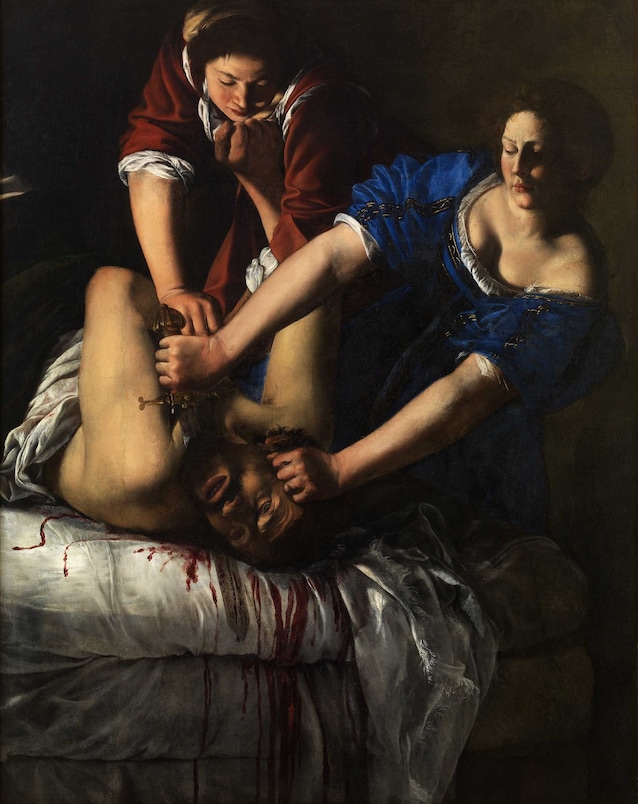
- Judith beheading Holofernes (1612-1613)preserved at the National Museum of Capodimonte (Naples)
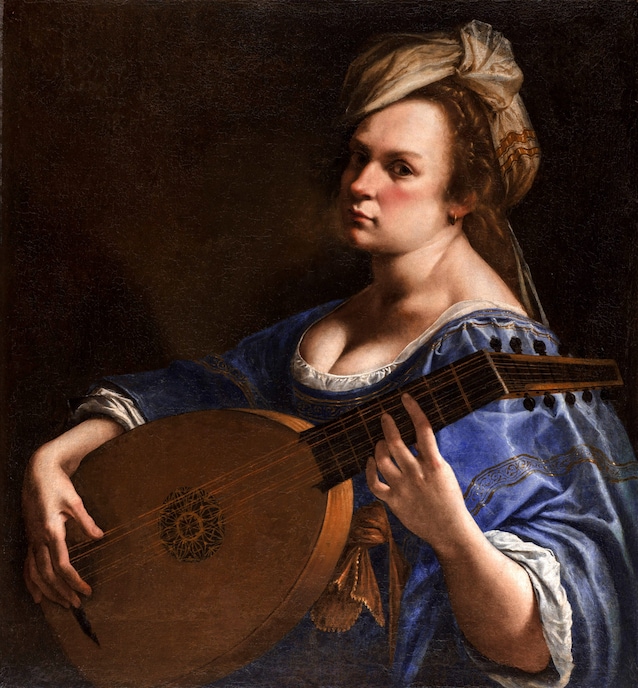
- Self-portrait as a lute player (circa 1615-1617)Curtis Galleries in Minneapolis,
- Conversion of Magdalene (1615-1616)Palatine Gallery of Palazzo Pitti (Florence).