
It may seem counterintuitive, but according to several research melancholy music and sad songs would activate some in us brain circuits related to pleasure, emotional regulation and empathy, suggesting that this type of music can help us feel less alonereduce stress and better elaborate emotions. It therefore seems that sadness in music is not pure pain, but that it can turn into a pleasant and even therapeutic experience.
What happens when we listen to sad music: because it can give us pleasure
When we listen to sad music, the areas of the brain that are activated are not all linked to sadness, on the contrary. According to several studies on music and emotion, the hippocampus and the amygdala, important centers respectively of the memory and of emotionsin particular negative ones. In addition, the researchers saw the activation of areas related to reflection and to the emotional regulation: upper and medial front round turned with more strength when the person listened to melodies in minor shadetendentially associated with “sad” music. One of the Main differences Between the greatest and lesser shade is the interval between the tonic (the first note) and the third note: in the larger shade The third note is higher (4 semitons above the tonic), in the minor shade The third note is lower (3 semitones above the tonic). Although there is a difference in a single semitone, it is enough to ensure that the melodies in greater shades more likely give a feeling closer to joy than to melancholy, while for the melodies in minor shade tends to take place the opposite.
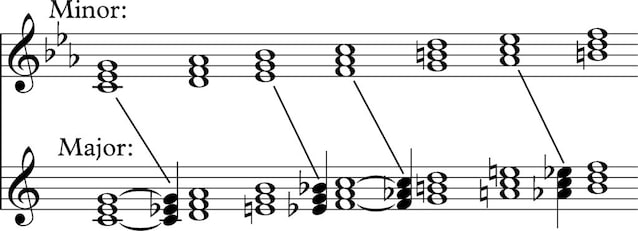
This typical interval of minor shade creates a harmony that the ear of the population western has historically interpreted and perceived as more dark And introspective. Curiously, the front orbit of the Caudato nucleus, areas very often linked to pleasant experiences.
Of course, in addition to the individual and cultural variability there are gods limits To the pleasantness of a sad song. According to a systematic review of 2015 published on Frontiers in Human Neurosciencethe sadness evoked by a song is judged Pleasant when it is not perceived as threateningwhen his “aesthetics” (timbre, harmony, structure, etc.) is pleasant for those who listen to it, and when it produces psychological benefits such as the Regulation of one’s emotions and the re -enactment of past memories.
Sad songs and empathy
Another reason for the charm of melancholy music is the Connection with others who manages to create, that the philosopher Jarrold Levinson called “emotional communion“. A sad song makes us identify with the author who wrote it and with those who listen to that song with us, to the point that people often say they feel more close to the composer When they listen to this type of music. Empathy is in fact a fundamental component in listening and in the perception of pleasantness of a sad song: on the one hand the melancholy music stimulates empathic responses; on the other from the collected data it appears that people who have higher levels of empathy in the tests seem more likely to listen to sad music when they find themselves in a negative mood.
According to what emerged from studies, melancholy music has the power to transform a negative emotion In a secure processing process, aesthetically pleasant and shared. It is a “area without dangers“which allows us to explore the pain Without really suffering it, and to make sense of emotions by feeling part of a group.
