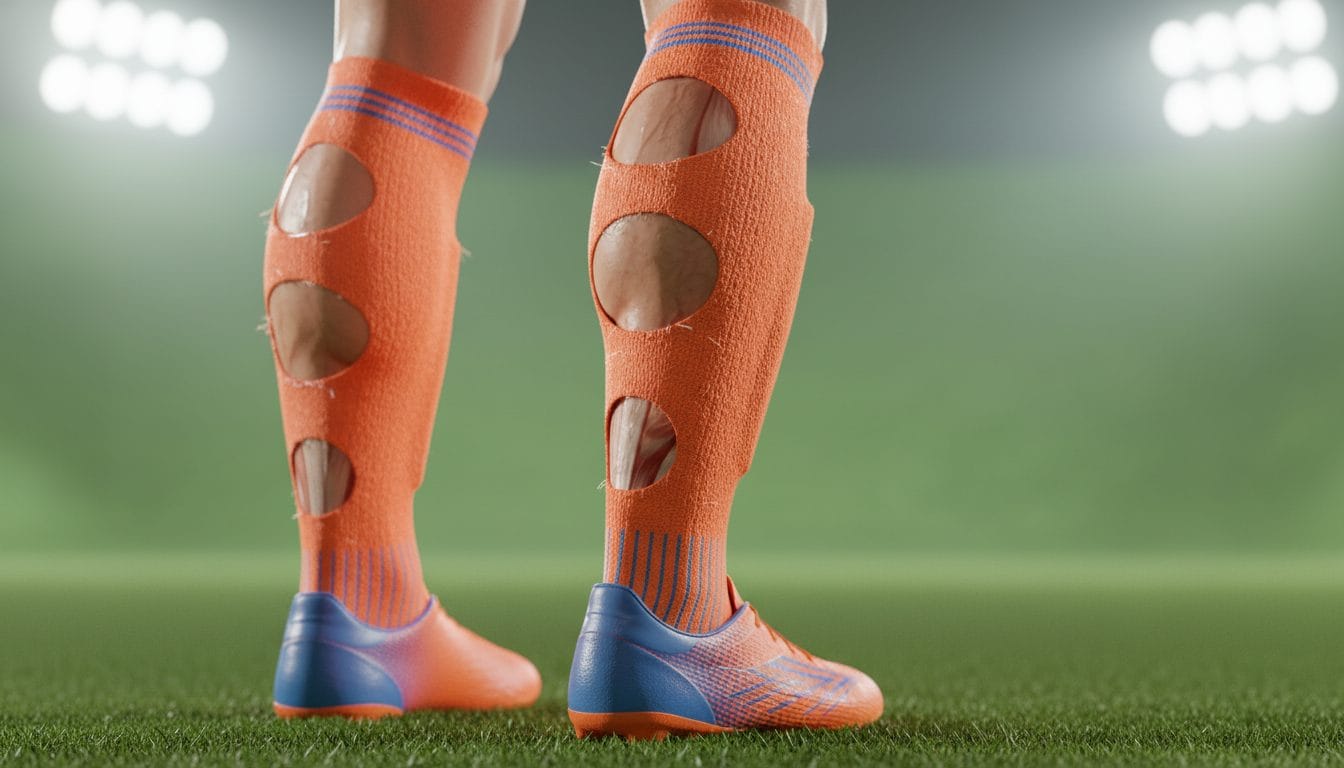
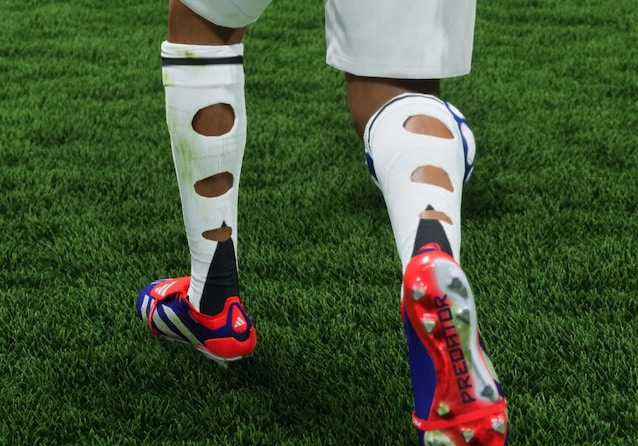
There are many athletes who, in modern football, choose to make goals before or during a match holes to their socks. This, as one might imagine, has always elicited a notable level of curiosity among the fans. Many journalists, in fact, have asked those directly involved several times the reasons behind this choice, obtaining, more or less, the same answer. In particular, that of Kyle Walkerformer Milan and Manchester City among others, remains among the most exhaustive: “Because otherwise the socks would be too tight for my calves and would cause problems. So instead I release the tension.” Players, therefore, claim to implement this practice in order to relieve tension on the calf and, consequently, reduce the probability of muscle problems like the typical ones cramps at the end of the race. However, several experts (from doctors to physiotherapists) were heard on the subject who agreed almost unanimously on the fact that it could be a sort of placebo effect.
The pattern of the holes in the socks on the calf
Anyone who has played football, at any level, knows well how annoying socks can be (especially if very high) and how much their adhesion can reduce the comfort of movements and technical gestures during training or a match. Now let’s imagine we have the calf very developed just like that of a footballer and wear socks during intense and prolonged physical activity high and very tight. The feeling of constriction could certainly be unpleasant. Here, therefore, a solution was found to comply with the problem: making holes in the socks, in some cases even going against the rules and impositions of the highest football bodies. If you then begin to associate this practice with a feeling of reduction of muscle problems (probably related in a casual way), this habit takes on even more value and credibility until it spreads like wildfire even in amateur football.
What science says about cutting socks before a football match
The Spanish newspaper AShas addressed the topic in the past, addressing several doctors, who declared that the benefits witnessed by the athletes were, in all likelihood, the result of psychological help: in other words a real placebo effect.
The literature is quite sparse on this type of topic, but a particular study, published on PubMed, which analyzes the effects produced by clothing compressive during intermittent and prolonged high intensity activity, It helps us clarify things a bit. First of all, some clarifications are in order. The first point to clarify is what sports compression clothing consists of. It includes all those compressive garments often used to aid recovery. Obviously, they have one composition different from the classic sports uniforms. Specifically, those used in the article referred to were made up as follows: 74% nylon and meryl microfibre And 24% spandex (a very elastic synthetic polyurethane fiber used, albeit in smaller quantities, also in classic football socks). Regarding intermittent and prolonged high intensity activity, you should know that it is a type of exercise characterized by repeated bouts of high-intensity activityinterspersed with periods of low intensity activity and it is typical of the team games like football.
Once the general overview has been clarified, we can analyze the results of the research which, although conducted with fabrics of a partly different composition compared to simple socks on the market, helps us to understand any consequences due to compression clothing. Compared to control condition (therefore without compression clothing), the tests carried out with the garments in question recorded a greater total distance travelleda increase in variable average speed and a higher level of tissue oxygenation taken into consideration. These benefits physiologicalwhich could be partly due to better recovery, would consequently bring advantages to the tactical game system on the pitch.
The scientific evidence currently available, although still limited, would therefore show one total absence of evidence in support of the famous holes. Indeed, in some ways it has been demonstrated as a adequate level of constraint on the muscles during the activity can bring significant benefits. In conclusion, the tears on the socks would appear to be simply one mental condition of ease or safety and, perhaps, even a sign of style.
Sources
The Newspaper Sear, J. A., Hoare, T. K., Scanlan, A. T., Abt, G. A., & Dascombe, B. J. (2010). The effects of whole-body compression garments on prolonged high-intensity intermittent exercise. Journal of Strength and Conditioning Research, 24(7), 1901–1910
