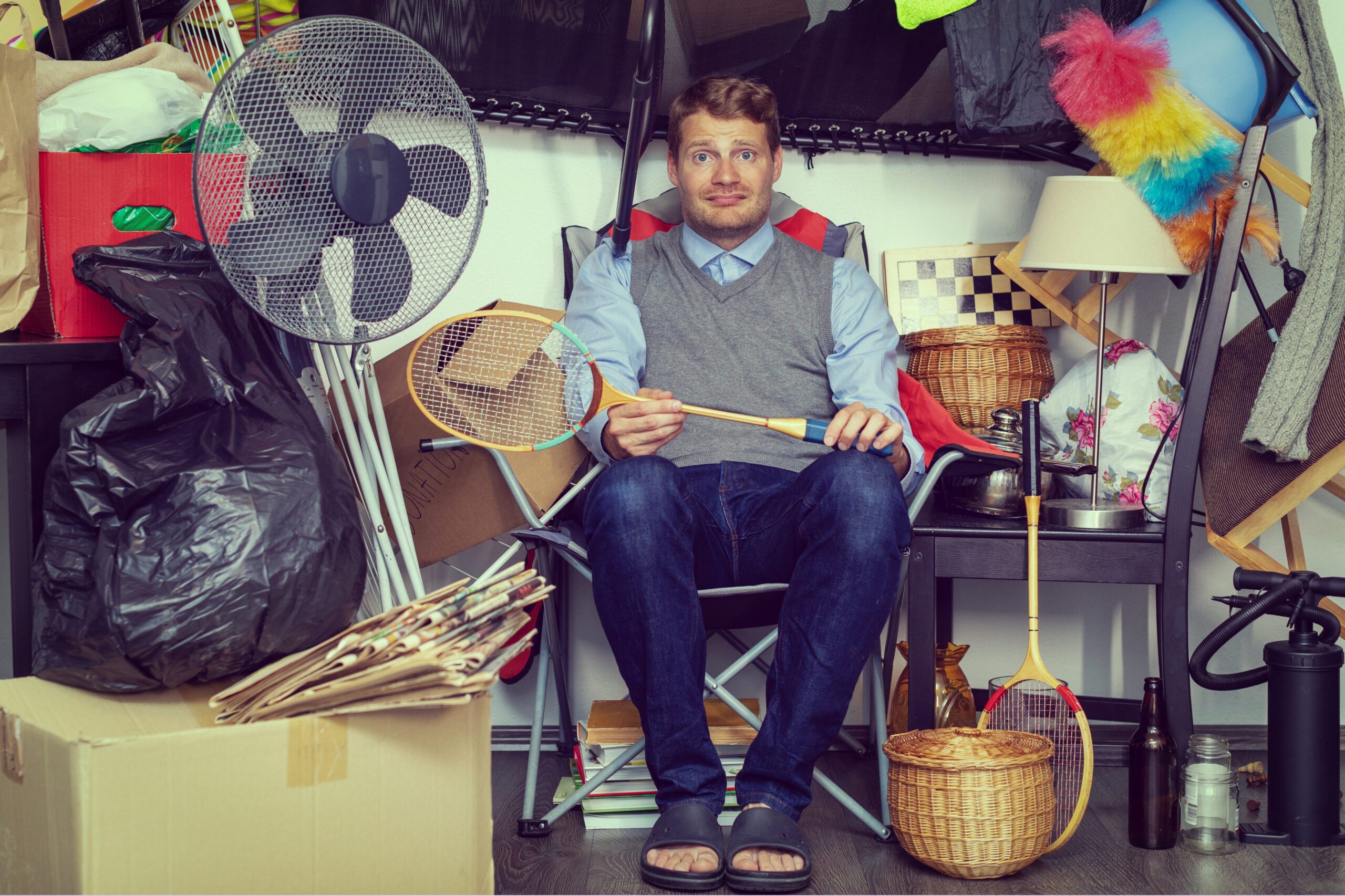
There is no point in hiding it: today’s world leads each of us to accumulate a lot objects, of which is often extremely difficult to get rid of! Yes, because with objects, just like with people, we can establish a real relationship emotional bond and attachmentregardless of our age and their material and instrumental value, making us try agitation and a mixture of negative emotions at the thought of throwing them away, as confirmed by several studies.
The explanations are different and range from our habit to anthropomorphize objects (how many of you haven’t railed against the remote control that doesn’t work?) up to the tendency to identify with them. Some objects, in fact, they reassure usothers allow us to travel in timewhile still others… simply “they can always be useful!The result? Our favorite objects lose theirs inanimate naturebecoming longtime friends from keep with care or, again, “horcruxes” (as Harry Potter would say) in which we store part of our identity.
Objects or humans?
Whenever we attribute to objects human characteristics and qualitiesby addressing them as a friend or relative, we are adopting a behavior called anthropomorphization. It happens, for example, every time we direct insults to the computer for yet another automatic update. Or even when we encourage our car to encourage it to go faster.
Anthropomorphize objects represents one of the most common natural tendencies of human beings, which can significantly change our way of relate to them. And it’s not simply a question abstract phenomenon: when we relate to objects, the our brain can activate partially overlapping areas to those that light up when we interact with humans. Thus, our objects lose part of theirs inanimate nature becoming more like us, sealing the formation of a more “human” emotional bond which, just like with a good friend, can make more complex to separate from.
Objects as time machines
Many people have the habit of preserve objects linked to lived experiences on your own skin. Old tickets, photos and souvenirs left to gather dust can in fact become real treasures switches of autobiographical memory (of the cuesin technical jargon), which help activate the brain areas in which they are located kept memories of episodes and events in our lives which, otherwise, we would risk forgetting.
This mechanism is especially true for elderly people. As age advances, the cognitive abilities tend to get worse, clouding our memories, while the physical ailments they limit the possibility of having new experiences. So old dusty objects can take on the appearance of a real DeLorean from the film Back to the futuretaking us back to past moments and loved ones with whom we shared important parts of our lives.
In this way, objects do not simply evoke the past, but help us to remember who we are and the journey we have been on.
It could always be useful!
Objects not only have sentimental value, but also one instrumental. Simply put, they are for achieve a specific purpose. The instrumental value of a car, for example, is to transport us from one place to another. Yet, just open the drawer of any piece of furniture to realize how many objects we continue to conserve even when they can no longer fulfill their function, simply because… “they could always be useful!”.
Probably, in these circumstances we are perfectly aware that we are lying to ourselves, but the mere idea of a possible future job pushes us to increase their perceived valuemaking them still appear indispensable to us. On the other hand, we all have at least one box full of smartphone chargers that are now out of production and in disastrous conditions or, as Luciano De Crescenzo would say in Thus spoke Bellavistafull of “strings too short to be used”.
Not just objects, but part of our identity
In an attempt to give away an object to which we are attached, we may experience a strong feeling sense of bewildermentalmost as if we were giving up a part of ourselves. Maybe that old sweater, now faded and felted, that we haven’t worn for years. These sensations, often kept hidden, are more common than we think. Over time, in fact, the objects that we chose carefullythose who reflect our tastes and they walked us in particular moments in lifethey acquire a symbolic valueto the point of perceiving them as essential elements to define the our identity and our self.
Separating ourselves from them would risk losing one part of us (or at least, so it seems to us). The result? The old sweater is still there in the closet, reminding us of the extraordinary power of our mind and his innate propensity to create bonds.
Sources:
Kwok C. et al., Object attachment: Humanness increases sentimental and instrumental values, 2018 Yap K. et al., Unpacking the construct of emotional attachment to objects and its association with hoarding symptoms, 2019 David J et al., Redefining object attachment: Development and validation of a new scale, 2022 Melissa M. et al., The psychology of object attachment: Our bond with teddy bears, coffee mugs, and wedding rings, 2021 Wan EW et al., Anthropomorphism and object attachment, 2021
