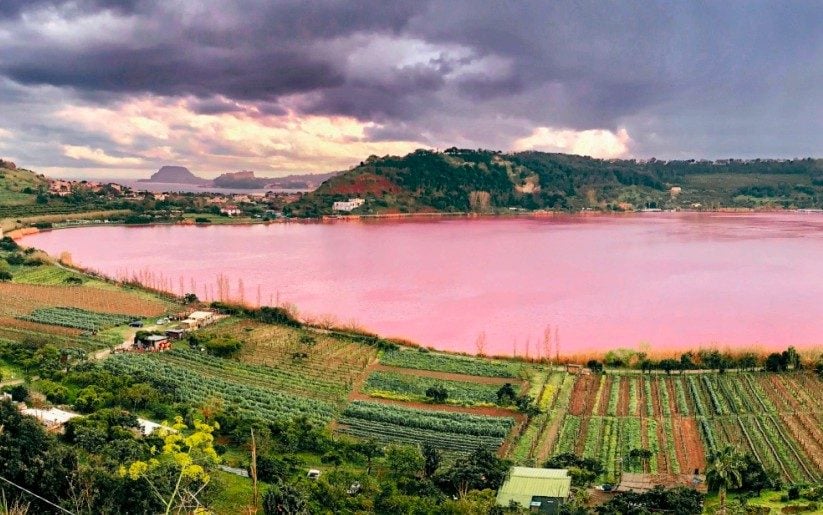
The Lake Avernuslocated along the western edge of the Caldera of the Campi Flegreiin recent days it has returned to dye yourself a color between pink and red as has already happened other times in the past. The curious phenomenon has nothing to do with bradyseism, but is linked to proliferation and bloom of a particular algae which in the presence of certain conditions is capable of making water coloured. In recent years these episodes have become more frequent due toincrease in temperatures linked to ongoing climate change.
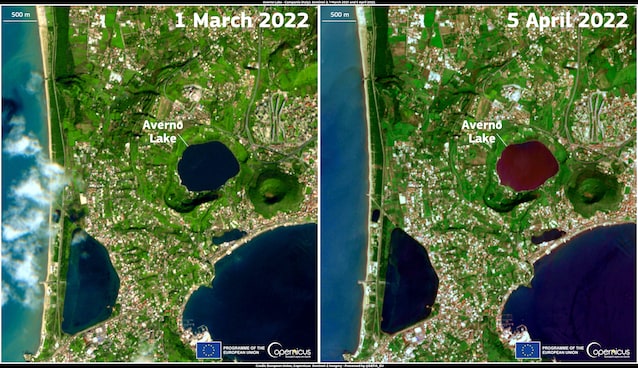
The algae bloom that colors Lake Averno red
At the origin of the red color that the waters of Lake Averno have taken on, which occupies the crater of an extinct volcano in the municipality of Pozzuoli, there is the algae bloom Planktothrix rubescens. It is a cyanobacterium that has a red-brown photosynthetic pigment, phycoerythrin, and which thrives in environments characterized byhigh concentration of mineral salts.
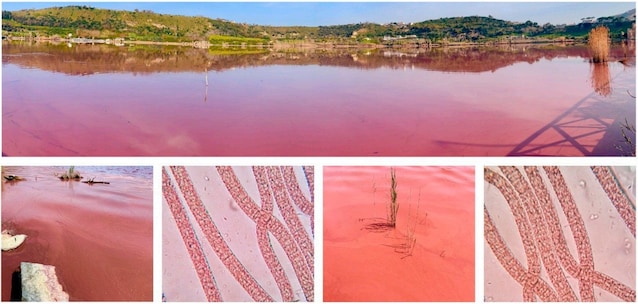
The algae usually blooms in winter and spring monthswhen a mixing of the waters of the lake. This is caused by the cooling of the superficial layers of the lake waters: as they become colder they become heavier and sink, favoring the rise of the cyanobacteria to the surface, where they find their conditions favorable for flowering. In the past the algae bloomed occasionally, every five to ten years. In recent years, however, the phenomenon has become more frequentdue to the increase in temperatures which favors the growth of these microalgae. In the past, the analysis of the lake waters in conjunction with these episodes revealed the presence of toxins: the algae is in fact potentially toxic and capable of damaging the lake’s ecosystem. Furthermore, its proliferation takes away oxygen to the waters and can put the fish that live there at risk. There are other lakes in the world that occasionally turn pink due to microorganisms: examples include Laho Hillier in Australia and the Retba Lake in Senegal.
How Lake Averno was formed: the characteristics
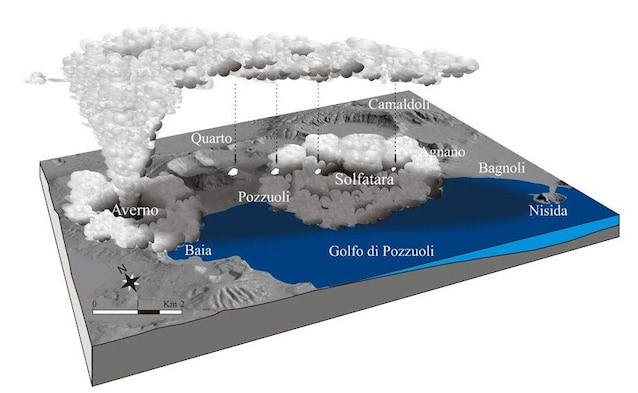
Lake Averno, with a surface area of 0.55 km² and one maximum depth of 35 mit is the second largest lake in the Campi Flegreiafter Lake Fusaro. It was formed in a circular depression originating from the collapse of a volcanic edifice less than 100 m high above sea level and located approximately 800 m from the coast, along the western edge of the Campi Flegrei caldera. The lake is fed by a superficial water table, close to sea level. It is one of the areas of the Campi Flegrei, together with that of the Solfatara and Baia, in which i secondary volcanic phenomenalike fumaroles, are more intense. The volcanic materials present in the area of Lake Averno can be traced back to two volcanic eruptions which occurred 5250 and 4280 years ago respectively. There first eruption took place along the southwestern margin of the lake and generated a volcanic edifice now buried by the deposits of thesubsequent eruption. The latter occurred in three phases, during which one was generated eruptive column up to 10 km highwith pyroclastic flows and phreatomagmatic explosionsdue to the interaction between magma and water circulating underground. As a consequence of this event, the eruptive center migrated and the building was formed that is currently observed.