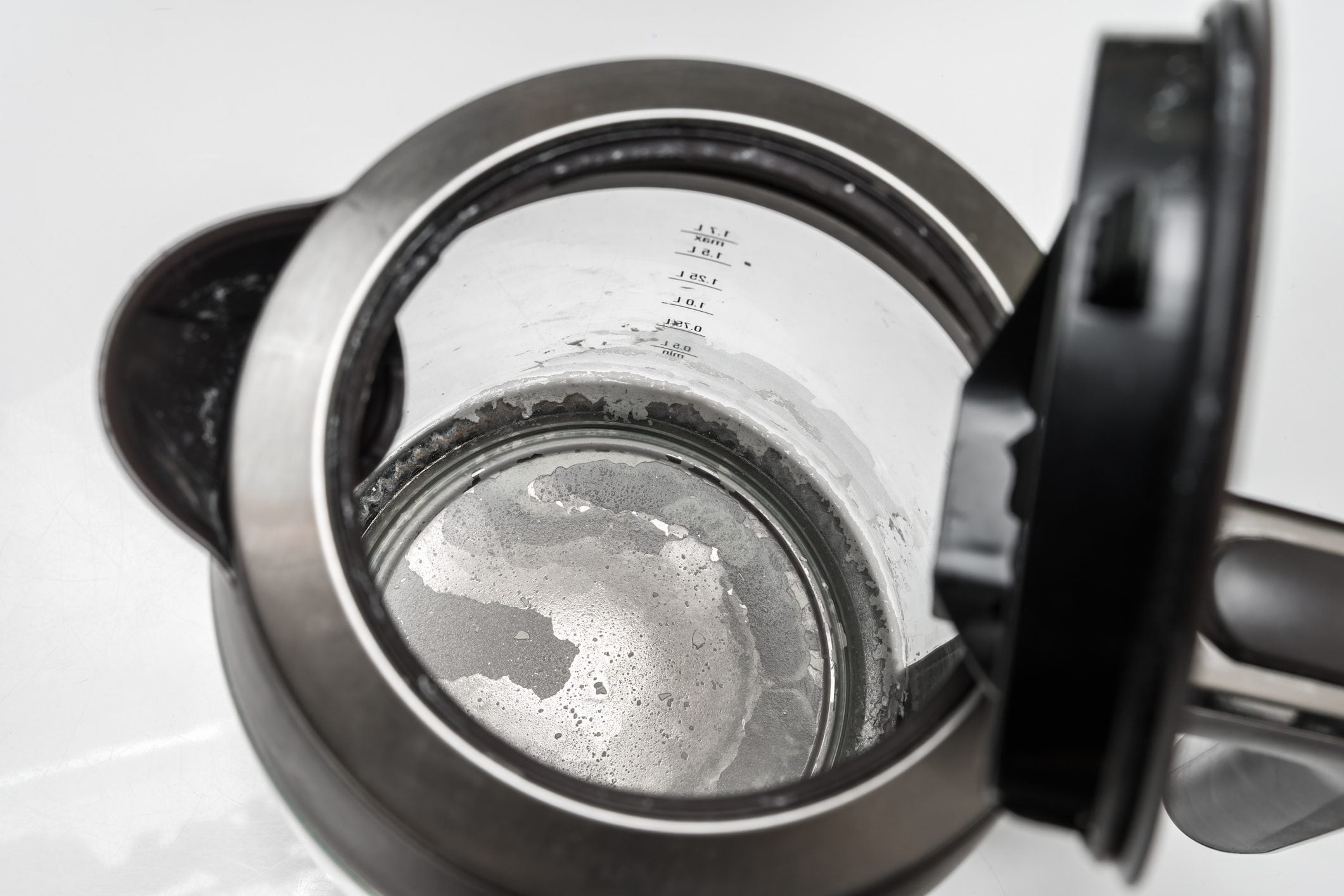
The limestone it is one of the main enemies of electric kettles. It is formed when thehard waterrich in calcium and magnesium, is heated: insoluble salts, such as calcium carbonate (CaCO3)are deposited on the walls, creating typical white crusts. Not only is it not much to look at (the outer glass becomes all opaque compared to the transparency of the brand new product), but in the long run the kettle can become less efficienttaking longer to heat up, especially if limescale starts to build up on the resistence. Fortunately, eliminating it is simple: weak acids, such asacetic acid some vinegar or citric acid of lemon, they easily dissolve the carbonates that form limestone. Just let them sit for a while and then rinse well. With one periodic cleaning the kettle remains efficient and free from encrustations.
The chemical cause of limescale in the kettle
Limescale appears if we use hard watercontaining significant quantities of calcium ions (Approx2+) And magnesium (Mg2+) dissolved. When the water comes heated – as happens in the kettle – and slowly evaporates, the ions transform into poorly soluble saltsabove all calcium carbonate (CaCO3)which precipitate and deposit on the internal surfaces of the appliance. Over time these deposits become increasingly thicker and more visible, the classics white crusts which make the walls of our appliance opaque.
According to the Guidelines of the Istituto Superiore della Sanità, published in the ISTISAN Report 22/32 on water quality, the presence of calcium and magnesium does not represent a health riskbut can cause encrustations in household appliances and plumbing systems, compromising its efficiency. In kettles this can be translated into longer boiling times, less energy efficiency and the formation of white scales which can end up in the water poured into the cup. The harder the water, the more quickly limescale accumulates on the internal surfaces of the device every time we heat water for a herbal tea or infusion.
Because weak acids such as vinegar and citric acid remove limescale
Fortunately, the weak acids we find at home come to our aid once again: limestone deposits are made up of carbonates, in particular calcium carbonate (CaCO3), who react easily then acidic environments (H+), splitting into carbon dioxide (CO2), water (H2OR). and soluble calcium ions (Ca2+). The reaction is very simple:
CaCO3 + 2H+ → Approx2+ + CO2 +H2OR
That H+ indicating acidic environment can derive from common substances such as acetic acid ofvinegar or citric acid of lemon juice, which therefore manage to neutralize the carbonates allowing their elimination with a simple rinsing. For this reason many home maintenance manuals recommend this slightly acidic solutions to remove encrustations caused by hard water. We won’t need any harsh or abrasive cleaners, just the chemistry of vinegar or lemon is enough.
How to remove limescale step by step
We advise you to always follow what is indicated in the instruction manual of your appliance, but in general, removing limescale from the kettle is quite simple and takes little time:
- fill the kettle with a solution of water and vinegar (this way we will avoid waste – unless your kettle is in such bad shape that it requires a liter of vinegar!) or water and lemon;
- leave to act for some time, which can be several minutes or a few hours depending on the condition of the kettle;
- empty the kettle and observe whether the limescale has dissolved. If residue remains, it can be scrubbed gently with a non-abrasive sponge or brush;
- rinse several times with clean water and boil fresh water once to eliminate any residues of vinegar or citric acid.
This procedure dissolves the encrustations without damaging the material of the kettle e without using aggressive products. Repeat the operation periodically – especially in areas with very hard water – helps keep the appliance efficient and avoid limescale build-ups that are difficult to remove.
