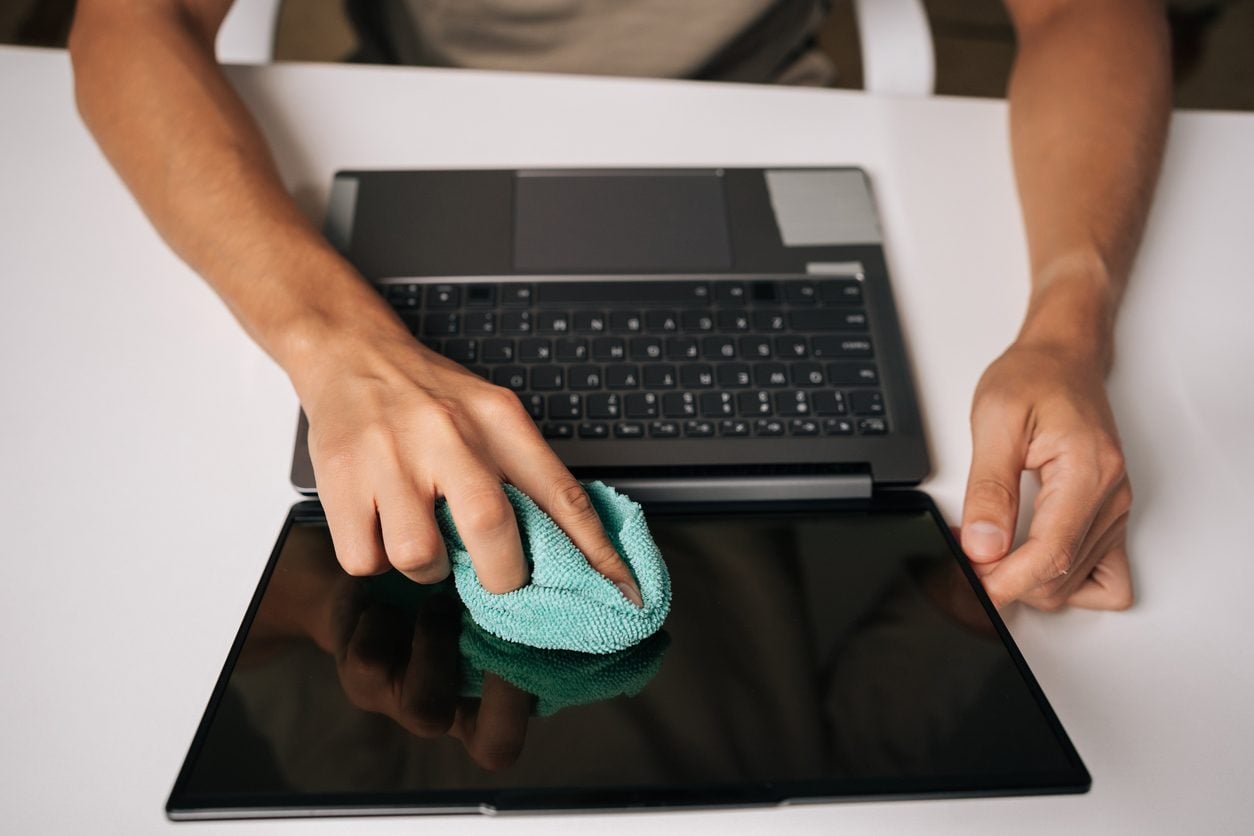
THE microfiber cloths they are the right allies if we want to remove dust from screens or any other surface. They are fabrics made with extremely thin synthetic fibresgenerally composed of polymers such as polyesters and polyamides, which are organized and intertwined so as to have air chambers in the fabriccapable of trapping dirt. Furthermore, microfibres can take on electrical charges capable of attracting more particles to themselves, and are also very absorbent, managing to retain large quantities of liquids, including oils and water up to seven times their weight. For this reason they are particularly effective for clean delicate surfaces such as screens, eyeglass lenses and glass, often even without detergents.
What microfibers are made of, what they are and what they are used for
Microfiber is a synthetic material composed of polymersthat is, long chains of repetitive units linked together, called monomers. Among the most used polymers we find i polyesters (like the PET) and the polyamides (like the nylon). Often microfibers are not made of a single material, but are fibers two-componentthat is, made up of two different polymers combined within the same filament. The two materials are melted or dissolved in a solvent and brought together through specials spinning nozzlesin a process known as extrusion. Depending on how the polymers flow and meet inside the nozzle, the filaments can take on different structures. Among the most common configurations, also reported in a study on e-Polymers, we find:
- “side-by-side“: the two polymers flow side by side and are extruded together creating a fiber where they remain next to each other along the entire length of the filament.
- “core/shell“: one of the two polymers forms the internal “core” of the fiber, while the second covers it externally like a sheath.
- “islands-in-the-sea”: one of the two components is dispersed in the other, often in the form of tiny droplets. If you look at the section of the filament, appears like a small archipelago: many “islands” of one material scattered in the “sea” of the other.
- “segmented-pie“: in section, the fiber resembles a pizza divided into wedgeswhere the polymers form radial segments which start from the center and reach the outside.
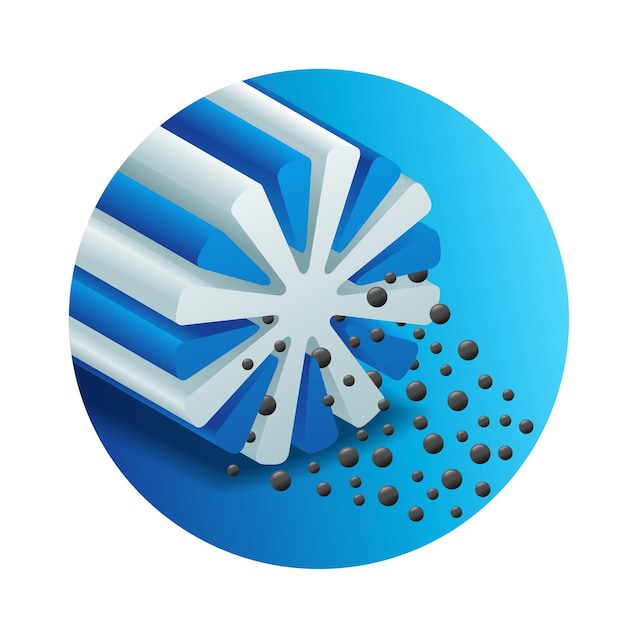
In all these cases, the polymers they do not react chemically with each otherbut they are simply combined through a physical process. This allows us to obtain fibers that combine the properties of both polymers, such as resistance, elasticity and absorption capacity.
The secrets of microfibers for cleaning at home
These fabrics are composed of very thin fibreseven tens or even hundreds of times thinner than human hair, depending on the thickness of the hair: we often talk about a diameter of between 2 and 3 microns (μm), i.e. millionths of a meter. Before becoming a fabric, however, these fibers are brought together into small bundles, much like when thinner threads are twisted into rope, forming slightly thicker yarns which in turn are woven together to create the final cloth.
Their effectiveness in removing dirt depends above all on the way these fibers are organized. What does this mean? Let’s imagine that there is a layer of dust on a table and that we try to eliminate it with two objects: a handkerchief and a brush.
The handkerchief, with its smooth surface, will tend to move the dust rather than retain it. The brush, however, will trap dust particles among its many bristlesensuring greater cleaning effectiveness. This principle can also be transferred to microfiber cloths. In fact, if we look at these fabrics with a closer look, we will notice that they present small protrusions That they significantly increase the contact surface. At the same time, the microfibers are woven together to create tiny air spaceswhere the dirt remains trapped. In this way the microfibre cloths offer multiple attachment points for particles and they also manage to penetrate the microscopic irregularities of the surface they are cleaning. Simply put, microfiber cloths don’t just move dirt: they they capture.
Microfibers can too become electrostatically charged increasing their ability to attract particles. They are also very effective at absorbing liquids: according to the book “Technical Textile Yarns”, microfiber fabrics have high retention of fluids, including oils, and can absorb and retain water up to seven times their weight.
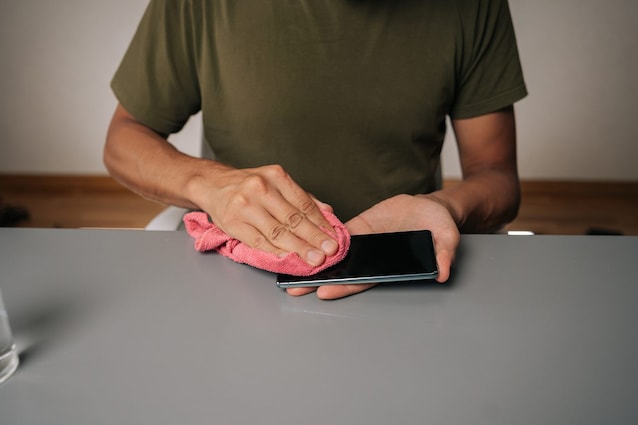
For all these reasons, microfiber cloths are considered among the best materials for not only cleaning screens of electronic devices, but also glasses lenses, mirrors, tiles, steel and many other hard surfaces, often even without the use of detergents. Many prefer them for cleaning cell phone or tablet screens because, being very soft to the touch, they are difficult to damage. But Attention: If the cloth catches slightly larger, irregular debris that gets dragged across the screen along with the fabric, it can end up scratching the screen.
