Following thejoint attack Of United States And Israel against theIranthe conflict in the Middle East has now entered the height of an unprecedented escalation, also involving other countries in the region: the news of the last few hours reports new Iranian attacks against the Bahrainwith at least 32 injured, while Israel said it destroyed 16 planes at Tehran Airport.
In this ever-changing geopolitical context, there have been numerous questions about a possible involvement ofItaly and other NATO member countries, especially after a missile headed towards the Türkiye was intercepted and shot down by the military forces of the Atlantic Alliance, while in our country the debate on the use of US military bases.
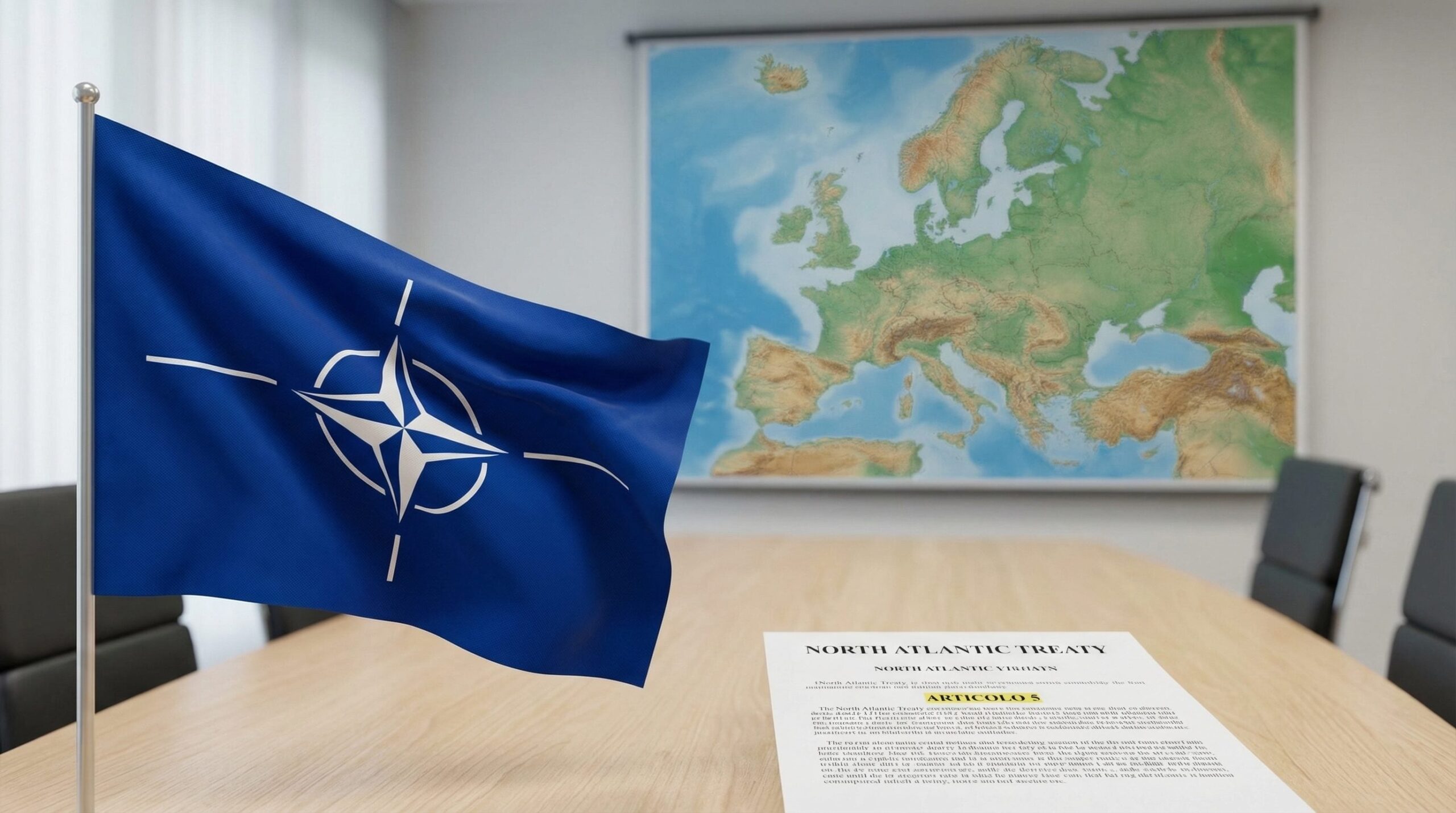
In order to have a reliable answer to the question, it is necessary to examine in detail thearticle 5 of the Atlantic Pact (or North Atlantic Treaty), which establishes that an armed attack against a NATO member will be considered the same as an attack against all other members of the Alliance.
What does Article 5 of the Atlantic Pact say: collective defence
The Atlantic Pact, signed in Washington on April 4, 1949states attArticle 5 the so-called principle of collective defenseaccording to which an armed attack against one or more States parties to the Treaty is considered as a attack to all parties. By virtue of the right to legitimate defense – both individual and collective and also recognized by art. 51 of Charter of the United Nations – Article 5 establishes that the parties will be able to assist the attacked State with the action they deem necessaryincluding the use of armed force, with the aim of maintaining international security.
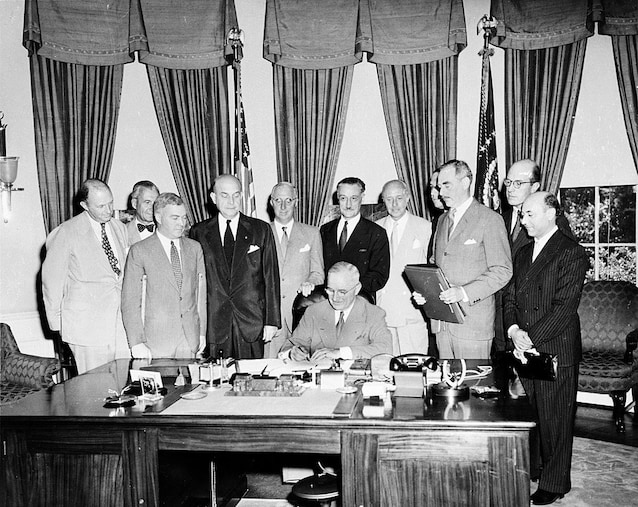
The article also states that any armed attack and the consequent measures undertaken by States must be brought to the attention of the United Nations Security Council. Throughout NATO history Article 5 has been invoked only onceon the occasion of the attack on the Twin Towers ofSeptember 11, 2001following which the United Nations Security Council adopted resolution no. 1368in which he recognized the United States’ right to individual and collective self-defense. The consequence was thereinvasion of Afghanistan to overthrow the Taliban regime, an operation that only ended in 2021 with the withdrawal of US troops from the area.
What a NATO Member State can do if Article 5 is triggered
In the event that Article 5 is activated, each state would evaluate independently the type of intervention who thinks more adequate: this, in practice, can translate into economic sanctions, but also logistical and military support for the mission.
Article 5, therefore, does not foresee necessarily one automatic military-style responsebut it depends on assessment of allies and circumstances. States, among other things, can also act individually in defense of an ally, while every response of NATO as a whole is decided by North Atlantic Council.
In the past, for example, the Alliance has adopted collective defense measures on the occasion of the Russian invasion of Ukraine or, at the request of Türkiye, on three occasions:
- In the 1991 with the launch of Patriot missiles during the Gulf War. The MIM-104 Patriot missile is one of the most advanced US surface-to-air missiles for defense;
- In the 2003 with a series of defensive measures in the so-called Operation Display Deterrence in Iraq. The latter was an operation 65 days to protect the Turkish border near Iraq. The defense measures consisted of AWACS surveillance aircraft and related crews, TMD unit and equipment biological and chemical defense;
- In the 2012 in Syria with the deployment of Patriot missiles.
Participating in the defense of an allied country does not mean going to war
In the specific case of the current conflict in the Middle East, it must be emphasized that, unlike the United States, Israel it is not a full member state of NATObut rather a associate member of the Mediterraneantogether with Algeria, Jordan and Morocco.
Unlike full member countries, i Associate member countries participate in the political and military alliance of NATO but they do not have the same rights and obligations of the full Member States. Among these also includes the protection guaranteed by art. 5: therefore, if a partner country finds itself in a crisis situation, i NATO member countries they can start a consultation And decide whether to intervene or not, but any participation or support (military or otherwise) is not automatic.
In short, participating in the defense of an allied country does not necessarily imply going to war with an armed attack: each NATO member country can decide independently what actions to take, including those of the armed typeand according to one’s own constitutional procedure. In this regard, the Prime Minister Giorgia Meloni declared that «Italy is not at war and does not intend to enter it».
In any case, our Constitution establishes in article 78 that apossible authorization for a military intervention must necessarily pass through the Parliamentto then be approved with a formal law, promulgated by the Head of State (ex article 87 of the Constitution) and subjected to scrutiny by the Constitutional Court.
Therefore, no limitation on state sovereignty derives from the North Atlantic Treaty it is not expected mandatory themilitary intervention by a State, constitutional primacy is in force.
