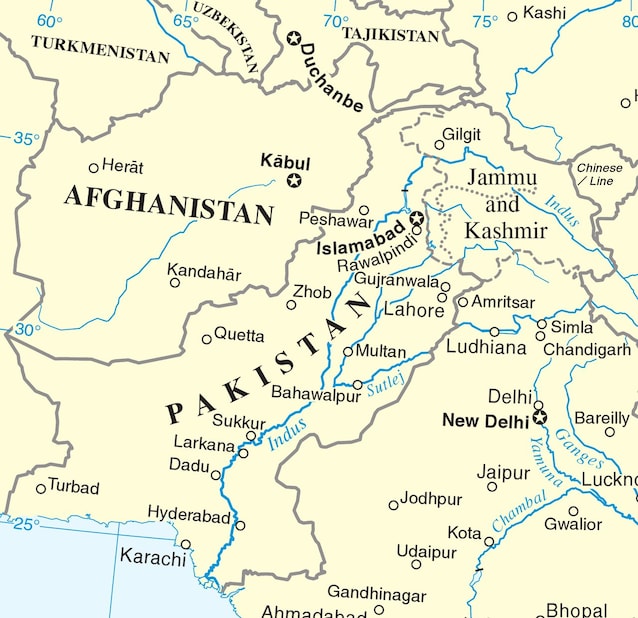
On the night between Thursday 26 and Friday 27 February, the Pakistani air force attacked numerous Taliban positions in Afghanistanin the cities of Kabul, Kandahar and Paktika province. According to the authorities of Islamabad, 9 positions were conquered, with the death of 228 Afghan Taliban, a budget that could continue to rise. However, according to Afghan sources, numerous civilians were killed in the air attack, including women and children. The Pakistani defense minister declared that Pakistan is in “open war”, while the Kabul government “vehemently condemns the violation of Afghan airspace and the attack on civilians, a flagrant violation of Afghanistan’s territorial integrity and a provocative action”. These events occur a few months after the last crisis between the two countries in October 2025.
The causes of the attack
The Defense Minister of PakistanKhawaja Mohammad Asif, through a post published on the social network Pakistan and Afghanistan we have now reached a phase of open war. The night bombings conducted by Pakistan on the night between 26 and 27 February occurred in a context of already strong tension and clash between the two countries. In the previous weeks, and in particular in the night between February 21st and 22ndPakistani armed forces had attacked some Afghan provinces, including Nangarhar, in particular by targeting alleged training camps which – according to Pakistani sources – are attributable to extremist groups Tehrik-e-Taliban Pakistan (TTP) And Islamic State – Khorasan Province (Iskp). Pakistan, in fact, accuses the Taliban government to support anti-Pakistan terrorist groups, including formations linked to the independence movement of the south-eastern region of Balochistanheld responsible for suicide attacks in Pakistani territory, accusations always rejected by the Kabul government. Islamabad also said it acted in response to an attack launched by Afghan forces on border troops Pakistanian escalation that reflects months of growing tensions along the Durand Line, the long border between the two countries. Following the clashes ofOctober 2025, which caused approx 70 victimsmost of the border crossings between the two countries was closed for security reasons, with the temporary interruption of trade and cross-border exchanges.
The latest crisis between Afghanistan and Pakistan in October 2025
In October 2025, one occurred serious crisis between Afghanistan and Pakistan: the militant group Tehrik-e-Taliban Pakistan (TTP), also nicknamed “Pakistan Taliban” and present in eastern Afghanistan, have been the subject of numerous military reprisals by Pakistan, one of the most violent in the night between on 8 and 9 October 2025, and which was followed by clashes along the border between the two countries. These tensions then saw a phase of diplomatic negotiation with the mediation of Türkiye and Qatar. The result was a brittle cease-fire, which however did not really achieve the objective of a lasting agreement between the two countries.
Pakistan’s defense minister Asif accuses the Taliban regime of undermining Pakistan’s internal stability and regional security by maintaining close ties with the government of New Delhifor “exporting terrorism to Pakistan” and fearing that theAfghanistan can ally itself with India to create tension within the country by leveraging the military group Tehreek-e-Taliban Pakistan (TTP).
International reactions: Iran as mediator, the United Nations invites dialogue
Following last night’s Pakistani attack, the Taliban government spokesperson Zabihullah Mujahid declared himself to be open to dialogue and that we wish to collaborate in finding a peaceful solution through negotiations. Meanwhile, numerous international actors have intervened to call for de-escalation and to begin negotiations. The Russian Foreign Ministry Lavrov called on Pakistan and Afghanistan to immediately cease fighting and try to use diplomatic channels. An invitation to de-escalation it also came from United Nationsby Secretary General Antonio Guterres and human rights chief Volker Türk, who called for dialogue and respect for human rights and above all of international law. There Islamic Republic of Iran instead she volunteered as a mediator, through a post on the Iranian foreign minister’s social media site X Abbas Araghchi. Even the China through the spokesperson of the Ministry of Foreign Affairs, Mao Ningexpressed his concern about the escalation of the conflict and his willingness to continue to play a “constructive role in the diplomatic dialogue between the two countries.”
