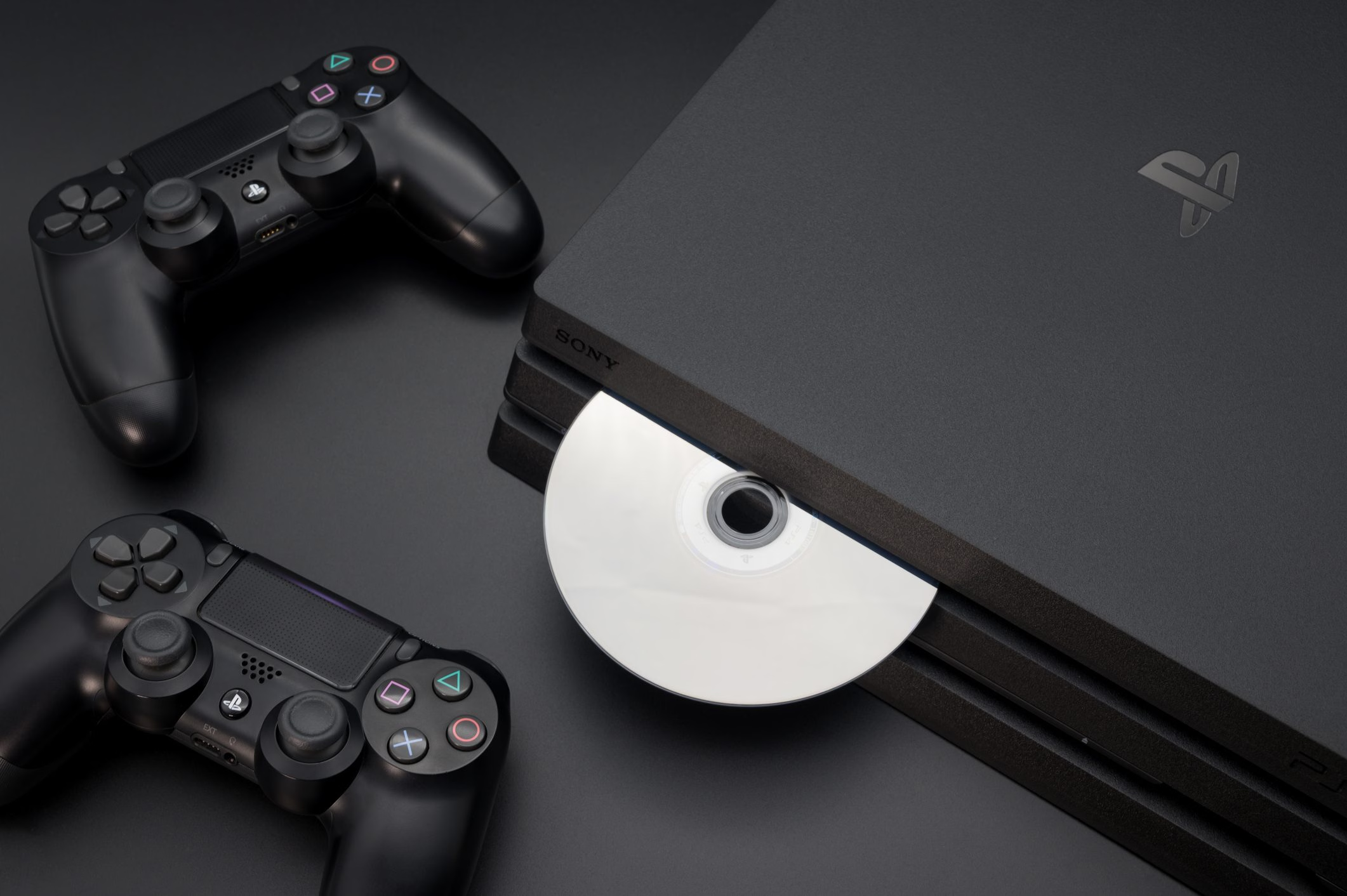
For over thirty years the physical disc has been one of the symbols of experience PlayStation. From the January 2028However, this story is destined to change, and this time forever. Sony announced earlier this month that all new video games intended for its consoles will be distributed exclusively in digital format – which currently represents 85% of sales. It will be possible to purchase them through the PlayStation Store, the official online store of the platform, or in traditional stores in the form of packages containing a simple code to be redeemed to download the game. Titles published before 2028 will continue to be available on disc.
The physical disc and the success of the PlayStation phenomenon
The choice has a strong symbolic value because it is its own the physical medium helped make PlayStation a worldwide phenomenon. When the first Sony console arrived on the market, in the now distant 1994its success was also linked to the use of CD-ROMan optical medium developed in the 1980s by Sony together with Philips. Optical media is a disk on which data is read using a laser beam, unlike older cartridges that stored information through electronic chips.
The adoption of the CD-ROM made much more space available to developers for data, allowing them to create video games with more complex stories, richer and more complex graphics and, last but not least, higher quality soundtracks. From that combination, works were born that are still considered milestones in the gaming sector today and contributed to transforming PlayStation into a brand capable of marking the childhood and adolescence of millions of people.
The reasons for the disappearance of Sony’s physical discs after 30 years
More than three decades later, the same company that helped make the disc a central element of home entertainment believes that the format no longer represents the future. Second Sony Interactive Entertainmentthe decision reflects the evolution of consumer habits, who now largely prefer to purchase and use video games in digital format. For this reason the company defines the change as «a natural direction to adapt to consumer trends, as the overall preference for digital media significantly exceeds that for physical discs», which will allow it to focus its resources more on innovation and new ways of accessing games.
The numbers released by Sony themselves help to understand why the company has taken this path. In the financial results for the fourth quarter of fiscal year 2025, available in this document, i Digital downloads account for 85% of sales of complete video games for PlayStation 4 and PlayStation 5, while physical copies stop at 15%. Even observing the weight of the various activities of the video game division, a similar picture emerges: disc game sales in 2024 they just represented the 3% of turnover of Sony’s overall gaming sector, while digital games accounted for approximately 20%; the rest comes from hardware, online services and additional content that can be purchased separately.
The video game industry has changed profoundly
The transformation also had consequences beyond consoles. Specialized shops, which for years have built a large part of their business on the sale of records, are gradually reducing their presence. The most obvious example is that of GameStopwhich in the last two fiscal years has closed more than 1,300 of its stores. It is the reflection of a market in which more and more people prefer to buy directly online without going through store shelves.
Yet, paradoxically, the reaction of many enthusiasts demonstrates that the physical disc continues to have a value that goes beyond the simple function of containing a video game. The confirmation came a few days before Sony’s announcement, when RockstarGames announced that the physical edition of GTA VIif you can call it a “physical copy”, will only contain a download code instead of the traditional disc. The news sparked numerous protests among fans, highlighting how much a part of the gaming community continues to attach importance to material possession of the game.
The reasons for this discontent are different. For many collectors, the record represents an object to be preserved, displayed and passed on, while a digital license, i.e. the right to use content purchased online, does not offer the same perception of ownership. Then there is a practical aspect: without an authentic disc it becomes more difficult to resell the video game on the used marketa possibility that for years has allowed players to recover part of the expenses incurred by purchasing new titles.
A paradox emerges clearly and strongly from this whole affair: Sony says goodbye to the format that contributed to building the success of the first PlayStation because the market has now moved to digital, but this very transformation pushes many players to reevaluate the disc as a symbol of ownership, conservation and freedom of use. And which side are you on?
