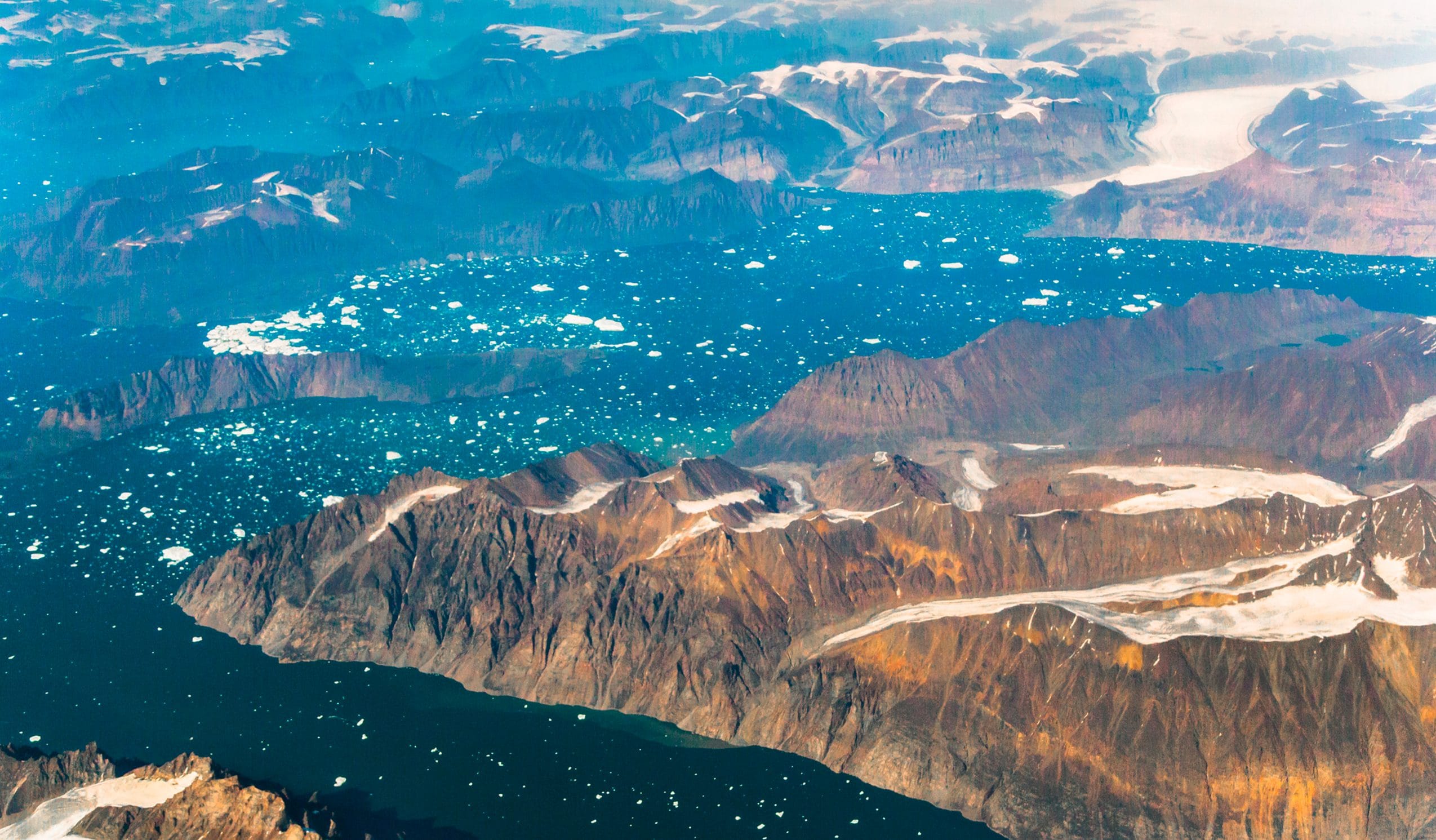
The ice of Greenland are melting at an unprecedented rate due to global warming, yet around the island, unlike what is happening on the rest of the planet, sea level could fall by up to 4 m by 2100. This phenomenon, apparently paradoxical, can be explained by the fact that the loss of ice lightens the crust of Greenland: the result is that this it rises under the area where ice melts, with a sort of “rebound”, faster than the ocean surface. It is the so-called isostatic loweringwhich together with the decrease in the gravitational attraction that the cap exerts on ocean waters, determines thelocal drop in sea level. The phenomenon was already known, but now a new study published in the journal Nature Communicationsthe work of an international research team led by Columbia University in New York, shows how the lowering of sea levels will much more marked than expected and he will have serious consequences.
Why will sea levels drop in Greenland while they continue to rise around the world?
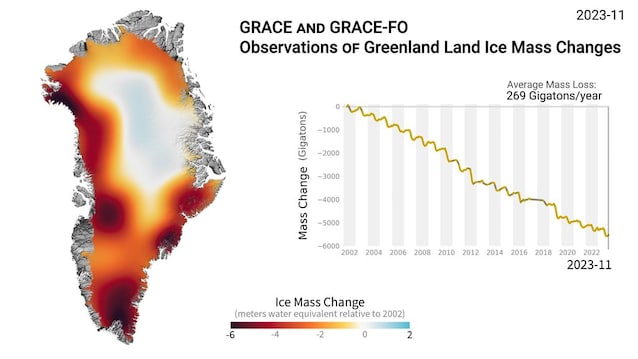
The Greenland ice sheet is losing approx 200 billion tons of ice per year. This ice contributes to almost a fifth of sea level rise across the planetbut around the island its melting has the opposite effect.
During the last ice age, the Greenland ice sheet reached enormous thicknesses sinking the crust with its weight terrestrial in the underlying mantle. The latter, being viscous, flowed laterally and accordingly the areas at the edges of the cap were raisedwhile sea levels rose around the island. Towards the end of the last glaciation, approximately 20,000 years agothe weight of the cap began to decrease: consequently, the viscous material that constitutes the earth’s mantle was redistributed and the crust began to lift under the area where the ice melted, faster than the ocean surface, lowering to the sides of this area. To better understand the phenomenon, just imagine a mattress that bounces when you lift a weight that crushes it. This vertical movement, called isostatic adjustmentallows the crust to reach a condition of buoyancy equilibrium above the cloak. The effect of current global warming adds to that of the end of the last ice age, accelerating the rise of the island and the lowering of sea levels. Furthermore, the shell exerts agravitational attraction towards water oceanic, but with its fusion the attraction weakens and sea level decreases further.

How much will sea level drop according to the new study?
Traditional models included a modest drop in sea level around Greenland in the coming decades. The new study shows instead that the level, depending on greenhouse gas emissions, by 2100 it will decrease by 1 to 4 m (i.e. 25% to 65% more than expected). The mantle and crust, in fact, seem to respond much faster than previously thought to changes in glacial load. The lowering of sea levels will occur mainly in the Western and Southern Greenland. For their study, the researchers used data from the network of GPS stations present on the territory of Greenland, which monitor its uplift. Furthermore, they analyzed the geological traces of the Little Ice Age, which testify to a rapid change in sea level between the 14th and 19th centuries, which may have accelerated the departure of the Vikings from Greenland.
The consequences of lower sea levels in Greenland
The lowering of sea levels puts the economy is at risk of the Greenlandic population. The consequences could concern coastal infrastructurewhich were built taking into account the sea level of the past decades and which could therefore become unusable. Yes they would repercussions on navigation and you may need to build new ports. The ecosystemsfor example those made up of mussels, algae and crustaceans, could find themselves without any more water to support them. Consequently, also the fishing and so the food supply would be at risk. There is also the possibility that the lowering of the sea in Greenland contributes to slow down the melting of some glacierswhere these reach the ocean, but this aspect is still being studied by scientists. Even if greenhouse gas emissions decreased in the coming years, one would still occur around Greenland average decrease in sea level equal to 90 cm.
