
In the photos of the mission Artemis IIone thing immediately catches the eye: the orange overalls of the four astronauts Reid Wiseman, Victor Glover, Christina Koch and Jeremy Hansen. In the collective imagination – fueled by the Apollo missions, spacewalks on the International Space Station and countless science fiction films – astronauts’ suits are traditionally white. But the orange color is not new, on the contrary: the color we saw during the launch of Artemis II is the same one that astronauts wore at the time of Space Shuttle. But why orange? And why are many astronaut suits white instead? The answer is less obvious than it seems, and says a lot about how survival works in space.
White or orange – the color depends on the purpose of the suit
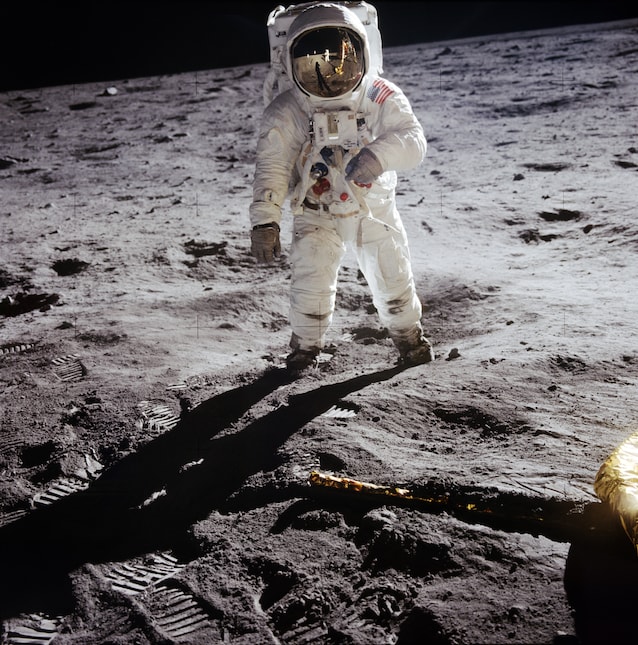
It is no coincidence that, over the decades, white has clearly dominated as the color for astronauts’ suits. The whitein fact, it reflects the sun’s rays and consequently helps the suits not to accumulate too much heat. It is therefore the ideal color for suits to be used outside capsules and spacecraft, for example during spacewalks.
THE’orangeon the other hand, is immediately recognizable on a blue background, and therefore can help quickly locate astronauts in the event of an emergency splashdown. For this reason it was chosen as the color for the suits to be used inside space vehicles during the most critical phases of flight: launch and return to earth. Since Artemis II does not foresee a moon landing or even the exit of the astronauts outside the Orion spacecraftthe orange color was chosen as it was done in the Shuttle era. And in fact the design and technology of these suits are inherited directly from the Shuttle era.
In short, Artemis II’s suits are orange for the same reason that the “black boxes” are actually orange!
How an Artemis II suit is made and what’s inside
The basic technology is that developed for the Shuttle, but with significant improvements. Each suit is tailor-made for the individual astronaut, to ensure maximum comfort during the operational phases. The helmet is lighter than in the past and integrates an autonomous communication system, independent of that of the capsule.
The suit ensures pressurization of the environment around the body, and is designed not to stiffen like a balloon under pressure: astronauts can move with relative freedom. It also incorporates an air recycling system that removes CO2 from the internal environment. Under the actual suit you wear a under-suit in contact with the skin, which contains the body’s cooling system — also improved compared to previous versions. The gloves are more resistant and compatible with touch-screens, and the entire system is obviously fireproof.
Each suit comes with a survival and signaling kit: lights, mirrors and whistles, designed for an emergency ditching in the open sea. But the most important feature, from an Artemis II perspective, is another: the suit is capable of ensure the survival of the astronaut up to 6 days in total autonomy.
This is not a minor detail. If the Orion capsule suffered a depressurization during the journey to the Moon (hundreds of thousands of kilometers from Earth) the crew would have enough time, safe in their suits, to complete the reentry. A safety net designed for worst-case scenarios, hoping you never have to use it.
