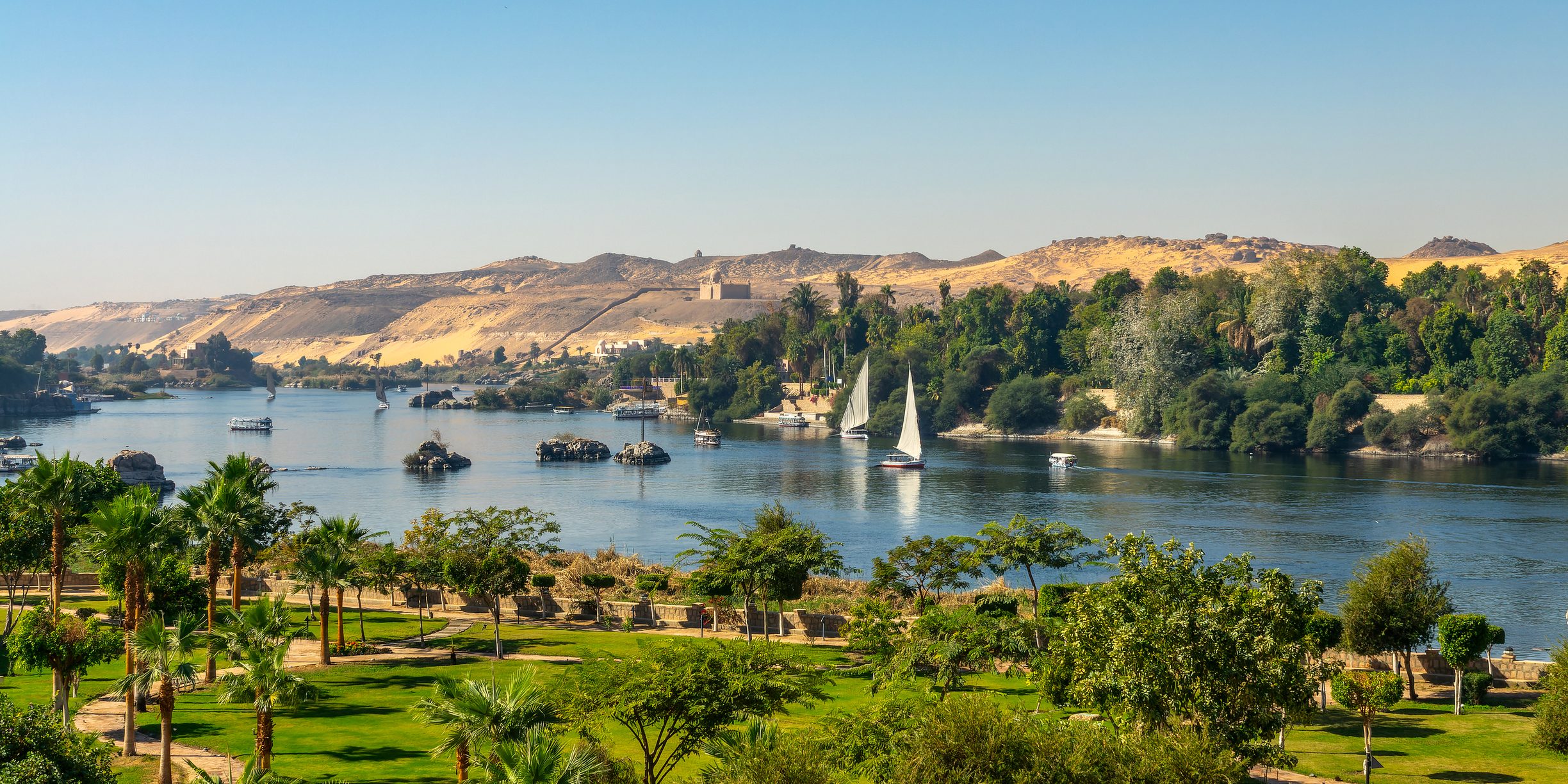
The Nilewhich together with Amazon River it plays for the first place for the longest watercourse on the planet, it is certainly among the best known and important rivers for the role it has played in the history of humanity. We are talking about a river that, with its 6852 km long and a catchment area of 3,254,555 km²touches eleven different states in the central-eastern regions of the African continent and flows into the Mediterranean Sea with one of the most spectacular deltas in the world. But if the location of its mouth is well known information since the dawn of time, the same cannot be said of its sourcethe location of which has been at the center of some of history’s most intricate puzzles.
The exact point where the Nile River originates, in fact, has remained a mystery for thousands of years, during which explorers, naturalists, geographers and geologists have put forward the most disparate theories, and, even today, closing the question once and for all does not seem to be such a trivial task.
But what causes this “mystery”? The reasons are different and we can analyze them in light of three factors: one geographicalone historical and one cultural.
The geographical factor
At first it might seem truly bizarre, almost ridiculous, not to be able to exactly identify the origin of a river. Why not simply follow its course by proceeding in the opposite direction to the direction of flow of the water until reaching the source?
The answer is actually quite simple, and that is: in the case of the Nile, this just can’t be done.
But let’s proceed in order and start analyzing the characteristics geographical of this immense river basin. To begin with, the Nile originates from two different rivers: the White Nile and the Blue Nile. The first would originate from Lake Victorythe largest lake on the continent, and extends for approximately 3700 km from Uganda to Sudan. The second conventionally originates inEthiopian plateau at the Lake Tanaand, after crossing theEthiopiajoins the first near Khartoum (the capital of Sudan). And here the situation begins to get complicated.
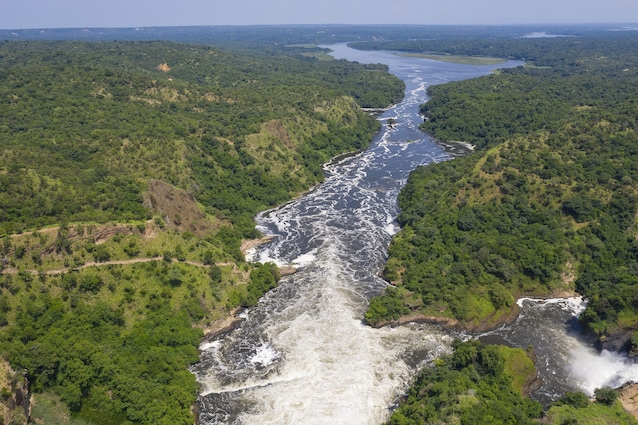
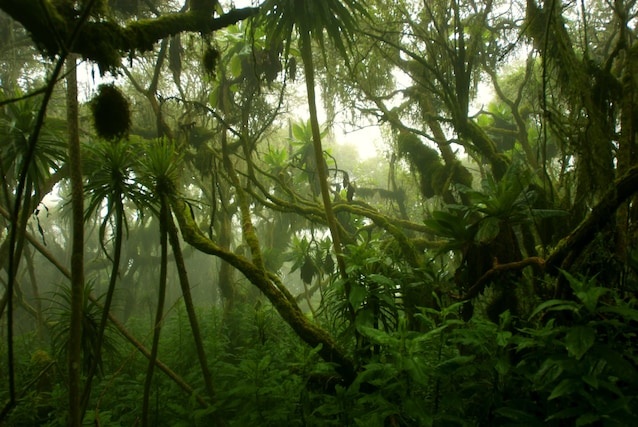
Added to this is a rather complex morphology of the territory. The environments crossed by the Nile are in fact extremely diversified. The waterway flows through savannahs, immense swampy areas, mountains, desert areas and equatorial forests, and it does not always do so in a linear way. Near the source of the White Nile, the main of the two tributaries, the river basin extends into the enormous African rainforests, giving rise to a labyrinthine system of interconnected lakes, aquifers, rivers and streams.
The historical reason: the absence of modern technologies
In light of what has just been described, we can understand how the morphology of the territory was an obstacle to explorers who in past centuries intended to navigate the river in search of its source. The expeditions could in fact proceed only with the aid of small boats and beating the more internal territories step by step.
What made exploration even more complicated was the absence, in ancient times, of technologies And knowledge modern. For a long time, in fact, it was almost impossible to correctly map the region to document its characteristics and, within the densest rainforests, it could be extremely difficult just to find your bearings. They added to this the almost zero modern geographical and geological knowledgewhich would facilitate the understanding of the complex factors influencing the hydrography of the Nile basin.
Finally, to make everything even more difficult there was the lack of adequate equipment and tools to deal with the problems difficult climatic and environmental conditionssuch as the extreme rainfall and high humidity of the equatorial regions, and the threat characterized by illnessesgive it intoxicationsgive it infections and from fauna endemic.
For many centuries, therefore, the information documenting the characteristics of the river’s course and its basin remained extremely scarce, incomplete or even contradictory.
A cultural obstacle
Another obstacle in the search for the source of the Nile is found in the importance that this waterway has represented (and still represents) for the local populations.
Since the time of the ancient Egyptians, in fact, the Nile had a central role in the economic development of many human societies and, consequently, its waters as well as the information concerning them they were jealously guarded and protected.
Furthermore, the centrality that the watercourse had in the culture of many populations of central-eastern Africa was also transmitted to size spiritualresulting in the birth of numerous legends regarding the origin of such a vital resource. These made it even more difficult to recover reliable information on the course of the Nile, which for a long time remained indistinct from myth.
Modern discoveries
For the first real results in identifying the sources of the Nile we will have to wait until European explorations of the 19th century. The development of new scientific disciplines and the progress technological in fact they allowed significant progress to be made in mapping the course of the river.
An important contribution was made by the British explorer John Hanning Spekejust over the middle of the nineteenth century, who made important discoveries on the development of the White Nile and its origin in Lake Victoria.
At the beginning of the 2000s, further research, carried out with the use of technologies digital And satellite have allowed us to refine the research, to the point of identifying the point furthest from the mouth within a marshy area in the dense forest of NyungweRwanda.
