
The kiss is one of the more intimate and widespread gestures in the collective imagination, but beyond the borders of European culture, it is not universal at all: not all populations of the world practice it, and it does not always have the same meaning. In Western societiesis a symbol of Love, passion And proximity. It could derive from ancient feeding practices: prehistoric mothers passed chewed food to their children mouth to mouth, strengthening the emotional bond. Over time, in many cultures, kissing evolved into gesture of love and desirealso linked to neurochemical reactions of pleasure and attachment. Today it is depicted in art, celebrated in literature and enacted in cinema as the pinnacle of romanticism.
A cultural question or not: why do we kiss and since when?
Anthropological studies and ethnographic research show that about half of the cultures currently known does not practice romantic kissing. In some indigenous communities in Africa, the Amazon and Papa New Guinea, kissing is not part of courtship rituals or couple life. For many populations, the idea of putting lips together is even perceived as strange or unattractive practice. In these societies, intimacy is expressed in other ways: through physical contact, exchanging glances, caring for others or sharing food. The absence of the kiss therefore does not imply a lower degree of affection, but a different way of conceiving and communicating emotions.
Scientists have long debated whether kissing has biological roots or is a cultural invention. Some speculate that it derives from ancient feeding practices: Prehistoric mothers would have chewed their food and then passed it mouth to mouth to their young children, a gesture that strengthened the emotional bond. Other scholars instead underline how kissing activates neurochemical mechanisms which increase desire and attachment: during a kiss, in fact, the brain releases oxytocin, dopamine and serotonin, hormones linked to pleasure and empathy.
These physiological effects could explain why kissing has become entrenched in many cultures, but they are not enough to make it universal. His presence or absence depends on social, symbolic and cultural factors.
The meaning of the kiss and other gestures of affection
The kiss it is not a universal behavior: rather, it is one of the many ways in which people build bonds, communicate affection and desire. Some experience it as an essential ritual of love, others replace it with other gestures of affection.
Anthropologists have collected examples that show just how much The ways of expressing affection may be varied and creative. Between the Fore from the Pope New Guineathe partners rub their nostrils against each other in a gesture that for them has the same intensity as a kiss. In tradition Inuithowever, there is the so-called kunik: not a kiss with the lips, but a delicate rubbing of the nose and upper part of the lip on that of the partner, often accompanied by warm breathing.
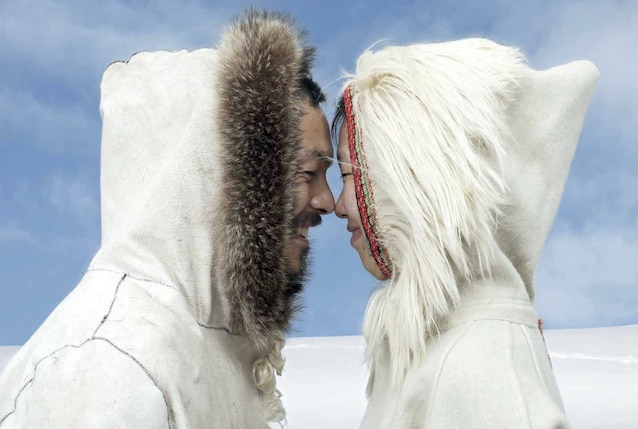
In some populations ofTribal Indiathe exchange of love passes through smell: smelling each other’s faces or hair is considered more intimate than joining lips.
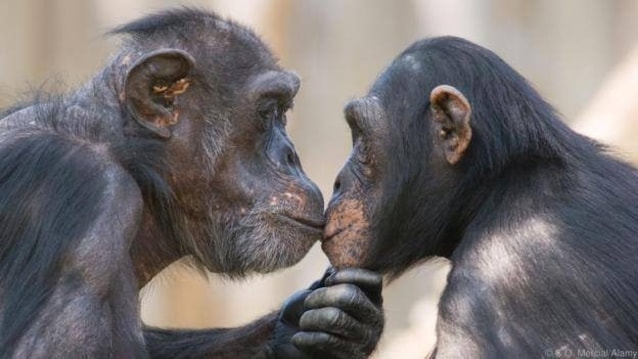
Yet, it has been observed that even in the animal world there are behaviors similar to that of kissing: the bonobo monkeys they kiss on the mouth as a sign of reconciliation and affection, showing their resemblance to human beings.
Neurochemistry and anthropology of intimacy in dialogue
In recent years, the neuroscience el’biological anthropology they combined their studies and contributed to generating debate, analyzing in particular the rrole of hormones involved in kissing.
Experimental studies have shown that during kissing, i oxyticin levelsoften referred to as the attachment hormone, along with dopamine and serotoninsubstances associated with pleasure, confidence and mood regulation.
The anthropologist Floyd and colleagues (2015), while highlighting that the Romantic kiss is not universalunderline how in the societies in which it is present it plays a role in strengthening the couple’s bond. Likewise, the scholar Helen Fisherwithin the framework of theory of romantic love as a neurobiological systeminterprets kissing as one of the behaviors that activate the attachment and partner selection circuits.
However, scholars point out that these chemical mechanisms do not automatically determine cultural practice: the biology provides a basis for bodily response, but it is the culture to shape which gestures are coded as intimate, appropriate, or desirable.
Sources
Jankowiak WR, Volsche SL, & Garcia JR (2015). “Is the Romantic‑Sexual Kiss a Near Human Universal?”
Arbøll TP, & Rasmussen SL (2023). “The ancient history of kissing”
Lameira AR (2024). “The Evolutionary Origin of Human Kissing”
