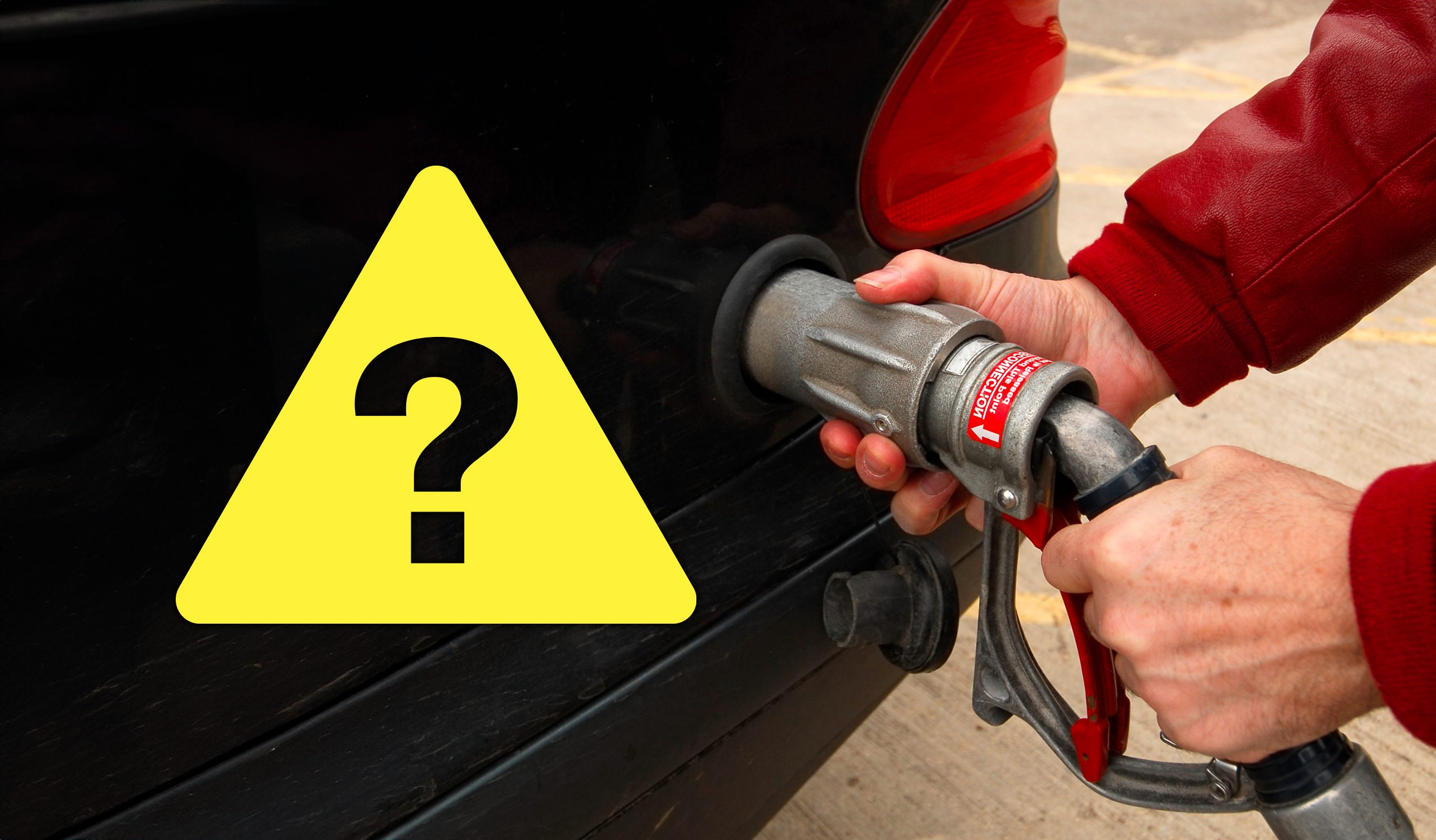
Anyone who has an LPG car in Italy knows very well that Self-service refueling is not permitted. This is actually only partially true. Within the decree of March 31, 2014 in fact it is said that it can be done autonomous refueling of LPG provided that a whole series of conditions are satisfied requirements. And this is precisely the crux of the matter: these are requirements so stringent that they discourage the majority of merchants who, for simplicity’s sake, prefer to limit themselves to refueling during opening hours. In Italy, the safety reasons and current regulations are more stringent than those of other European countries where self-service is allowed. But for what reason?
The requirements established by the decree
Inside the attachment to decree 31/3/2014 the characteristics necessary to authorize self-service refueling are specified. The first point concerns the surveillance of the pumps: if the system is open it is necessary that a employee to provide customer support; in the case of a closed system it is mandatory to install a system video surveillance which allows you to monitor the situation at any time and communicate with the user 24 hours a day.
But not only that: each user should be equipped with a special one to be able to refuel form which reports the user namethe plate and that he has one validity linked to that of reservoir installed on the vehicle. In order to obtain a self-service card the user should be informed through a course on refueling methods, the associated risks, limitations, prohibitions and behavior to follow in the event of an emergency. Furthermore, one is also planned demonstration practice on the correct use of the self-service dispenser and on how to refuel the vehicle.
In short, these are rather stringent and onerous conditions from an economic point of view, and for this very reason today the self service of these fuels in Italy is essentially a utopia – unlike what happens in other European countries such as Germany or France.
Why Italian law is so stringent: the reasons and risks
The first aspect to consider is that in this area Italian law has a more approach to civil liability protective compared to that of other countries, where the citizen is assumed to be responsible for his own actions. This more precautionary approach is adopted for LPG and not for petrol and diesel for very specific technical reasons, linked to the physics of this fuel.
Unlike traditional liquid fuels, the LPG it’s a mixture of propane And butane which at atmospheric pressure appears in gaseous form. To keep it liquid at room temperature it is typically stored under pressure between 5 and 8 bars. This characteristic entails two specific risks that petrol and diesel do not present.
The first is related to instant vaporization: when the gun is detached, a small quantity of liquid LPG comes out and, suddenly passing to atmospheric pressure, transforms into a cloud of invisible vapors potentially flammable (if present in a sufficient concentration). Unlike a petrol leak, LPG vapors do disperse into the air without leaving visible traces. Furthermore, being heavier than air, they tend to accumulate in the air low areas such as wells and poorly ventilated areas, where even a single spark, for example of electrostatic origin, could be sufficient to trigger them.
The second risk concerns the cold burns: when liquid LPG leaks out and vaporizes rapidly, absorbs a large amount Of heat from the surrounding environment, reaching temperatures in the order of −42°C, making even accidental and brief contact potentially capable of causing cold burns.
It is the combination of these factors (invisibility of the gas, tendency to accumulate and risk of burns) that makes LPG refueling objectively more complex to manage independently compared to traditional liquid fuels, and explains the reason behind this regulatory framework.
