
When we think of a mammoth preserved in ice, hair, bones and skin come to mind. When the research group led by Emilio Mármol-Sánchez who published it in the journal Celllooked at those fragments but found something infinitely more fragile: theRNAa molecule that disintegrates with impressive speed in fresh tissues, all it takes is one enzyme out of place and every trace is erased. Yet, sometimes, the frost works miracles: the permafrost ice guarded ancient molecules, broken by time but still recognisable, belonging to mammoths that lived between approximately 39,000 and 52,000 years ago. One of these creatures, Yuka, provided enough material to allow not only the reading of her transcripts, but also the reconstruction of the activity of its tissues. Sequence after sequence, scientists found long stretches of ribosomal RNA, tiny but intact microRNAs, linking them to a surprisingly coherent group of genes unique to skeletal muscle. A further surprise was to discover that, unlike what previous analyzes indicated, Yuka was a male and not a female! All this material allows, for the first time, to observe the biology of an extinct animal not only through its DNA, but through what its tissues “were doing” shortly before death.
How to recover RNA from an extinct animal
In recent years, entire pieces of extinct fauna have re-emerged from the Siberian permafrost. Bodies frozen so quickly that they retain their skin, fur, even the original shape of their muscles. But RNA is a whole different story. It’s a molecule very delicatewhich in living organisms often lasts a few minutes before degrading. For this reason, until today, almost no one hoped that it could survive for tens of thousands of years. In the new study, however, scientists attempted a challenge: extract RNA from mummified tissues of 10 mammothsfrozen in the Siberian permafrost. From each sample they obtained two things: DNA, which was much more stable, and RNA, which was the real objective.
The amount of RNA was very low, often almost to the detection limit of the instruments. Despite this, scientists have managed to build sequencing libraries, that is, collections of fragments to be read by sequencing machines. The first critical step was to understand whether those little pieces were really mammoth RNA or not background noisethat is, of some other living being. To do this they used an analysis called metatranscriptomicwhich reads the general composition of fragments based on sequences at least 31 nucleotides long. It’s a bit like checking whether you find enough pieces in a bag of puzzles that belong to the same image.
Only three specimens had enough genuine RNA to allow deeper analysis:
- Yuka (mammoth n°1) – 39,000 years
- Oymyakon (mammoth n°4) – 44,000 years
- Chris Waddle (mammoth #10) – approximately 52,000 years old
How do you understand if that RNA is authentic
Having RNA is not enough: you need to verify that it is really ancient, not contamination or “masked” DNA. Scientists used multiple complementary strategies taking into account several factors:
- The length of the fragments: this tells the age of the fragment itself. The older a fragment, the shorter it is.
- Where RNA docks in the genome: mature RNA is made of only a few parts called exonswhile DNA also contains other different parts. The scientists saw that in Yuka and Oymyakon most of the sequences hooked right onto the exonsas occurs in fresh tissue RNA. This is a strong indication of authenticity.
- Typical chemical damage of ancient finds: over time the molecules suffer specific damage perfectly compatible with very ancient material.
- The genetic variants of mammoths: some RNA fragments contain mutations typical of the mammoth, already cataloged thanks to 20 ancient genomes. In Yuka, for example, they have been identified 407 RNA fragments which contained known variants of mammoths. It’s like finding yourself the fingerprint of the species.
All these signals together make the conclusion that this is a very robust one Authentic ancient RNA.
A surprise in the ice: Yuka was male
One of the most surprising parts of the study concerns the sex of the famous mammoth Yuka. In 2012, at the time of discovery, the external structures of the genitals had been interpreted as female. But the genetic study tells another story. By analyzing RNA and DNA, the researchers found pieces of RNA (in technical jargon transcribed) corresponding to a gene present only on the Y chromosome; sequences of the SRY gene, which in mammals initiates male development; and a ratio of X chromosomes to autosomes consistent with an individual XY.
All genetic tests therefore agree that Yuka is genetically maleand not female as had been assumed. The researchers observe that the contrast between external anatomy (described in the past as female) and genotype could depend either on a visual error in the first classification, or – a much rarer possibility – on a form of XY gonadal dysmorphism. At the moment, however, there are no genetic signals that confirm problems in sexual development.
What does RNA tell about the mammoth’s body
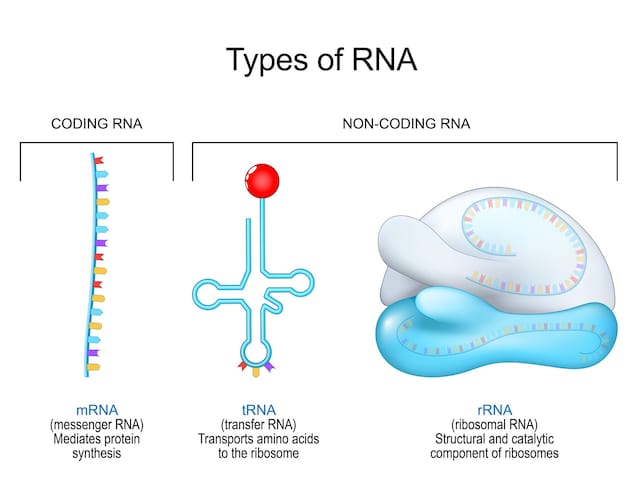
Once the RNA is proven to be authentic, one can ask: what does it tell us about the mammoth? In Yuka’s sample, the most complete, scientists have identified 342 coding mRNAs And 902 Non-coding RNAs all with enough coverage to be considered reliable. But the interesting point is that the most abundant mRNAs almost all contain gene information typical of skeletal musclethe same ones that today control the contraction of fibers, the response to effort, the structure of the sarcomere, the position of the nuclei in muscle cells.
This not only indicates that the tissue was muscle, but also suggests what type of fiber, indicating the presence of a muscle rich in slow fibers (slow-twitch), used for prolonged efforts, resistance, posture. By comparing Yuka’s muscle mRNA profile with large gene expression databases from modern animal tissues, the researchers saw that corresponds almost perfectly to current skeletal musclesindicating that the active genes were very similar to those of modern muscles, as if they “still spoke the same molecular language,” despite having passed 39,000 years.
MicroRNAs: tiny traces, new ideas
One of the advantages of RNA is that it allows you to see not only active genes, but also regulatory molecules, such as microRNAwhich are very small (about 22 nucleotides) and control the activity of genes. In Yuka’s case, they were also identified two possible new microRNAs never described beforeprovisionally called Mpr-Novel-4 and Mpr-Novel-5.
Mpr-Novel-4 is present in elephants and mammoths, while Mpr-Novel-5 appears instead specific to the elephantine lineage. It is not yet known whether they are actually functional: experimental tests would be needed to understand this, but the fact that a microRNA can “survive” for so long is in itself a huge achievement.
