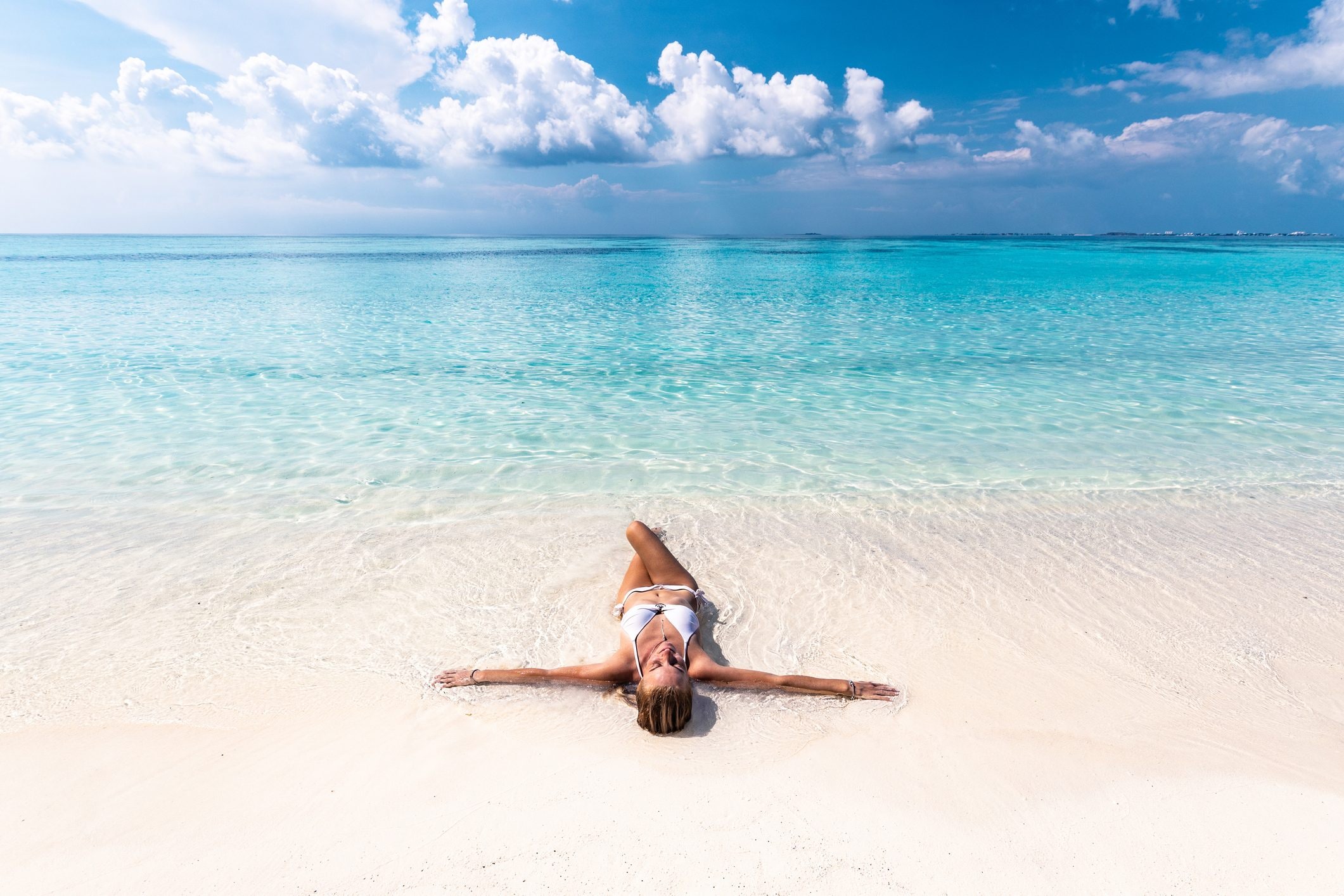
What’s better than a nice bath in this torrid heat? Too bad that, like every single time we are on vacation, here comes the menstruation and we can forget swims and you unwind in fresh water … we are kidding! It is a false myth: When you have menstruation, you can quietly swimwhether in the pool, at the sea, at the lake or enjoy a nice bath in the tank at home. Are the hormones To check the menstrual cycle, not a dip in the water. The water temperature, for example, does not affect the flow of menstruation, nor worsens abdominal cramps, indeed swim can improve Some painful symptoms. In addition, there are many solutions on the market to swim with menstruation: from cups to menstrual costumesthere is ample choice for all of us.
Where this myth is born from
It is not clear where this false myth is born from, perhaps from religious or cultural beliefs who saw something impure in menstruation, something to hide. Let’s repeat together: There is absolutely nothing impure in menstruation. I am a process naturalwhich is part of how the body works, as well as breathing or slamming the eyelids.
Their trend is influenced by hormonesfrom stress, from some drugs and pathologies, not from a dip in the water. The differences that can sometimes be observed when we bathe, more abundant flow, a longer or lesser duration, are often alone physiological variationsto which we try to give an external explanation and to which perhaps we do not even do a lot during the winter. If you have doubts about your menstrual cycle, it’s always good contact your trusted gynecologist or gynecologist.
Bathing does not block the cycle
It is thought to swim blocks or speed The cycle: it is not true. Water does not have the power to magically influence our hormones, modifying the normal and physiological duration of the cycle.
Knowing a little basic physiology, we could try to explain this false myth an explanation. What Perhaps You could observe is one slight reduction of blood flow, if the water is very cold: it is known that the cold causes vasoconstriction, restricting the blood vessels and for this for a couple of hours it might seem that the cycle stopped or reduced. In reality, it’s just a perception, There are no studies that confirm it And in any case it would be an extremely transient effect.
In the same way, it is said that hot water increases the menstrual flow: wanting to find an explanation of this belief, the heat dilates the blood vessels and for this you could feel a feeling of more abundant flow. Also in this case, however, There is no solid evidence And in any case it would be only a transitory effect.
In a nutshell, There is no evidence Whether water or temperature can in any way change the natural menstrual flow. Otherwise even a week on the snow should stop menstruation, while a holiday in a hot place should make them become more abundant than usual.
If I bathe with menstruation, can I get the water dirty?
This is also one unfounded fear. Starting from the fact that menstruation is not something “dirty”, the water losses would be anyway minimum. Whether at the sea or in the pool, solutions such as internal swabs, the cups or menstrual disks, or still menstrual costumes, to enjoy the bathroom in complete tranquility. The only precaution, we avoid using normal external absorbent, because they are made of absorbent material that would precisely absorb water. Tampons are also made of a similar material, but being interior There is no risk of excessive water absorption.
And no, even if sharks can capture the smell of blood in the water, Having menstruation does not make you more attractive! Sharks understand smells of all biological fluids, including simple urine.
The benefits of bathing with menstruation
First of all, to be able to enjoy without prejudices And preconceptions every summer day, every swim in the pool and every dip that we do all year round. In addition, moderate exercise, like a beautiful swim at the sea or in the pool, is a ally against premenstrual syndrome and menstrual pains. There are several studies that confirm the importance of physical activity in the management of mild pain, thanks to the production of endorphins and endocannabinoids. Specific studies on dysmenorrhea (that acute and persistent pain accompanied by cramps, typical of the first days of menstruation) found one clear reduction in pain and use of painkillers In women who practice constant and moderate exercise, in particular with swimming. It is also shown that applying the heat on the abdomen It helps to reduce menstrual cramps: Here a hot bath transforms from strange taboo into a not bad idea!
Sources:
