For three days, from 20 to 22 March 2026, the eyes of world athletics will be focused on Poland, on the covered track in Toruń, for the World Indoor Athletics Championships. Three days of very different events compared to those of “Olympic” athletics that we are used to seeing in stadiums. Here, in fact, all the competitions are held inside a building, a space very small in which almost everything changes, starting from the track: 200 meters in total length instead of the traditional 400, a difference that makes indoor athletics almost a sport in itself. Many Italians competing in search of podium performances, from Mattia Furlani And Larissa Iapichino in the long jump a Nadia Battocletti in the 3000 m.
The first thing that changes: 100 meters doesn’t exist
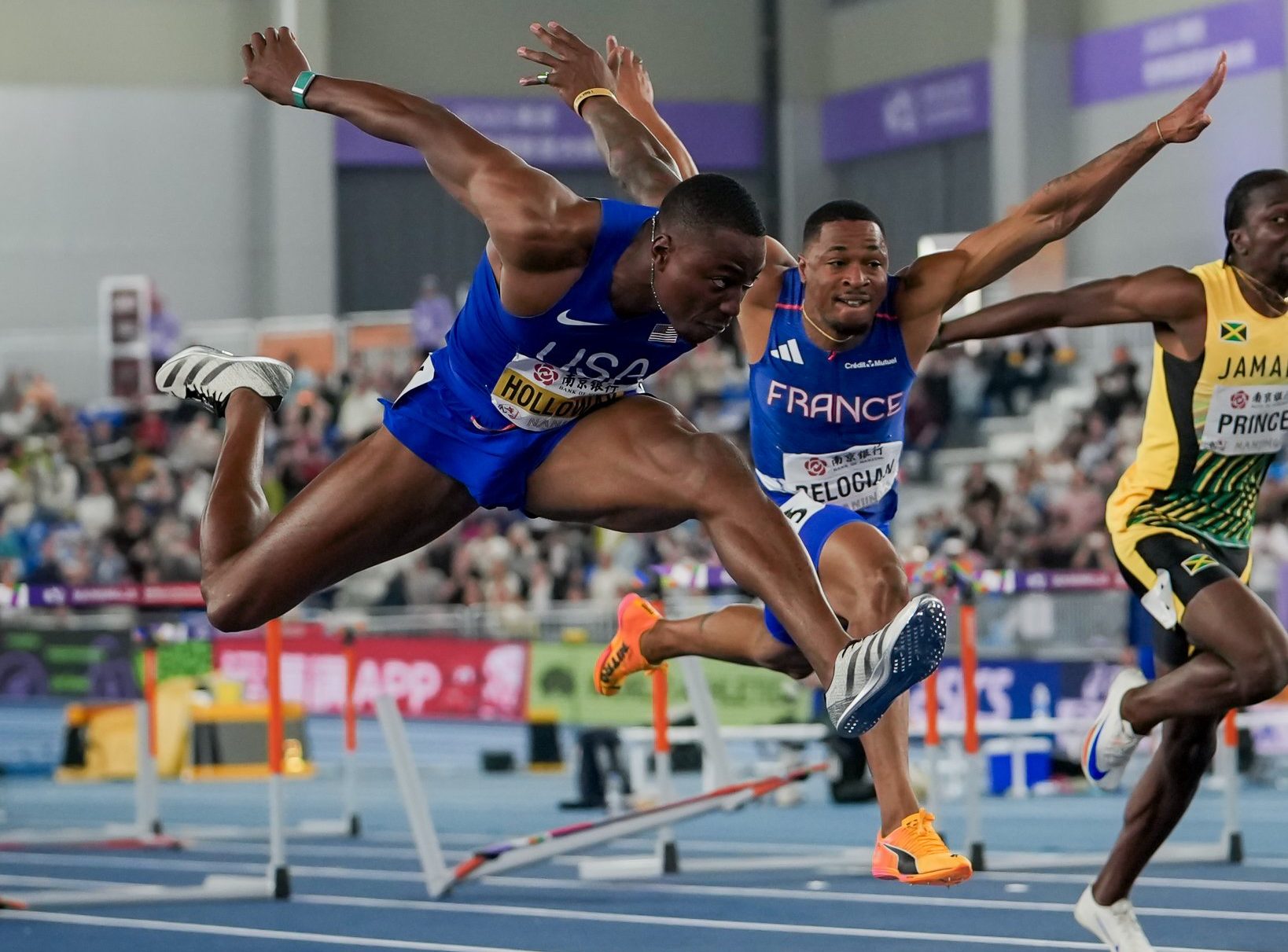
Indoor athletics is often overlooked and has less media appeal than its outdoor version. Indoor competitions are in fact typically held in winter, and are often considered a preparation for the outdoor season. The most obvious difference is also the most surprising: The 100 meters are not run at the World Indoor Championships. In fact, the symbolic race of athletics runs over 60 meters (flats or hurdles). The reason is simple: inside a sports hall there is no space for a 100 meter straight, while it is possible to create a 60 meter straight by positioning it in the center of the track, also managing to guarantee the right space for the athletes to slow down at the end of the race, complete with vertical mattresses positioned at the end of the track to allow them to stop in complete safety after having reached and exceeded 40km/h in just seven seconds of the race.
This race is the symbol of how indoor athletics can differ from outdoor athletics: in the 100 meters outdoors, an important part of the race is played on maximum speed and the ability to maintain it. In the 60 meters indoors, however, everything can be decided in the first steps. The start and acceleration become practically decisive, and it is not uncommon for athletes who are very strong on the 100 to not be equally dominant on the 60, or vice versa.
An inclined runway and no wind
The reduction in space obviously does not only concern the straight, but the entire track. The curves, being inserted in a 200 meter ring, are much narrower than the outdoor ones and, to prevent the athletes from losing too much speed or balance in the curves, they are slightly elevateda bit like what happens in cycling velodromes. It is a technical solution that allows you to run fast even in small spaces, but which introduces a completely different sensation for athletes, especially in faster races such as the 400 meters (which are consequently held over two laps of the track instead of one), where the curves have a huge impact on performance. Another big difference, perhaps the easiest to understand, is the total absence of winda variable that outdoors can distort the results, especially in speed tests and jumps, favoring athletes or disadvantaging others within a few minutes or within the same race. Indoors the conditions are always the same for everyone, easy to compare and more indicative of the real value of the individual athlete.
Because some races disappear and others change
Not all the disciplines that we are used to seeing outdoors find space indoors. This is the case of the 100 meters but also of the 200, with the latter discipline being contested at an international level until about twenty years ago, but eliminated due to the excessive difference in the curve radius to be faced between the athletes of the first lanes and those of the outermost lanes. At those speeds, you need to slow down significantly to be able to complete the curve if you are in the innermost lanes. Not even the longest races such as the 5000 or 10000 meters are run, which would require an enormous number of laps on an already very short track, just as the 3000 steeplechase is not run, which requires ad hoc structures such as the riviera, a fixed obstacle to jump followed by a puddle of water.
Even more evident is the case of throws: discus, hammer and javelin they are not playedbecause they require spaces that cannot be safely recreated indoors. The multiple events also change accordingly: the decathlon, a discipline reserved for men, becomes a heptathlon, with 7 events instead of 10, while the women’s heptathlon becomes a pentathlon, with 5 events instead of 7.
Then there are some specialties that remain surprisingly similar even if brought inside a sports hall, like the shot put, which adapts well to indoor spaces and practically maintains the same characteristics as outdoors. The jumps (high, long, triple and pole) are almost identical to those outdoors, so much so that the need to differentiate the records obtained indoors from outdoor ones is almost superfluous.
Italy at the 2026 World Indoor Championships
In this particular context, Italy presents itself at the World Cup in Toruń with a large and competitive team: 26 athletesdistributed among all the main disciplines and equally divided between men and women, record individual appearances in the indoor World Championships.
The medalists of the Nanjing 2025 edition will be present: Mattia Furlani (gold in long jump), Andy Diaz (gold in triple jump) e Zaynab Dosso (silver in the 60 m), with the latter on the strength of the seasonal world record and the first Italian able to run the distance in less than 7 seconds (6″99 ran last February 22nd in the same arena that will host the World Championships). There will be no shortage of other big names from the Italian national team: from Larissa Iapichino in the long a Leonardo Fabbri in weight, from Nadia Battocletti in the 3000m to the very young Kelly Douallajust sixteen years old, competing in the 60 meter dash and making her senior national team debut.
