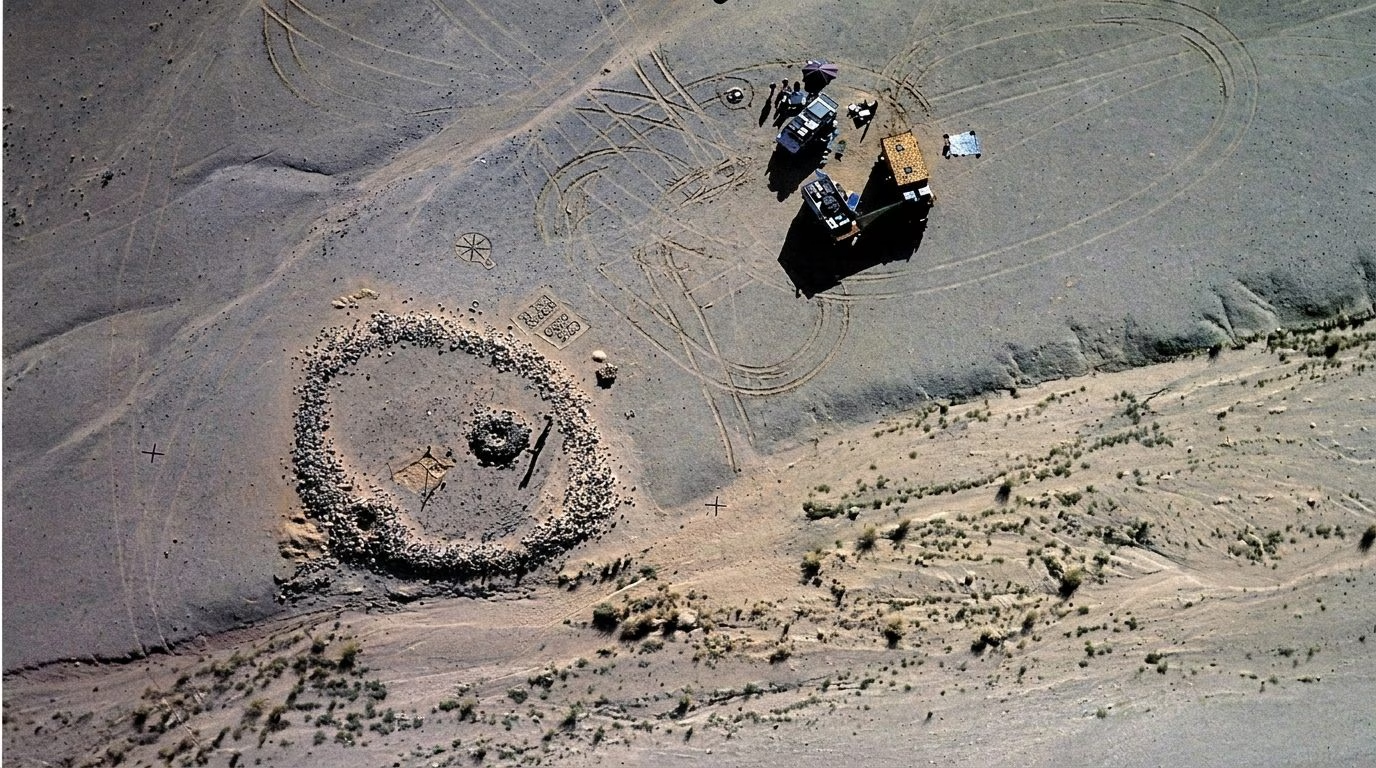
Between the Nubian Nile and the Red SeaIn the Atbai deserta vast region of north-eastern Africa (between present-day Egypt southeastern and Sudan north-eastern) still little known from an archaeological point of view, the satellite images have revealed the traces of a little-known ancient civilization, with a monumental funerary tradition underestimated so far. A new study conducted by an international group of researchers from the Atbai Survey Project
he has indeed identified well 280 structures characterized by a circular or oval stone enclosure up to 80 m in diameter containing burials and surrounded by animal remains: the authors define them Atbai Enclosure Burials (AEB). Of these, 260 were identified thanks to remote sensing. The study, led by Julien Cooper of Macquarie University in Sydney, Australia, was published in Journal of African Archaeology.
The identified structures are distributed across the entire Atbai, from Upper Egypt to the present-day regions Eritrea. They have very variable dimensions, with diameters ranging from 5 and 82 metersbut they share a basic architectural concept. Some of the best-known complexes show numerous internal burials, including both humans and animals, demonstrating the central importance of livestock. The best documented case is that of Wadi Khashabin Egyptian territory, where an excavation involved a circular enclosure of approximately 18 meters in diameter. Inside were identified further 25 burialsincluding that of an individual around which cattle, sheep and a child were arranged. The available datings place the different depositions between the 5th and 4th millennium BC; the monument came later reused in the 2nd millennium BC
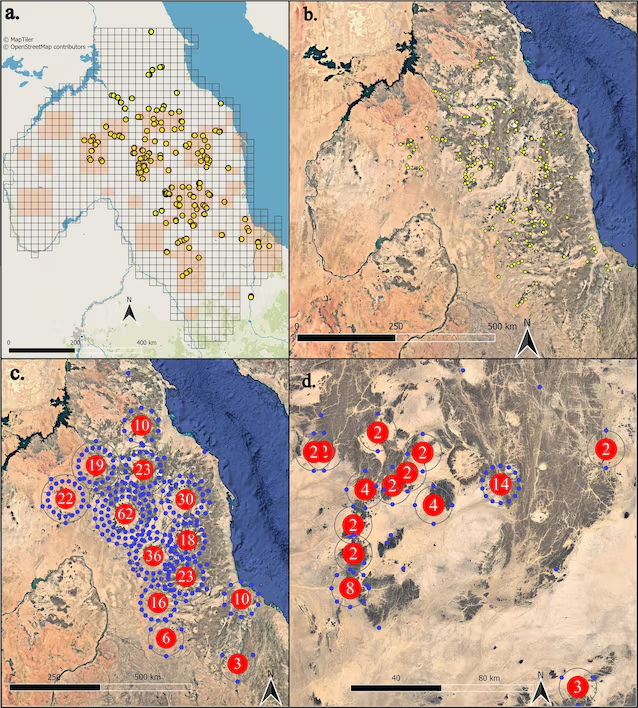
The distribution of AEB offers an important clue about the company that built them. Most of the monuments are located near the wadithe ephemeral watercourses of the desert: the average distance from a current riverbed is approximately 196 metres. According to the authors, this placement probably reflects the search for areas favorable to grazing and water supply. The monumental tombs would therefore be closely linked to the territories frequented by semi-nomadic pastoral communities. The animals they have a central role in interpretation. The presence of cattle, goats and sheep connects them AEB to pastoral societies in which livestock also had an important role social and ritual dimension.
The authors speak of a local pastoral culture of Atbai, which developed especially in 4th and 3rd millennium BCin the context of the progressive aridification following the African humid period, with the end of the “Green Sahara“.
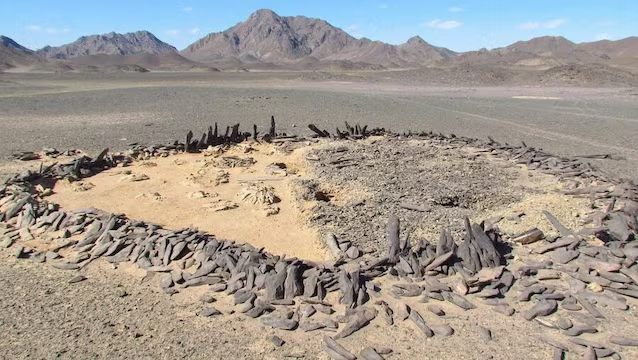
The decline of this monumental tradition is probably placed in 3rd millennium BC. The authors propose a model in which the climate changethe reduction of water resources and the pressure exerted by grazing on vegetation acted together. The drying up would therefore not have been an exclusively climatic process: human and animal activity would also have contributed to the transformation of the environment.
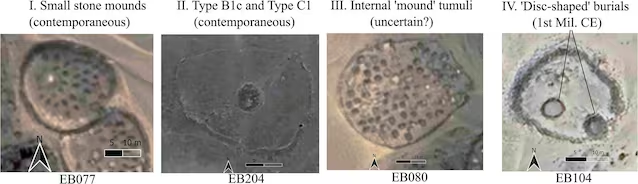
The AEB finally, they represent a local manifestation of a broader phenomenon: in various regions of the Sahara and Arabia, prehistoric pastoral societies built large funerary monuments even as landscapes became progressively drier. In the case of Atbai, these monuments allow us to glimpse a mobile society capable of transforming the desert into a landscape organized around water, pasture, animals and the memory of the deceased.
