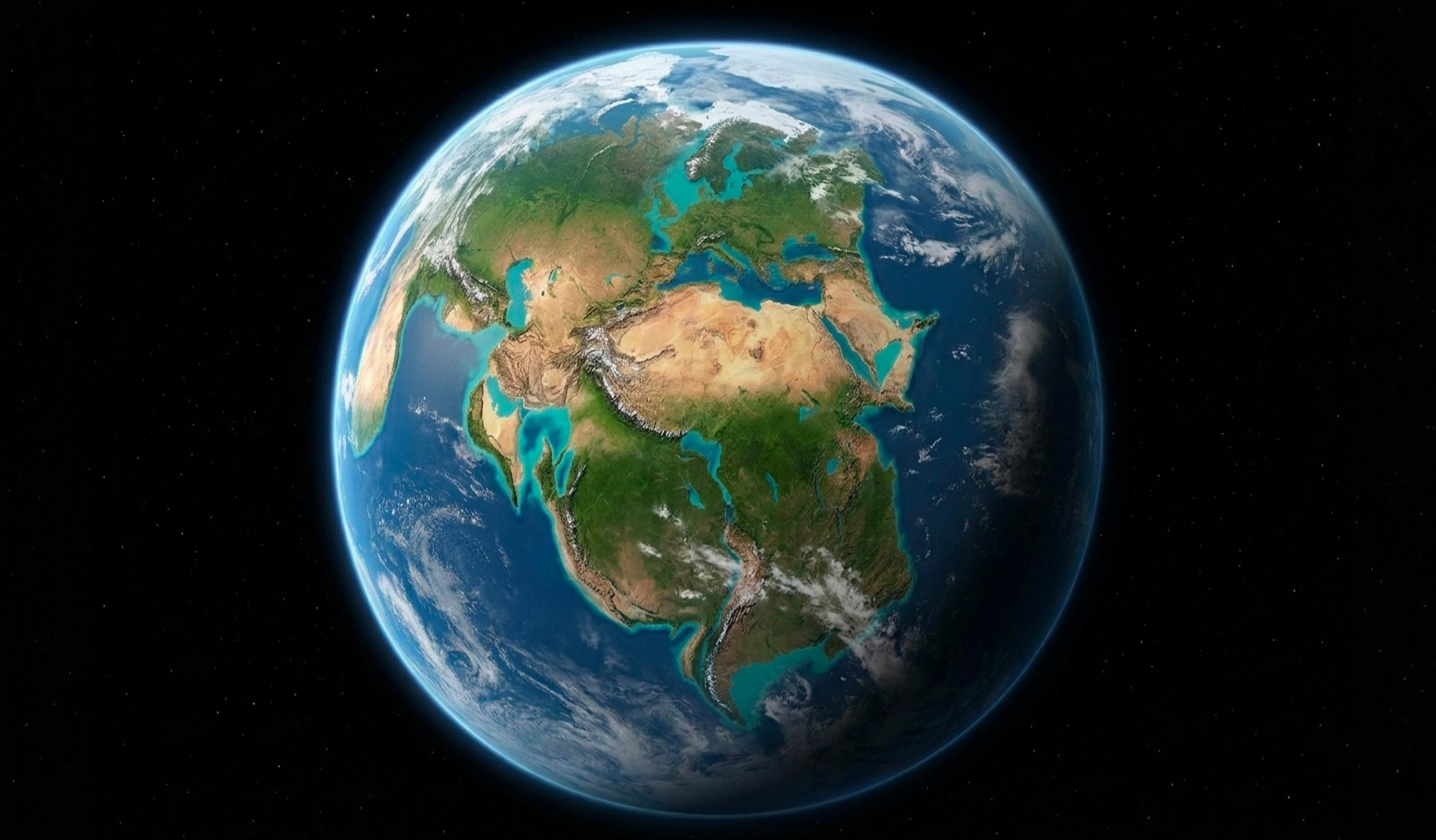
In the future the planet will look completely different: here are the four possible supercontinents.
In 250 million years the geography of the planet will change radically the continents will have a completely different look from the current one. In fact, our planet is alive, in constant movement, and for this reason researchers have outlined four possible supercontinent scenarios: Novopangea, Pangea Proxima, Aurica And Amasia. But what could their characteristics be? And how will the climate change?
The four scenarios: Aurica, Amasia, Novopangea and Pangea Ultima
The main element that will determine the appearance of the continents of the future will be the closure of the oceans – linked, in turn, to the formation of new subduction zones, i.e. areas in which one plate slides under another, being “swallowed” into the Earth’s mantle.
Novopangea
In this scenario, the Atlantic Ocean continues its expansion, while the Pacific shrinks more and more – until it disappears. As a result, the Americas migrated westward, colliding with Asia, while Oceania would tend to rise northward. Novopangea would form in about 200 million years, on the opposite side of the globe from old Pangea.
Pangea Proxima (or Pangea Ultima)
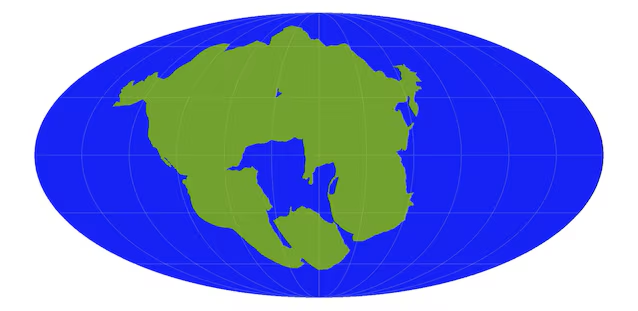
With Pangea Proxima it is the Atlantic that would stop widening. What would happen in this case is that the coasts east of the Americas would be affected by new subduction zones, “rewinding” the process that from Pangea led to the formation of the current continents. Eventually, in about 250 million years, the Atlantic would close, leaving only an inland sea.
Aurica
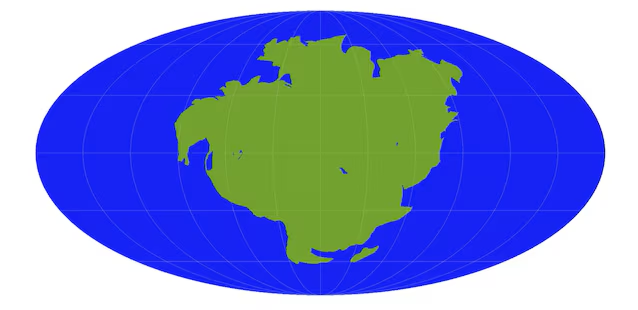
What if both the Atlantic and the Pacific closed? In this case, Asia would split, giving rise to a new ocean, the Pan-Asian, and in 250 million years a single equatorial supercontinent would form which would also include what is now Antarctica.
Amasia
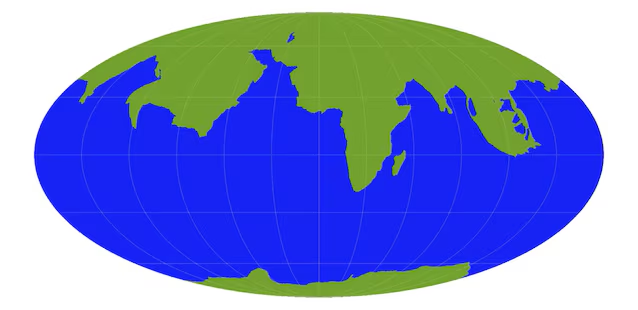
Amasia is the most “Nordic” scenario among the four. Here, in about 200 million years, five out of six continents would merge into a single supercontinent near the North Pole, while Antarctica would remain isolated at the South Pole. The Arctic Ocean would be crushed and sealed by the union of America and Eurasia. Unlike Aurica, here the equator would be composed of a single, boundless ocean.
What might the climate of the next supercontinent be like?
Answering this question is extremely complicated, but an international research team led byUniversity of Bristol tried in a study published on Nature Geoscience in 2023, taking as a scenario that of Pangea Proxima. The researchers started from the assumption that the Sun, as it ages, will emit approximately 2.5% more radiation. The hinterland, very far from the sea which acts as a “thermostat”, would become a desert with extreme temperature variations. At the same time, volcanoes, fueled by collisions between plates, would cause the values of carbon dioxide in the atmosphere to rise from around 400 parts per million today to over 600. The result? Widespread temperatures between 40 and 50 °C with high humidity, and even higher peaks in tropical areas. Conditions such that only between 8% and 16% of the emerged land would remain habitable for mammals.
Other scenarios were instead analyzed with the model NASA ROCKE-3Dwhich however does not consider the increase in carbon dioxide. In this case the planet could become warmer than “only” 3 °C in the case of Aurica, while in some configurations of Amasia the planet could even cool by almost 4 °C. The reason is to be found in the fact that in Amasia the continents, being piled up to the north, prevent the heat of the ocean waters from rising from the equator. Huge ice sheets would then form which, by reflecting sunlight, would further cool the planet, resulting in new ice age lasting 100-150 million years.
