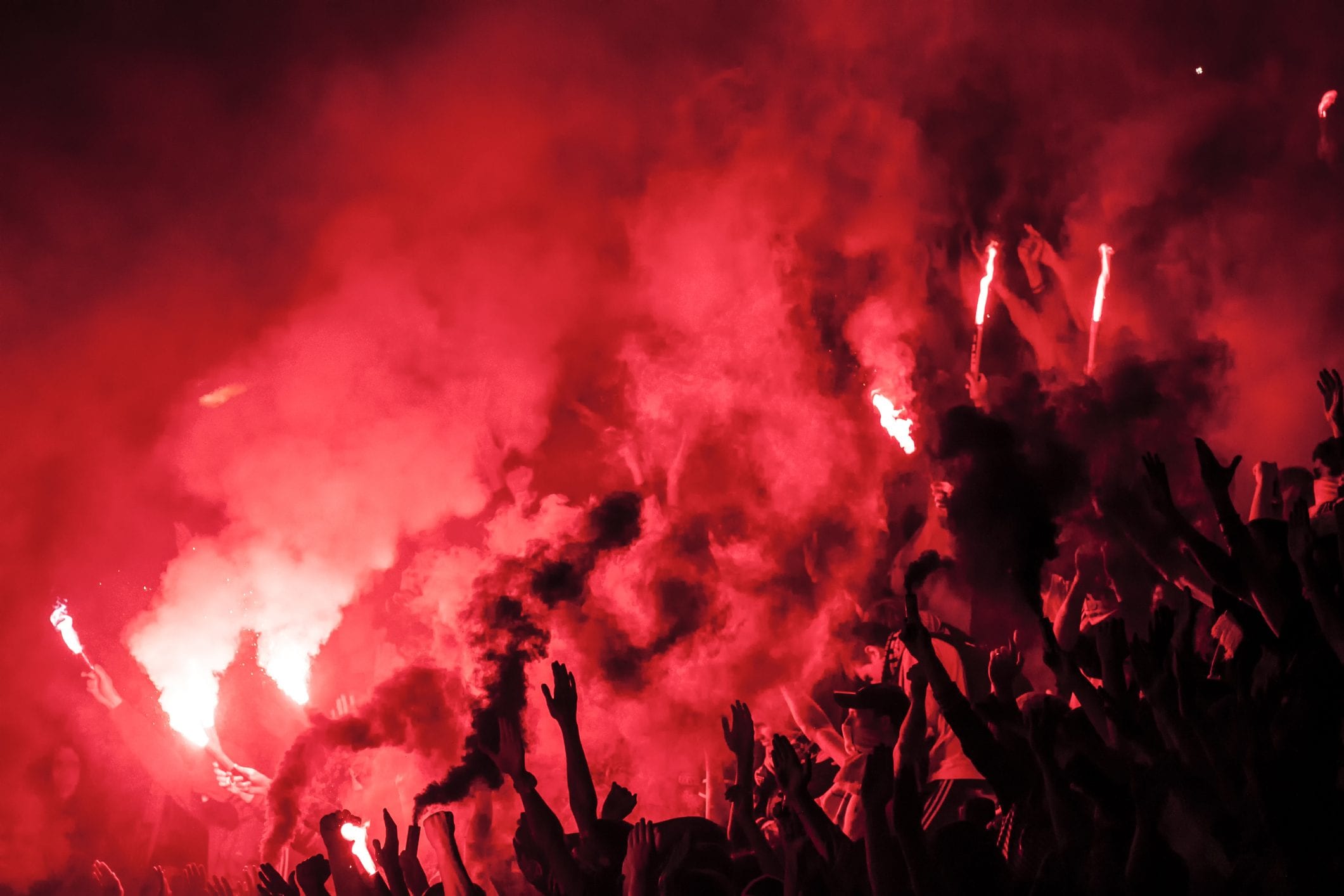
The term of Irish origin hooligans It was used at some point in history to indicate some English football fans protagonists of vandalism that with their violent and unruly behavior they deeply marked the United Kingdom. Beyond the legendary origins of the English or Irish term, the phenomenon ofHooliganism It was tremendously real and conditioned the life, not only sporty, of an entire country, also paving the way for the various movements ultras international born later. In response to tragic events in the stages of the 80s, culminating in the massacre of Hillsboroughthe Taylor relationshipa document that revolutionized English football by laying the foundations for the birth of the Premier League.
How and why Hooliganism was born: the origins
There violence linked to sporting events, it is a phenomenon that can be found since the end of the nineteenth century. The sociologist John Hutchinsonin fact, the first episodes of brutality linked to sport to 1870 traces traced back. The etymology of the term is uncertain, but it would seem to derive from the surname of a 19th century Irish family, the Hooligan, and in particular from Patrick Hooliganwell known in that era for his criminal conduct. It is important to understand, however, who are the Hooligans: it is above all young belonging to the “working class” or Working Classcharacterized by a sense of anger due in part to the employment crisis and to the right -wing governments that have alternated over time, and in part to a model of aggressive masculinity widespread in those years. Football thus becomes a form of rebellion for these guys who join over time in firm – groups organized with names, rivalries and rituals – for the purpose of to vent their anger against rivals.
The episodes that have left their mark in history
Although different phases can be identified in the chronological evolution of hooliganism, the period that most affected public opinion goes From the late 60s to the early 90s. In this turbulent twenty years they occurred serious episodes of violence inside and outside the stadiums, which led to the introduction of preventive measures still in use during sports events.
A decisive role was played by averagewhich fueled attention on the phenomenon, encouraging some groups to seek visibility even internationally. An emblematic example occurred in 1975during the Cup final samples Between Bayern Munich and Leeds United: following a denied penalty, the British fans burned and launched the stadium seats in the field, generating chaos And panic.
The 1985Then, it was a particularly critical year. THE’11 Mayduring the last championship match at the Valley Parade in Bradford, a fire – fueled by the absence of fire extinguishers, considered possible weapons in the event of clashes, and by the use of inadequate barriers to separate the fans – caused the death of 56 people.
Only 18 days later, the May 29ththe Champions Cup final Between Juventus and Liverpool at the stadium Heysel of Brussels he turned into tragedy. The British fans, in an attempt to reach the rivals, invaded the Z sector (occupied above all by unorganized Italians), causing a frenetic mass escape with consequent collapse of a wall and final balance of 39 dead and over 600 injured. In response, the then premier Margaret Thatcher Excluding British clubs from European competitions for 2 years, 4 For Liverpool.
The most dramatic point, however, was reached the April 15, 1989with the Hillsborough massacre. During the FA CUP semifinal between Nottingham Forest and Liverpoola disastrous management of the influx of fans led to the crushing of hundreds of people against fences, causing the death of 93 spectators. This event represented the real turning point in the history of English hooliganism.
The Taylor relationship and its imprint on the future of hooliganism
After the events of Hillsborough, the English government decided to definitively put an end to these acts of violence looking for a solution that could stem forever The problem of hooliganism. He entrusted this task to one commission ad hoccomposed of sociologists, criminologists and Expert sports managersled by the judge Peter Taylor. The final product of this decision was the homonymous report, published in the complete version in January of 1990.
The document was based on one parcelization of the faults. In fact, there was no simple accusation to the fans and their conduct, but he tried to understand how the institutionsi club and the authority they could be involved, giving life to some coercive measures. The basic idea, especially of the “American” component of the Commission, was to conceive the football match as a event and a product to sell to gods clients.
The first point in question were the stadiumtoo inclined to episodes of violence and not suitable for families and common spectators. The report suggested revolutionizing the systems of the higher alloys, abolishing the sectors without seats to sit down names, thus creating stadiums all-seater. All the barriersthe fences oi walls that could somehow hinder the escape (also towards the pitch) of the fans in the event of an emergency. The safety checks were expanded with video surveillance and monitoring systems (CCTV), greater checks at the entrance with electronic ticketing systems and internal presence only of steward specially trained, to replace the staff from the police departments. Finally, the sale and consumption of alcoholdeemed among the main causes unleashing the disorders, were regulated and subjected to greater limitations.
All the changes listed, were mainly possible thanks to important funding by the Football Association (the English football federation) and the government.
Thanks to the news introduced by the Taylor report, English football began to be conceived completely differently, with growing attention to comfortat the visibility and anexperience 360 degrees for the viewer. The most surprising result was the consequent birth of the Premier League In 1992: a new championship with an idea of unpublished and modern football, daughter of the work of the Commission and Peter Taylor.
